

This Content Is Free After You Enter Your Email
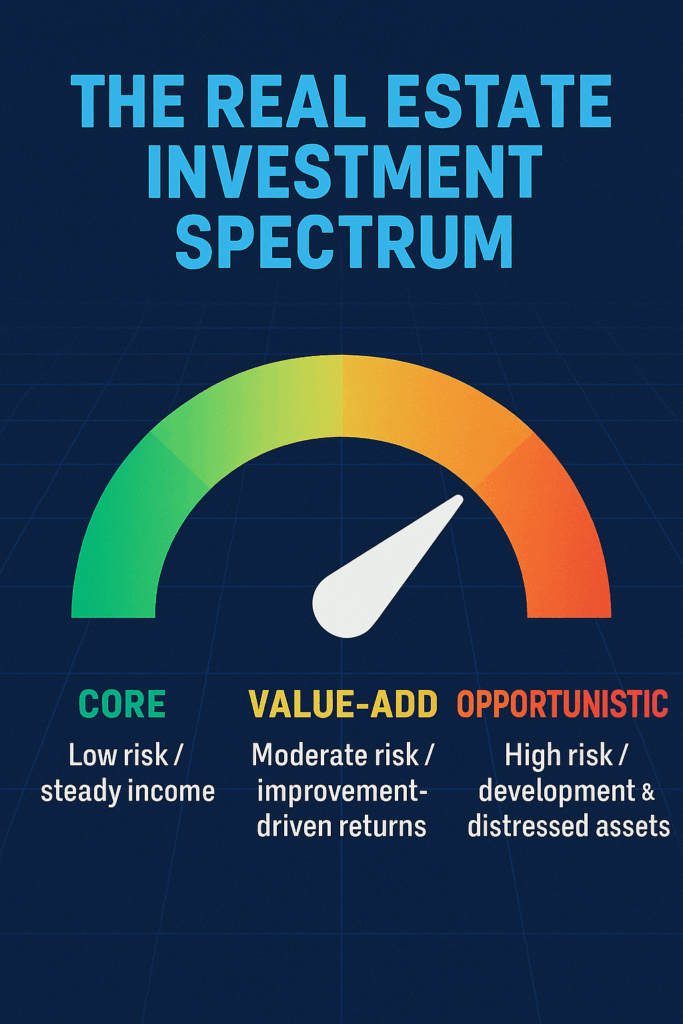
For investors looking to take a step beyond conservative real estate investments, value-add real estate offers a strategy that balances risk and potential reward. Unlike core real estate funds, which focus on stabilized, low-risk properties, value-add funds target properties that require improvement, repositioning, or operational optimization. This approach can generate higher returns than core investing while still providing more stability than opportunistic strategies.
In this article, we’ll explore what value-add real estate investing entails, how these funds operate, typical asset types, risks and rewards, and how investors can incorporate value-add strategies into their portfolios.
What Is Value-Add Real Estate?
Value-add real estate investing involves acquiring underperforming or partially stabilized properties and implementing changes to increase their value. These changes may include renovations, operational improvements, lease restructuring, or repositioning the property for a different tenant or use.
Key Characteristics
- Moderate Risk: Properties may have operational challenges, vacancy issues, or require upgrades.
- Potential for Higher Returns: Investors often target 8–12% annualized returns, combining rental income and capital appreciation.
- Active Management: Fund managers oversee renovations, lease improvements, and operational efficiency.
- Moderate Leverage: Value-add funds often use debt to amplify potential returns, but at a moderate level to manage risk.
Typical Value-Add Assets
Value-add properties span multiple real estate sectors:
- Multifamily Apartments: Older apartment complexes may require unit renovations, updated amenities, or improved management to increase occupancy and rents.
- Office Buildings: Outdated or partially vacant office buildings can be upgraded with modern facilities or repositioned to appeal to different tenants.
- Retail Centers: Shopping centers may benefit from renovation, improved tenant mix, or updated infrastructure to attract more visitors and tenants.
- Industrial Facilities: Older warehouses or distribution centers can be optimized for operational efficiency, modern logistics requirements, or re-leased to higher-quality tenants.
Example: A 150-unit apartment complex purchased at 70% occupancy can be renovated with updated interiors, modern amenities, and enhanced management practices. Over several years, occupancy increases, rents rise, and the property is eventually sold at a higher value, generating returns for investors.
How Value-Add Funds Work
Value-add funds pool capital from multiple investors, often through private partnerships or limited partnerships, to acquire properties that are not fully optimized. Fund managers then implement a plan to enhance the property’s value, which may include:
- Physical Improvements: Renovating interiors, upgrading common areas, or improving curb appeal.
- Operational Enhancements: Streamlining management, reducing costs, and optimizing tenant services.
- Lease Restructuring: Attracting higher-quality tenants or adjusting lease terms to maximize rental income.
- Repositioning: Changing the property’s use or target market to improve demand and cash flow.
Advantages of Value-Add Investing
- Potential for Appreciation: Properties that are successfully upgraded or repositioned often see significant increases in market value.
- Increased Cash Flow: Improved operations and higher-quality tenants can lead to greater rental income.
- Diversification Benefits: Value-add funds offer moderate risk and can complement core investments in a diversified portfolio.
- Strategic Flexibility: Fund managers can adjust their approach based on market trends, such as converting office space to residential units or modernizing retail centers for e-commerce compatibility.
Risks of Value-Add Investing
While value-add funds offer higher returns than core funds, they come with increased risks:
- Execution Risk: Renovation or repositioning projects may take longer or cost more than anticipated.
- Market Risk: Rental demand or property values may not increase as projected.
- Financing Risk: Leveraged properties are sensitive to interest rates and credit availability.
- Operational Risk: Tenant turnover or management challenges can reduce expected cash flow.
Example: A retail center purchased for repositioning may encounter delays in construction, tenant vacancies, or lower-than-expected foot traffic, which can reduce returns for investors.
Historical Performance
Historically, value-add real estate funds have delivered higher returns than core funds but with greater volatility. During post-recession recovery periods, such as the 2010–2015 U.S. real estate market rebound, value-add funds benefited from renovating and repositioning mid-tier office and apartment properties, capturing strong rental growth and property appreciation.
Example: A suburban office building bought in 2012 for $25 million, improved with modern amenities and upgraded tenant spaces, was sold in 2017 for $45 million, producing both rental income and capital gains.
Geographic Considerations
Location plays a critical role in value-add investing:
- Secondary Markets: Cities with growing populations or limited supply may offer significant opportunities to increase occupancy and rental income.
- Urban Redevelopment Areas: Older urban neighborhoods may be revitalized through mixed-use developments, attracting higher rents and improving property values.
- Emerging International Markets: Value-add strategies can also be applied in developing regions, where urbanization and infrastructure growth create opportunities for repositioning properties.
Role in a Diversified Portfolio
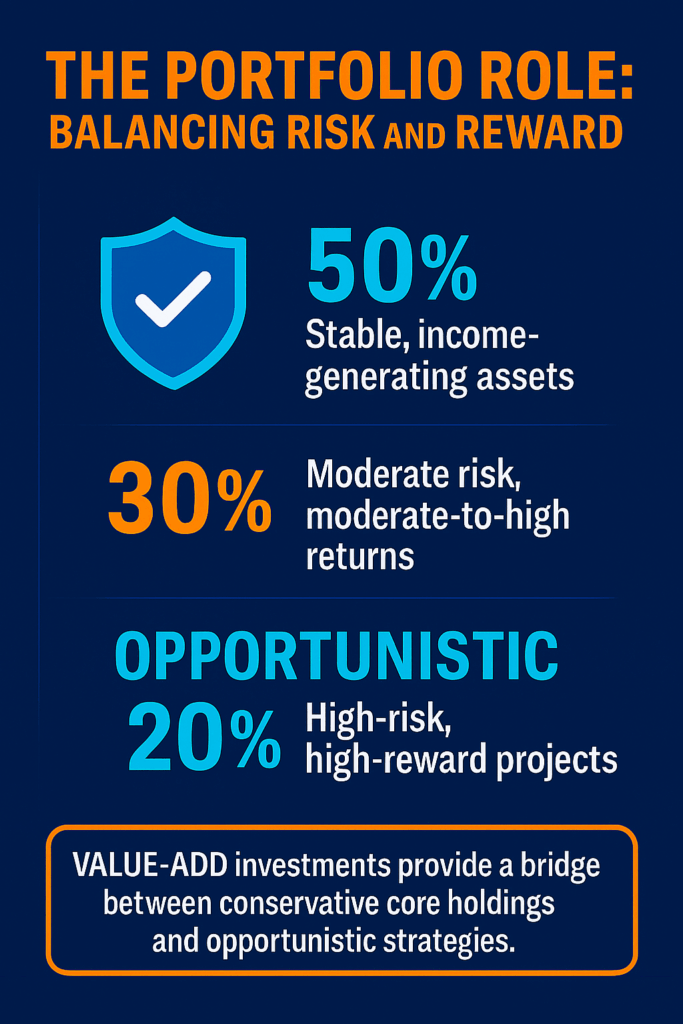
Value-add real estate provides a bridge between conservative core funds and high-risk opportunistic investments. A diversified portfolio may look like this:
- 50% Core: Stable, income-generating assets
- 30% Value-Add: Moderate risk, moderate-to-high returns
- 20% Opportunistic: High-risk, high-reward projects
By allocating a portion to value-add funds, investors can pursue capital appreciation while maintaining a degree of stability.
Practical Tips for Investors
- Assess Your Risk Tolerance: Value-add investing requires patience and comfort with moderate risk.
- Review Fund Track Record: Experienced fund managers are critical to navigating renovation and repositioning challenges.
- Examine Market Conditions: Ensure the local market supports rental growth and property value appreciation.
- Understand Fees and Leverage: Carefully review management fees, acquisition fees, and the level of debt employed.
- Plan for the Long Term: Value-add strategies often require multi-year investment horizons to realize full potential.
Conclusion
Value-add real estate funds strike a balance between risk and reward, offering the potential for higher returns than core investments without the extreme volatility of opportunistic strategies. These funds require active management, strategic planning, and market insight, but for investors willing to accept moderate risk, value-add strategies can enhance both income and capital appreciation in a real estate portfolio.
For investors looking to diversify beyond core real estate, value-add funds provide a compelling way to leverage managerial expertise and market trends to grow wealth. Understanding the nuances of property selection, renovations, and tenant strategy is critical to achieving the desired outcomes.