

This Content Is Free After You Enter Your Email
Private credit offers investors a wide array of strategies, but real estate-backed credit is among the most tangible and widely recognized. By lending against property, private credit funds provide income-generating opportunities while offering a layer of security through collateral. For investors seeking yield, diversification, and downside protection, this strategy has become increasingly popular over the past decade.
This article explores what real estate-backed private credit is, the types of loans involved, examples of fund structures, risk considerations, and why this segment has grown so rapidly.
What Is Real Estate-Backed Credit?
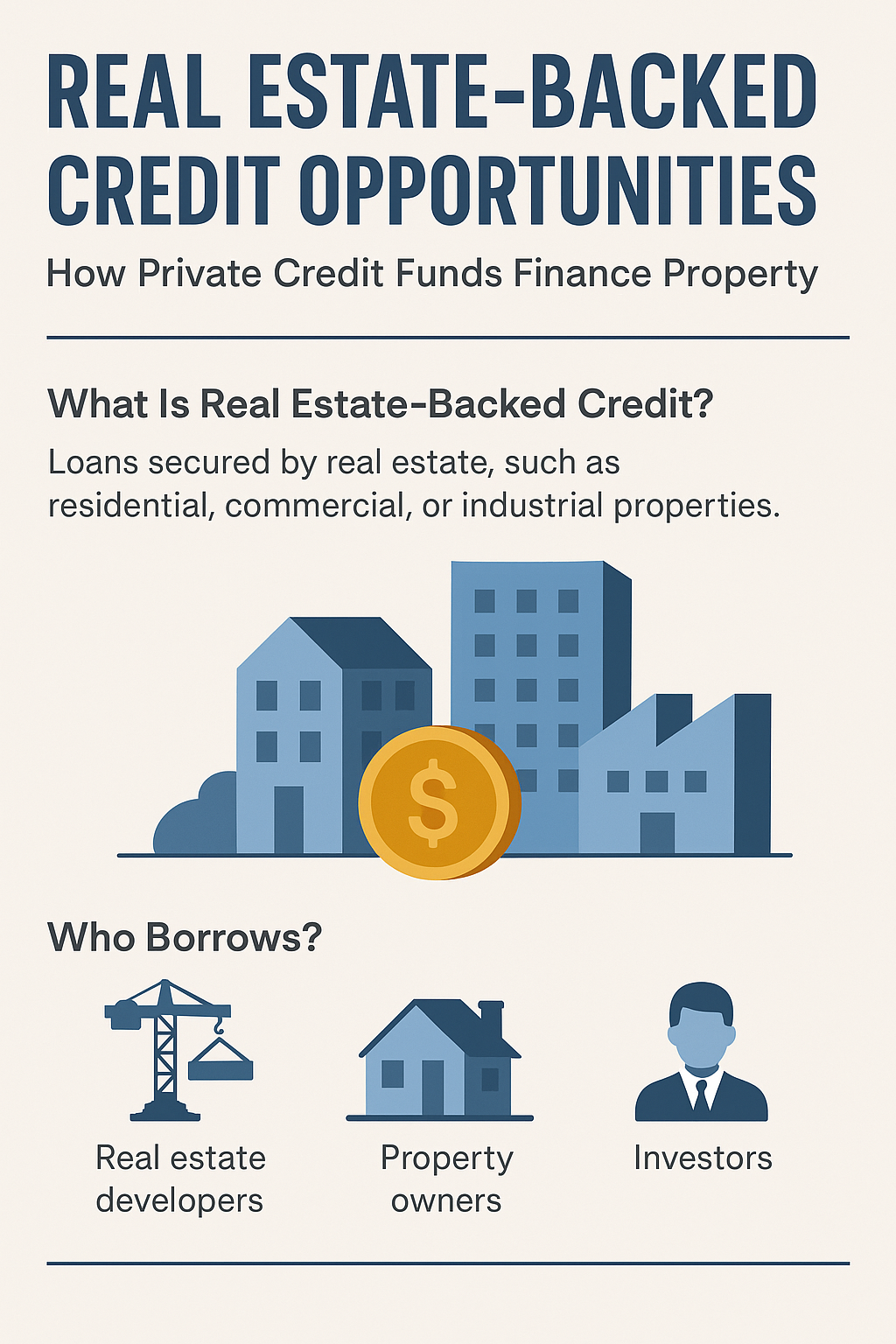
At its core, real estate-backed credit involves loans secured by physical property. Instead of owning the property directly, a fund lends capital to developers, operators, or investors, who pledge real estate as collateral. These loans generate interest income, with repayment obligations backed by the underlying asset.
Real estate-backed credit exists at the intersection of real estate investing and private lending, combining aspects of both. It allows investors to participate in property financing without the operational responsibilities of property management.
Who Borrows?
The typical borrowers are:
- Real estate developers building residential, commercial, or industrial projects
- Property owners refinancing or recapitalizing existing holdings
- Investors seeking short-term financing for acquisitions, renovations, or repositioning assets
These borrowers often face constraints in traditional banking or public markets, such as loan size limits, regulatory restrictions, or timing pressures. Private credit funds fill this financing gap, offering customized solutions and flexible terms.
Types of Real Estate-Backed Loans
Private credit funds structure real estate loans in various ways, depending on the borrower’s needs and the risk-return profile desired by investors:
1. Bridge Loans
Bridge loans are short-term loans designed to cover immediate financing needs until permanent financing or capital is secured. They typically have higher interest rates due to their short duration and risk profile.
Example: A developer purchases a plot to build an apartment complex but needs interim funding until a construction loan closes. A bridge loan from a private credit fund provides $20 million at 10% interest for 12 months.
2. Construction Loans
Construction loans finance the building or renovation of properties. They are often disbursed in stages as construction milestones are met, protecting investors while providing working capital to borrowers.
Example: A mixed-use development requires $50 million for construction. A fund provides staged financing, releasing capital as foundation, framing, and finishing work are completed. Interest is charged only on drawn amounts.
3. Mezzanine Loans
Mezzanine loans are subordinate to senior loans but senior to equity. They carry higher interest rates and often include an equity kicker, such as a small ownership stake or warrants.
Example: A commercial office building has a $40 million senior loan from a bank. A private credit fund provides a $10 million mezzanine loan at 12% interest, earning additional upside through a percentage of future rent income.
4. Specialty Real Estate Credit
Some funds focus on niche lending within real estate:
- Hotel and hospitality financing
- Student housing or senior living facilities
- Industrial and logistics warehouses
These specialty loans cater to sectors underserved by traditional lenders and can provide higher returns due to complexity or regulatory barriers.
Why Real Estate-Backed Credit Has Grown
Several factors have fueled the expansion of this strategy:
- Bank Retrenchment: Post-2008, banks limited exposure to construction and commercial real estate lending, leaving a financing gap.
- Investor Demand for Yield: Rising interest rates and low bond yields made real estate-backed loans attractive for income-focused investors.
- Flexibility: Borrowers appreciate tailored loan structures, and funds can adjust terms quickly to meet market conditions.
Preqin reports that real estate credit now accounts for a substantial portion of private credit assets, particularly in U.S. and European markets.
Investor Benefits
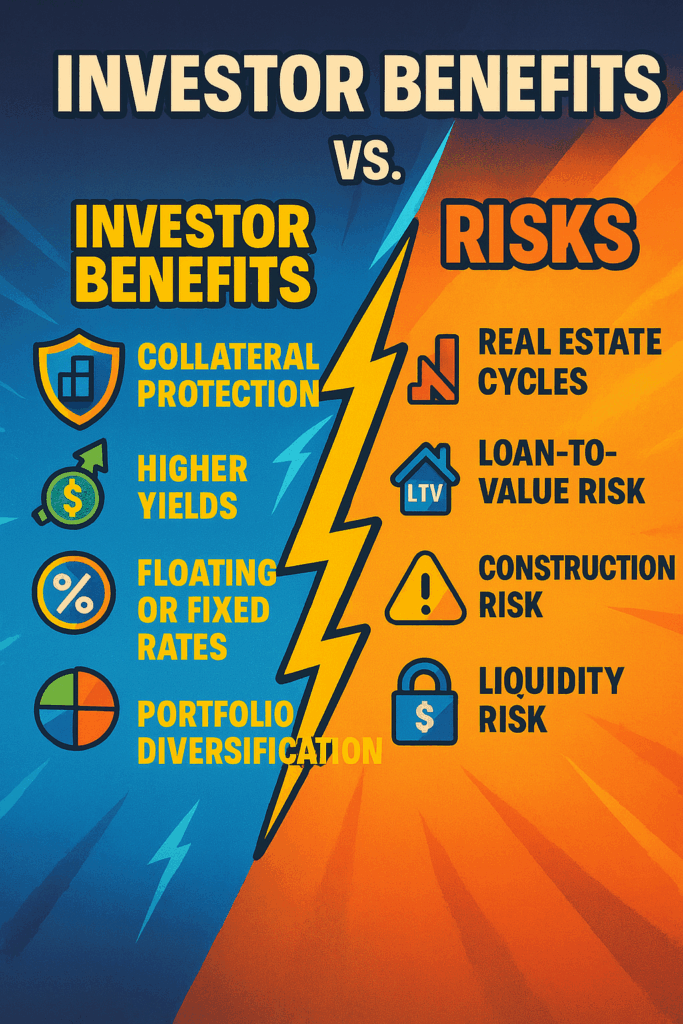
Real estate-backed credit provides several advantages:
- Collateral Protection: Loans are secured by tangible assets.
- Higher Yields: Compared to senior bank loans, private funds can command 8–12% interest.
- Floating or Fixed Rates: Loans can adjust with interest rates, offering protection against inflation.
- Portfolio Diversification: Exposure to property financing adds an uncorrelated asset class to broader portfolios.
Example: An investor fund allocates $50 million across 15 real estate loans, diversified across multifamily, office, and industrial sectors. Even if one property underperforms, the other loans maintain steady returns.
Risks to Consider
Despite these benefits, risks exist:
- Real Estate Cycles: Property values can fluctuate due to economic conditions, interest rates, or local market oversupply.
- Loan-to-Value (LTV) Risk: High LTV ratios increase potential losses if the borrower defaults.
- Construction Risk: Delays or cost overruns can impact repayment ability.
- Liquidity Risk: Unlike public bonds, real estate loans are not easily sold before maturity.
Mitigating risk requires diversified portfolios, thorough due diligence, and conservative underwriting.
Global Perspective
While the U.S. dominates the private real estate credit market, Europe, Asia, and Latin America are growing rapidly. Funds in Europe increasingly finance urban redevelopment and renewable-energy-linked projects, while Asia sees rising demand for logistics, infrastructure, and residential developments.
Example: In India, private credit funds are financing commercial real estate conversions into mixed-use spaces, meeting demand from growing urban populations.
Structuring Real Estate Credit Funds
Investors typically access these opportunities through:
- Closed-End Funds: Commit capital for 5–10 years, investing in multiple projects.
- Interval Funds: Semi-liquid options allowing quarterly redemptions.
- Private REITs or Specialty Lending Vehicles: Focused exclusively on real estate debt.
Funds earn management fees and sometimes a performance fee tied to returns above a benchmark.
Conclusion
Real estate-backed credit offers investors a way to earn attractive, secured returns while financing property development, acquisitions, and specialized projects. With its combination of yield, collateral protection, and portfolio diversification, it has become a cornerstone of private credit investing.
For novice investors, the key is understanding the type of property, loan structure, and market cycle. By carefully selecting funds with strong underwriting, investors can access a compelling balance of income and risk management.