

This Content Is Only For Subscribers
For years, investors who wanted exposure to Bitcoin faced a steep learning curve. They had to open accounts on crypto exchanges, worry about wallets and private keys, and navigate a still-maturing regulatory landscape. That changed with the arrival of Bitcoin exchange-traded funds (ETFs)—a vehicle that has made investing in the world’s largest cryptocurrency as simple as buying a stock.
But what exactly is a Bitcoin ETF? How does it work, and why has it become one of the most talked-about products in both traditional finance and crypto markets? Let’s break it down.
Understanding ETFs in Plain English
An exchange-traded fund (ETF) is a basket of assets that trades on stock exchanges, much like shares of Apple or Tesla. Investors don’t have to buy or manage the underlying assets directly—whether that’s a group of stocks, bonds, or, in this case, Bitcoin. Instead, they buy ETF shares, and the fund takes care of holding and tracking the actual investment.
ETFs are popular because they’re simple, liquid, and regulated. They allow everyday investors to access markets that might otherwise be complex or out of reach.
Spot vs. Futures Bitcoin ETFs
Not all Bitcoin ETFs are created equal. The two main types are:
- Spot Bitcoin ETFs
- Directly hold Bitcoin.
- Each share represents actual ownership of a portion of Bitcoin, held securely by a custodian.
- Most closely mirrors the price of Bitcoin itself.
- Futures-based Bitcoin ETFs
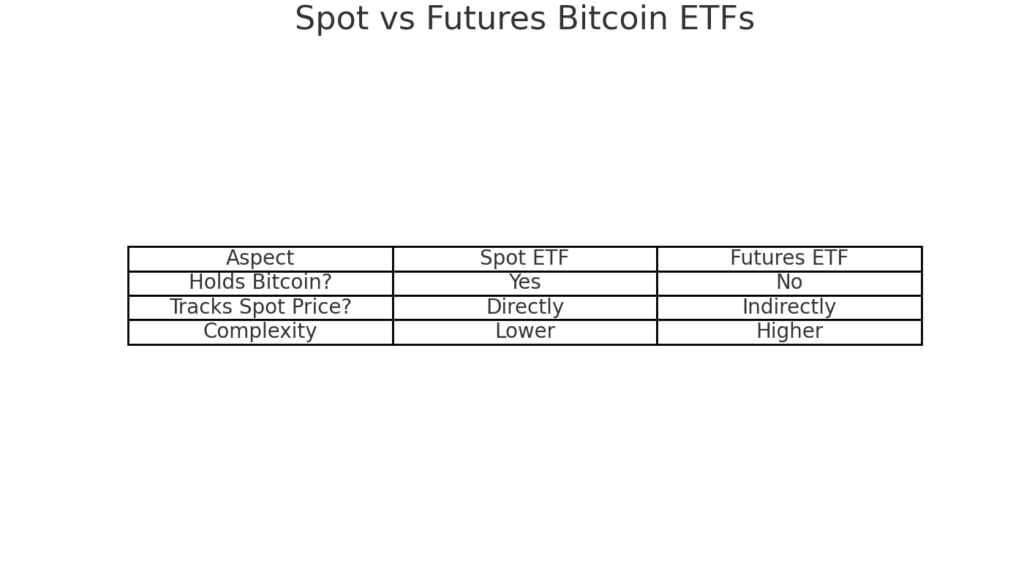
- Do not hold Bitcoin directly.
- Instead, invest in Bitcoin futures contracts (agreements to buy or sell Bitcoin at a later date).
- Can behave differently than spot prices, sometimes trading at premiums or discounts.
For investors, this distinction matters. Spot ETFs tend to be cleaner and easier to understand, while futures-based ETFs can involve more complexity and tracking error.
Why Bitcoin ETFs Matter
The launch of Bitcoin ETFs represents a milestone in crypto adoption. For the first time, investors can buy Bitcoin exposure in their regular brokerage or retirement account, without navigating crypto wallets or exchanges.
Some of the key benefits include:
- Accessibility: Anyone with a brokerage account can participate.
- Regulation: ETFs are overseen by securities regulators, which provides a layer of investor protection.
- Custody: Professional custodians manage and secure the Bitcoin, reducing risks like hacks or lost keys.
- Liquidity: Shares trade throughout the day, just like stocks.
This accessibility has been a game changer for financial advisors and institutional investors who were previously reluctant to recommend or allocate to crypto.
The Road to Approval
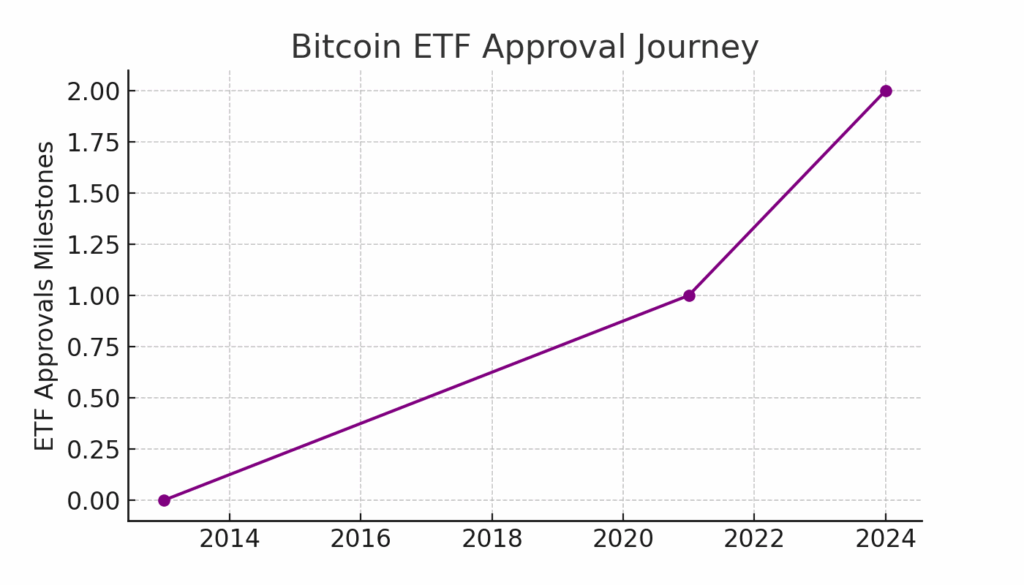
Getting Bitcoin ETFs approved has been a long journey. Regulators, especially in the United States, were cautious due to concerns about market manipulation, custody risks, and investor protection.
Canada was among the first major markets to greenlight spot Bitcoin ETFs in 2021, followed by Europe and other regions. In the U.S., the SEC initially allowed only futures-based Bitcoin ETFs starting in late 2021. After years of lobbying, lawsuits, and industry pressure, spot Bitcoin ETFs were finally approved in January 2024, unleashing billions in inflows within months.
This timeline highlights how regulatory acceptance is catching up with market demand—and why Bitcoin ETFs are considered a turning point for crypto finance.
Who Invests in Bitcoin ETFs?
- Retail investors: People who want exposure to Bitcoin but prefer to avoid the hassle of crypto exchanges.
- Institutional investors: Pension funds, insurance companies, and asset managers who require regulated products.
- Financial advisors: Many advisors can now allocate Bitcoin exposure for clients via familiar ETF structures.
Importantly, Bitcoin ETFs don’t just serve hardcore crypto enthusiasts. They bring in a wider group of investors who may have never touched digital assets otherwise.
Risks to Keep in Mind
Bitcoin ETFs solve some problems, but they don’t eliminate all risks:
- Volatility: Bitcoin remains highly volatile; ETFs don’t smooth out the ride.
- Fees: Some ETFs charge higher management fees than traditional index funds.
- Tracking error: Futures-based ETFs may not perfectly follow spot Bitcoin prices.
- Regulatory changes: Crypto markets remain under scrutiny, and rules could shift.
For novice investors, the key is remembering that while ETFs make Bitcoin easier to access, they don’t change the underlying asset’s risk profile.
A Bridge Between Worlds
Bitcoin ETFs are significant because they bridge traditional finance and digital assets. They give crypto legitimacy by placing it alongside stocks, bonds, and commodities in mainstream investment portfolios. At the same time, they provide regulators and investors with a transparent, standardized framework for engaging with Bitcoin.
Looking ahead, the success of Bitcoin ETFs could pave the way for ETFs tied to other digital assets—Ethereum and beyond. They could also inspire hybrid products that combine crypto with traditional investments in creative ways.
Key Takeaways
- A Bitcoin ETF is a regulated investment vehicle that tracks the price of Bitcoin, available through traditional brokerages.
- There are two types: spot ETFs (which hold Bitcoin directly) and futures ETFs (which use derivatives).
- They improve accessibility, security, and legitimacy but don’t remove Bitcoin’s volatility.
- Regulatory approval has been slow but is now accelerating, making ETFs one of the most important gateways into digital assets.
Final Word
For novice investors, Bitcoin ETFs are often the easiest and safest way to dip a toe into the world of digital assets. You don’t need to master crypto wallets or private keys—you just need a brokerage account. At the same time, it’s crucial to remember that the convenience of an ETF doesn’t change Bitcoin’s nature as a risky, volatile asset.
In that sense, Bitcoin ETFs are both revolutionary and familiar: they take something new and complex—cryptocurrency—and package it into a form investors have been using for decades. That combination is why they’re shaping up to be one of the most important financial innovations of the past few years.