

The rise of tokenized real estate has opened new avenues for investors seeking fractional ownership in high-value properties. Blockchain technology has transformed traditional real estate markets by providing transparency, efficiency, and liquidity. However, the accessibility and growth of this market largely depend on platforms that facilitate tokenized real estate transactions. Understanding which platforms are leading the way is essential for investors exploring this innovative sector.
Tokenized real estate platforms provide the technology and legal infrastructure for investors to buy, hold, and trade digital shares of properties. These platforms bridge the gap between blockchain technology and real-world assets, making it possible for individual and institutional investors to participate in real estate investment previously reserved for high-net-worth individuals.
How Tokenized Real Estate Platforms Work
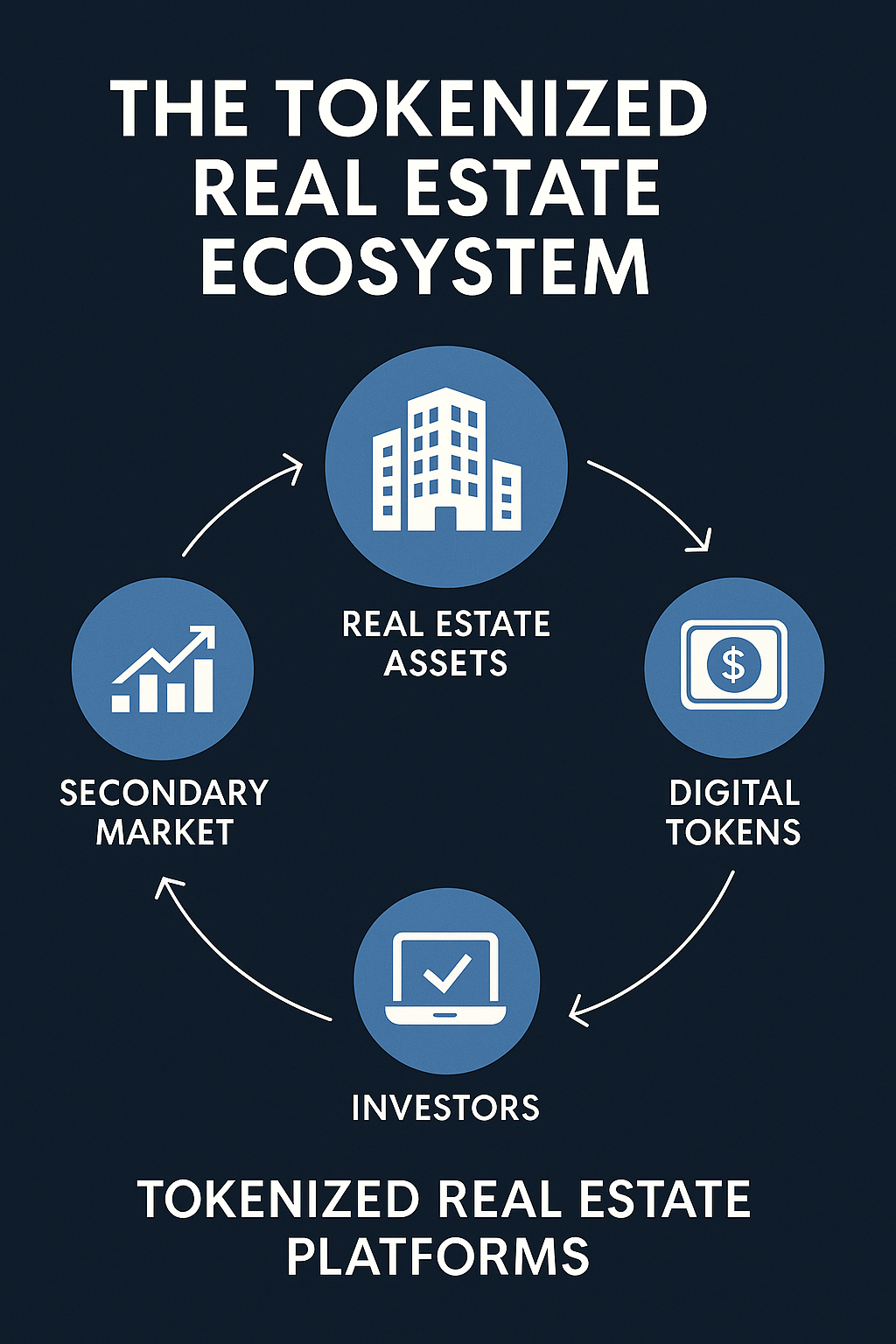
At their core, tokenized real estate platforms handle four main functions:
- Asset Sourcing and Due Diligence
Platforms identify properties suitable for tokenization and perform rigorous financial, legal, and operational due diligence. This ensures that only credible assets are offered to investors, reducing risk and improving confidence in tokenized ownership. - Tokenization and Smart Contracts
Platforms create digital tokens representing fractional ownership of the asset. Smart contracts automate ownership rights, distribution of income, and governance mechanisms. By leveraging blockchain, investors can verify ownership, track asset performance, and receive distributions in a transparent, tamper-proof way. - Investor Onboarding and Compliance
Many platforms focus on accredited or qualified investors, ensuring regulatory compliance. They manage Know Your Customer (KYC) and Anti-Money Laundering (AML) procedures, protecting both investors and property owners. - Secondary Market Trading
Some platforms provide secondary market access, enabling token holders to buy or sell fractions of real estate without waiting for a full property sale. This feature significantly enhances liquidity compared to traditional real estate investments.
Leading Platforms in Tokenized Real Estate
While the tokenized real estate space is still developing, several platforms have emerged as leaders, offering diverse investment opportunities and robust technology.
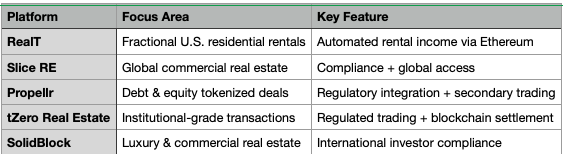
1. RealT
RealT focuses on fractional ownership of U.S. residential real estate, primarily single-family rental properties. Investors can purchase tokens on Ethereum, entitling them to rental income and potential property appreciation. RealT emphasizes transparency, with rental income distributed automatically through smart contracts.
2. Slice RE
Slice RE enables global investors to participate in commercial real estate projects through tokenization. The platform handles legal structuring, token issuance, and compliance, allowing both accredited and institutional investors to gain exposure to income-generating assets. Slice RE has been instrumental in bridging the gap between blockchain technology and traditional real estate finance.
3. Propellr
Propellr specializes in structuring and managing tokenized real estate offerings. The platform supports both debt- and equity-based tokenized investments and provides tools for investor communication, regulatory compliance, and secondary trading. By integrating blockchain with traditional legal frameworks, Propellr facilitates scalable tokenized real estate deals.
4. tZero Real Estate
tZero, a subsidiary of Overstock, provides tokenization and trading infrastructure for real estate and other private assets. Its focus is on institutional-grade transactions, offering regulated trading environments and leveraging blockchain to streamline settlement, transparency, and reporting.
5. SolidBlock
SolidBlock focuses on luxury and commercial real estate tokenization. The platform creates security tokens tied to specific properties and ensures legal compliance for investors worldwide. Its approach combines traditional asset management expertise with blockchain efficiency, making it a trusted option for international investors.
Key Features Investors Should Consider
When evaluating tokenized real estate platforms, investors should consider the following:
- Regulatory Compliance: Ensure the platform adheres to KYC/AML and securities regulations.
- Liquidity Options: Look for platforms offering secondary market access or interval liquidity programs.
- Asset Quality: Evaluate the property type, location, income potential, and historical performance.
- Transparency: Platforms should provide clear reporting, smart contract auditability, and performance tracking.
- Fees: Understand issuance, management, and transaction fees, as these impact net returns.
Advantages of Using Established Platforms
Tokenized real estate platforms reduce barriers to entry, simplify legal structures, and automate income distribution. They also allow investors to diversify across multiple properties, sectors, or geographic regions with minimal capital. Platforms that provide robust secondary markets enhance liquidity, enabling investors to react to changing market conditions or portfolio needs more efficiently.
Looking Ahead
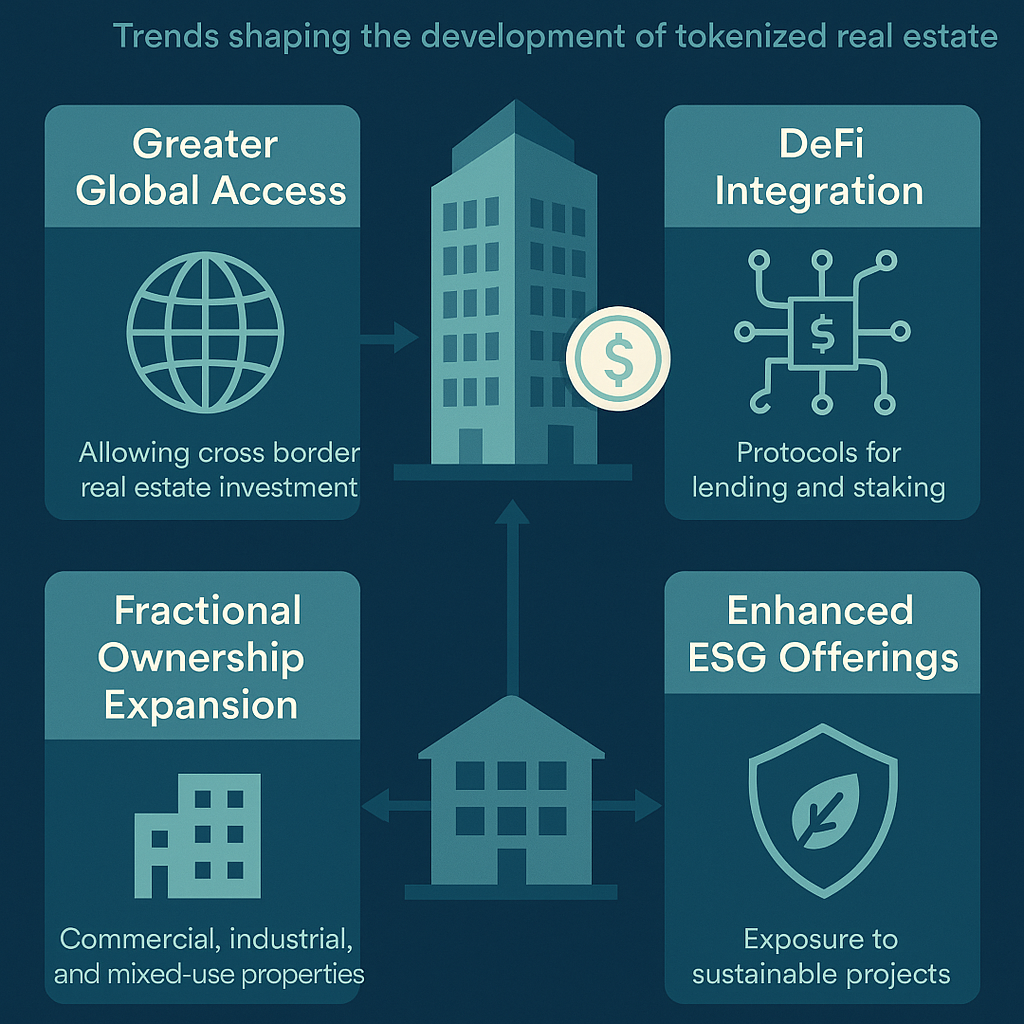
The growth of tokenized real estate depends on continued platform development, regulatory clarity, and investor education. Future trends may include:
- Greater global access, allowing cross-border real estate investment.
- Integration with decentralized finance (DeFi) protocols for lending or staking.
- Expansion of fractional ownership into commercial, industrial, and mixed-use properties.
- Enhanced ESG-focused offerings, providing exposure to sustainable real estate projects.
As the market matures, the platforms powering tokenized real estate will play an increasingly central role, bridging blockchain technology with traditional real estate and creating new investment opportunities for a wider range of investors.