

For entrepreneurs and investors alike, the world of startup financing can feel like an alphabet soup of jargon. You’ve probably heard of “Seed rounds” or “Series A” in the news, maybe even “Series B” or “Series C” when a buzzy startup raises millions. But what do these funding rounds actually mean? More importantly, what do they signal to investors about a company’s stage of growth, risk profile, and potential return?
Let’s break it down step by step.
The Seed Round: Planting the Idea
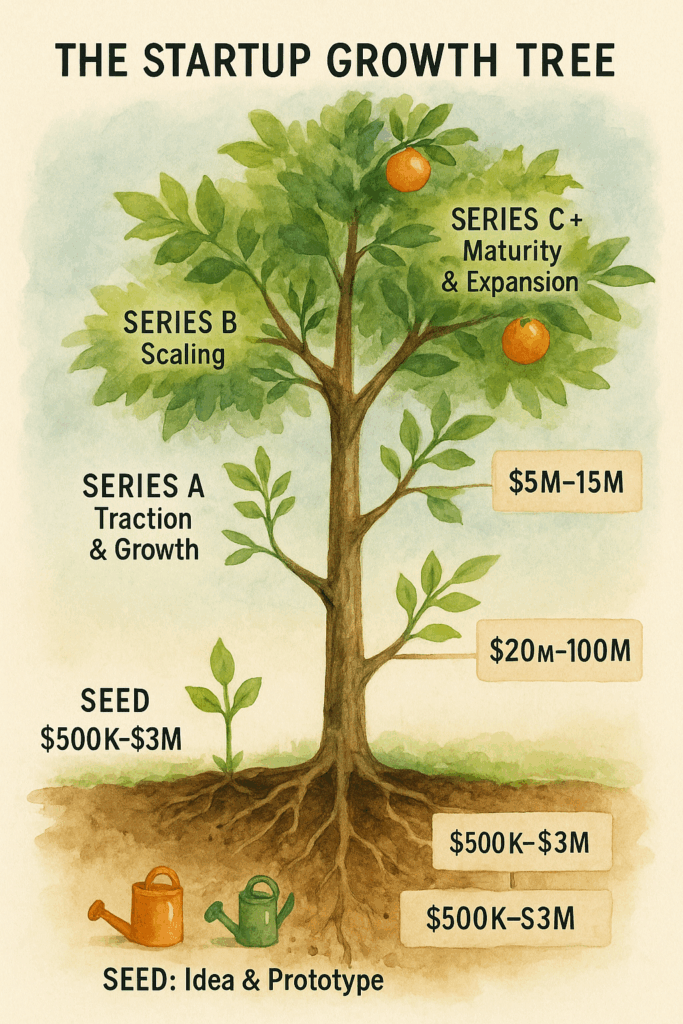
Think of the seed round as planting the first seed of a business. At this stage, startups usually have little more than a promising idea, an early prototype, or minimal revenue. The money raised—often anywhere from $500,000 to $3 million—is typically used for product development, hiring a small team, and testing market fit.
Investors here are often angel investors, early-stage venture capital firms, or accelerators. Because there’s little data to rely on, investors are betting primarily on the founders’ vision and ability to execute. Equity stakes at this point can be significant since the valuation of the company is still relatively low.
Series A: Building a Foundation
Once a startup has proven there’s real demand for its product or service, it may pursue a Series A round. Here, the company is expected to show traction—metrics like consistent user growth, early revenue, or strong engagement.
Series A rounds typically range from $5 million to $15 million, with valuations often between $20 million and $100 million, though these numbers vary widely by industry and region. The funds are used to scale the product, refine the business model, and build out core teams such as sales and marketing.
For investors, Series A is still risky but less speculative than Seed. Startups are expected to demonstrate a path toward profitability, even if they aren’t profitable yet. Venture capital firms usually dominate here, often taking board seats and greater governance rights.
Series B: Scaling Up
A Series B round signals that a startup has moved beyond product-market fit and is now focused on scaling operations. Think larger sales teams, entering new markets, or expanding product lines. Companies raising Series B typically have significant revenue growth and a clear strategy for capturing market share.
Rounds here often range from $20 million to $50 million or more, with valuations frequently in the hundreds of millions. Investors include both existing VCs and larger institutional players, such as late-stage funds or corporate venture arms.
For investors, Series B offers lower risk than earlier rounds, but the buy-in cost is higher. The upside potential is still attractive, especially if the startup is in a rapidly growing industry.
Series C and Beyond: Toward Maturity
By the time a company reaches Series C or later, it’s considered a more mature startup. These companies are no longer proving their model—they’re executing it at scale. Funds at this stage, which can range into the hundreds of millions, are often used for international expansion, major acquisitions, or preparing for an IPO.
Investors now include not just VCs but also private equity firms, hedge funds, and investment banks. The risk is lower than earlier stages, but so is the potential multiple on investment. Instead of hoping for a tenfold return, investors may be targeting 2x–3x growth as the company heads toward an exit.
The Bigger Picture for Investors
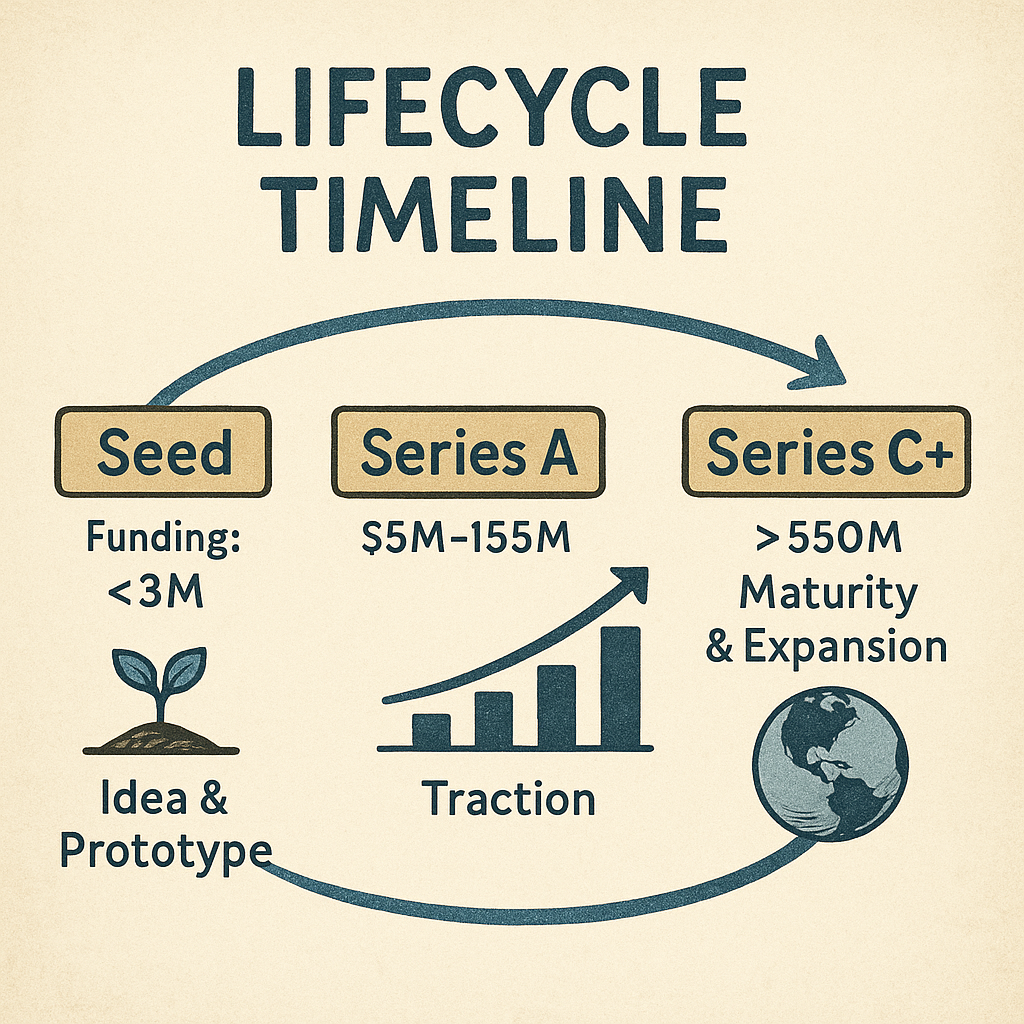
Each funding round tells a story about where a company is in its lifecycle:
- Seed: Idea stage, high risk, high potential upside.
- Series A: Early traction, still risky, but clearer signals.
- Series B: Scaling, less risky, with higher valuations.
- Series C+: Mature growth, institutional backing, lower upside multiples.
For investors, understanding the differences between these rounds is critical. Each stage requires not only a different risk appetite but also different expectations around governance, liquidity timelines, and returns.