

This Content Is Only For Subscribers
In private credit, some of the most specialized and potentially rewarding strategies fall under opportunistic, distressed, and special situations credit. Unlike traditional direct lending or real estate-backed loans, these approaches focus on companies or assets facing financial stress, structural complexity, or unique circumstances.
This article explores what these strategies involve, how they work, typical returns and risks, and why they play an important role in a diversified private credit portfolio.
Understanding Opportunistic and Distressed Credit
- Opportunistic Credit refers to loans made to companies or projects that present attractive risk-adjusted returns due to market inefficiencies, timing, or unique circumstances. Opportunities can arise from temporary liquidity issues, industry dislocations, or financing gaps.
- Distressed Credit targets companies in financial distress or approaching bankruptcy. Investors acquire debt at a discount, aiming to profit through restructuring, turnaround, or eventual repayment.
- Special Situations credit encompasses a broad range of unique or non-standard lending opportunities, including litigation finance, event-driven loans, or financing around mergers, acquisitions, or restructurings.
These strategies are riskier than traditional lending but can offer higher returns due to the complexity and illiquidity involved.

Who Uses These Strategies?
Distressed and opportunistic strategies are typically used by:
- Private credit funds and hedge funds seeking higher yields
- Institutional investors with long-term horizons
- Family offices pursuing niche investment opportunities
Borrowers often include companies undergoing:
- Bankruptcy or pre-bankruptcy restructuring
- Sponsor-backed buyouts requiring rescue capital
- Turnarounds or operational improvements
Common Structures
1. Distressed Debt Purchases
Investors buy existing debt at a discount from stressed or bankrupt companies. Returns are generated when the company restructures or emerges from bankruptcy at full or partial value.
Example: A retail chain struggles with declining revenues. A fund purchases its bonds at 60 cents on the dollar, and after a successful restructuring, the bonds are worth 90 cents, generating significant profit.
2. Rescue or DIP (Debtor-in-Possession) Financing
Funds provide emergency financing to companies in bankruptcy to keep operations running. DIP loans are senior in the capital structure and often carry high interest rates.
Example: A distressed manufacturing firm receives $25 million in DIP financing from a private credit fund at 12% interest. The funds enable continued operations until a sale or reorganization is complete.
3. Special Situations Loans
These are bespoke loans structured for unique events:
- Acquisition financing for companies under duress
- Litigation or claims monetization loans
- Financing around spin-offs or strategic restructurings
Special situations loans often include covenants, collateral, or equity participation to enhance returns.
Why These Strategies Have Grown
Several factors have contributed to the rise of opportunistic, distressed, and special situations credit:
- Bank Retreat: Many traditional lenders avoid complex or high-risk loans, leaving a gap for private credit funds.
- Market Volatility: Economic cycles and sector-specific downturns create temporary dislocations.
- Higher Yield Demand: Investors are seeking returns above traditional lending rates, and distressed opportunities offer this potential.
Investor Benefits
Investors in these strategies can gain:
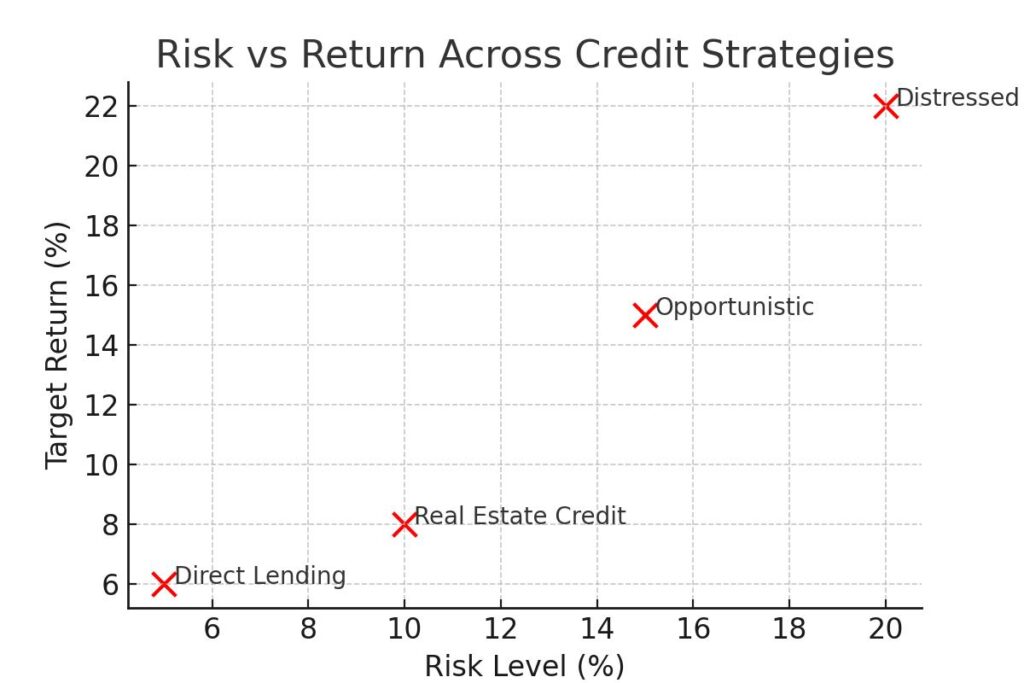
- High Potential Returns: Discounts on distressed assets can yield 15–25% or more, depending on outcomes.
- Diversification: Returns are often driven by idiosyncratic company events rather than broader market trends.
- Control and Influence: Funds often gain seats on creditor committees or board positions, influencing restructurings.
Risks to Consider
- Credit Risk: Borrowers are financially stressed, increasing the chance of default or loss.
- Liquidity Risk: These investments are typically illiquid, requiring patience until restructuring is complete.
- Legal and Operational Risk: Bankruptcy processes and restructuring negotiations can be complex and unpredictable.
- Market and Timing Risk: Misjudging the timing of distress or recovery can materially impact returns.
Successful investing requires expertise in credit analysis, legal frameworks, and operational restructuring.
Portfolio Role
Opportunistic, distressed, and special situations credit is often used as a satellite allocation within broader private credit portfolios:
- Enhancing Yield: Offers potential for returns above standard direct lending or real estate credit.
- Diversification: Performance depends on idiosyncratic events rather than macroeconomic trends.
- Strategic Exposure: Can be used tactically during economic downturns when distressed opportunities are abundant.
Conclusion
Opportunistic, distressed, and special situations credit represents a highly specialized, high-potential segment of private credit. These strategies allow investors to capitalize on unique market inefficiencies, financial distress, or corporate events while diversifying their portfolios.
For novice investors, it is critical to understand the complexity, illiquidity, and risk profile associated with these strategies. With the right expertise, careful underwriting, and risk management, these private credit strategies can complement more traditional lending approaches and provide significant risk-adjusted returns.