

Private equity (PE) can provide significant long-term returns and portfolio diversification, but it is a complex and illiquid asset class. Investors considering PE need to carefully evaluate funds before committing capital. Choosing the right fund requires assessing the general partner (GP), investment strategy, historical performance, fees, risk management, and operational capabilities. A systematic approach helps investors align their goals, risk tolerance, and time horizon with the right PE fund.
Understanding Fund Strategy
The first step is understanding the fund’s investment strategy. Private equity encompasses several types of funds, each with unique risk-return profiles:
- Venture Capital (VC): Targets early-stage startups with high growth potential but higher failure risk. Success relies heavily on identifying disruptive companies before competitors.
- Growth Equity: Invests in more established companies seeking capital for expansion. Typically less risky than VC, with moderate to high returns.
- Leveraged Buyouts (LBOs): Acquires controlling stakes in mature companies using debt to enhance returns. Operational improvements and financial restructuring drive value.
- Distressed/Special Situations: Focuses on underperforming or struggling companies. Potential returns are high but risks and complexity are significant.
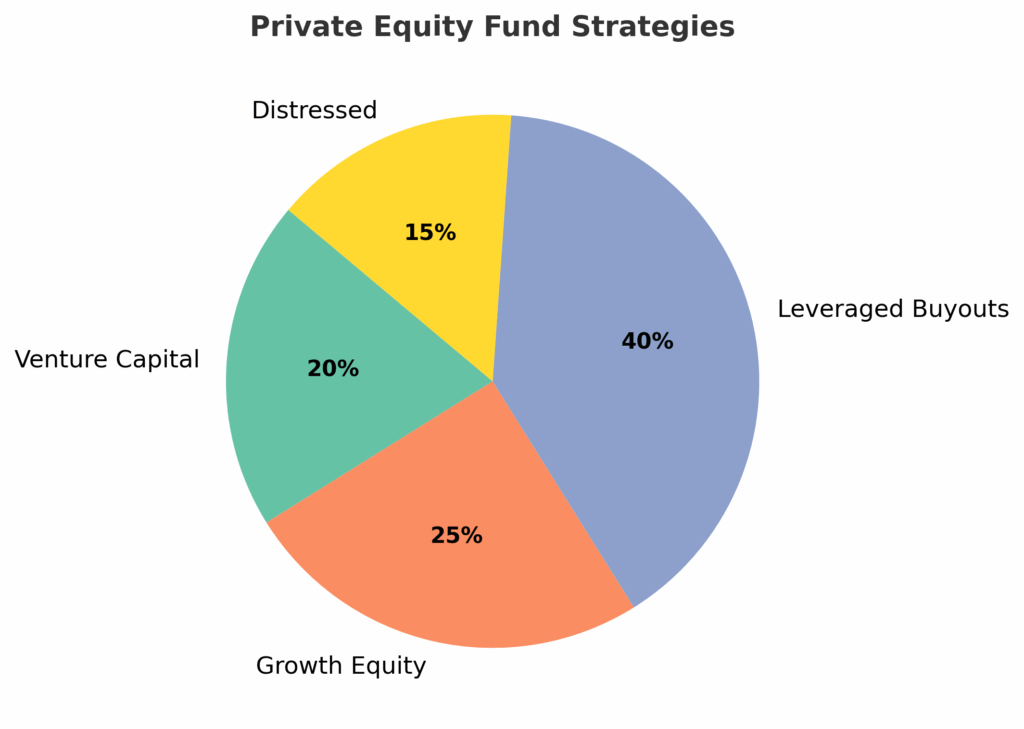
Understanding the fund’s approach allows investors to match the fund with their risk appetite and investment horizon.
Evaluating the General Partner (GP)
The GP’s experience and track record are arguably the most critical factors in fund selection. Key considerations include:
- Historical Performance: Review prior funds’ IRR, MOIC, and realized exits. Consistency across market cycles is a positive indicator.
- Operational Expertise: GPs should have experience improving companies’ operations, implementing growth strategies, and managing financial structures.
- Sector Knowledge: Specialized knowledge in sectors like technology, healthcare, or industrials can drive better deal sourcing and execution.
- Team Stability: A stable, experienced investment team reduces operational risk and ensures continuity of strategy.
Evaluating the GP helps gauge the likelihood of successful value creation and fund performance.
Due Diligence and Track Record
Thorough due diligence is essential before investing. Investors should:
- Analyze Past Fund Performance: Compare IRRs, MOICs, and exit outcomes to industry benchmarks.
- Assess Investment Selection Process: Understand how the fund sources, evaluates, and executes deals.
- Examine Risk Management Practices: Ensure the fund has strategies to mitigate market, operational, and leverage risks.
- Review Transparency and Reporting: Clear communication on performance, portfolio companies, and valuation methods is vital.
Due diligence ensures investors understand the fund’s investment process, decision-making framework, and potential return profile.
Fees and Economics
PE funds typically charge a combination of management fees and carried interest:
- Management Fees: Usually 1.5–2% of committed capital annually, covering operational costs.
- Carried Interest: Typically 20% of profits above a hurdle rate earned by the GP.
Investors should evaluate net-of-fee returns, as high fees can significantly impact long-term performance. Comparing similar funds and fee structures is critical to assessing value.
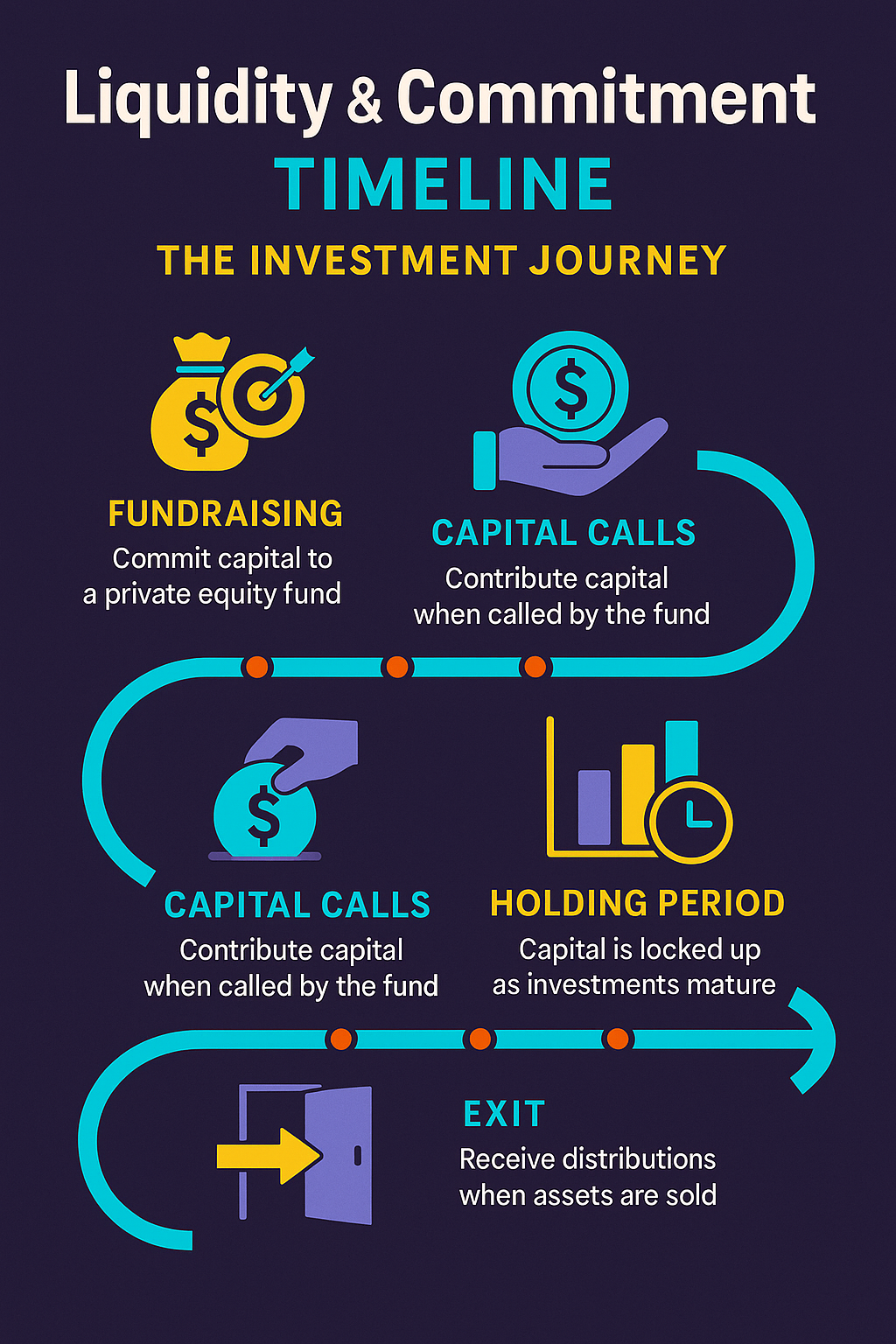
Understanding Liquidity and Commitment
Private equity is an illiquid asset class. Investors should be aware that:
- Capital is typically locked for 4–10 years, depending on fund strategy and lifecycle.
- Capital calls may occur over time, requiring investors to commit to multiple funding installments.
- Secondary markets exist, but liquidity options are limited compared to public markets.
Ensuring alignment between liquidity needs and investment horizon prevents unexpected cash flow challenges.
Evaluating Portfolio Diversification
A strong PE fund provides exposure to multiple companies, sectors, or geographies to mitigate risk. Key factors include:
- Number of Portfolio Companies: Sufficient diversification reduces reliance on a single investment.
- Sector Spread: Funds focusing on multiple sectors can balance cyclical risks.
- Geographic Exposure: International investments provide growth opportunities but may introduce currency and regulatory risks.
Diversification helps smooth returns while maintaining exposure to high-growth opportunities.
Alignment of Interests
A well-structured PE fund aligns interests between GPs and LPs:
- GP Commitment: GPs often invest their own capital alongside LPs, ensuring skin in the game.
- Hurdle Rate: Many funds implement a minimum return threshold before GPs earn carried interest, aligning incentives with investor outcomes.
- Governance and Reporting: Transparent oversight, advisory boards, and regular updates ensure LPs remain informed.
Alignment of interests is essential to ensure GPs are motivated to maximize returns responsibly.
The Bottom Line
Evaluating a PE fund requires careful consideration of strategy, GP expertise, past performance, fees, risk management, liquidity, and portfolio diversification. Private equity can offer compelling long-term returns and access to companies unavailable in public markets, but successful investing demands thorough research and due diligence. By understanding these critical factors, investors can make informed decisions, select funds that match their goals and risk tolerance, and position themselves for potential long-term growth. Private equity is a complex asset class, but with proper evaluation, it can be a powerful component of a diversified investment portfolio.