

This Content Is Only For Subscribers
Real estate has long been viewed as one of the most enduring ways to build and preserve wealth. Land ownership has been central to economies for centuries, and property—whether farmland, homes, or office towers—remains a cornerstone of investment portfolios around the world. Traditionally, real estate investing was relatively simple: buy property, collect rent, and hope it appreciates in value. But in the 21st century, that simplicity has been disrupted.
Technology, shifting demographics, environmental concerns, globalization, and economic cycles are rapidly transforming the landscape. For investors—whether institutional giants or individuals buying their first rental home—understanding these trends is critical to navigating the next decade of opportunities and risks.
This article explores the future of real estate investing by breaking down the most important themes shaping tomorrow’s markets.
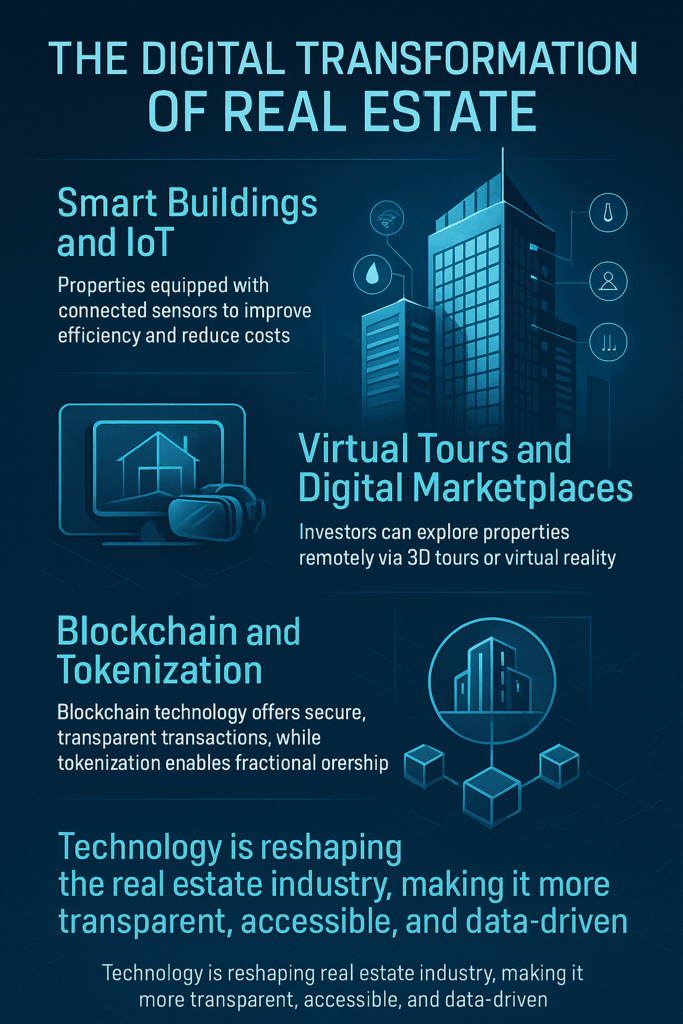
1. Technology and the Digital Transformation of Real Estate
Real estate has historically been slow to embrace technology. Deals often required stacks of paper, in-person meetings, and opaque pricing. That’s rapidly changing thanks to PropTech (property technology).
Smart Buildings and the Internet of Things (IoT)
Buildings are no longer just static assets—they’re becoming dynamic, data-driven systems. IoT sensors track everything from energy usage and temperature to occupancy rates and air quality.
- Case study: The Edge, an office building in Amsterdam, is often called “the smartest building in the world.” It uses thousands of sensors to optimize lighting, heating, and even parking. Tenants benefit from lower costs and better productivity.
- Investor implication: Properties with advanced building management systems often command rental premiums and lower long-term maintenance costs.
Virtual Tours and Digital Marketplaces
Remote property evaluation has accelerated since COVID-19. Investors can now tour apartments, office buildings, or warehouses through high-definition 3D scans or VR headsets.
- Platforms like Zillow in the U.S. or Rightmove in the U.K. have democratized property search, while startups are now offering fractional ownership via apps, opening doors to smaller investors.
Blockchain and Tokenization
Blockchain offers the promise of instant, transparent, and tamper-proof property transactions. Tokenization allows assets to be divided into tradable units.
- Example: A luxury hotel in Aspen was tokenized in 2018, allowing investors to buy digital shares of the property.
- Potential: If widely adopted, tokenization could make real estate as liquid as stocks, breaking down one of the industry’s biggest barriers.
The long-term outlook: Tech-driven real estate will attract younger, digital-native investors, while institutional players will adopt PropTech to enhance efficiency and sustainability.
2. Demographic Shifts: The Changing Face of Demand
Demographics are destiny in real estate. Who lives, works, and consumes in a region shapes the value of its properties.
Millennials and Gen Z
Millennials are now the largest cohort in the U.S. housing market. Gen Z is following closely, with different expectations:
- Preference for walkable neighborhoods with access to transit.
- Strong demand for flexible spaces that can double as home offices.
- Interest in sustainability and amenities like EV charging.
Aging Populations
By 2050, one in six people worldwide will be over 65. This shift drives demand for:
- Senior housing and assisted living.
- Medical office buildings and healthcare campuses.
- Age-friendly communities designed for accessibility.
- Case study: Ventas, a U.S. real estate investment trust (REIT), has invested heavily in senior housing and healthcare facilities, positioning itself for long-term growth in this demographic sector.
Urbanization vs. Suburbanization
Global urbanization continues, particularly in Asia and Africa. But in developed economies, hybrid work is reviving suburban and secondary cities.
- Example: In the U.S., cities like Austin, Nashville, and Raleigh are attracting companies and residents leaving high-cost metros.
- Investor implication: Growth markets may no longer be mega-cities, but mid-sized urban areas offering affordability and lifestyle benefits.
3. Sustainability, ESG, and the Green Building Revolution
Climate change is reshaping real estate risk and opportunity. Investors increasingly integrate ESG (Environmental, Social, Governance) into their strategies.
Green Certifications and Energy Efficiency
Buildings with LEED or BREEAM certifications often enjoy:
- Higher occupancy rates.
- Lower operating costs.
- Easier access to green financing.
- Example: In New York, Local Law 97 will fine buildings that don’t meet strict emissions caps, pressuring landlords to retrofit for energy efficiency.
Climate Risk and Resilience
Investors can no longer ignore climate geography:
- Miami and coastal Florida face rising insurance premiums due to hurricanes and sea-level rise.
- California is seeing higher wildfire-related costs.
Forward-looking investors are stress-testing portfolios for physical climate risks and shifting capital to resilient regions.
ESG Funds
Institutional capital increasingly requires ESG compliance. Pension funds and sovereign wealth funds now screen out assets that don’t meet sustainability standards.
Future outlook: ESG isn’t a trend—it’s becoming a baseline requirement for institutional capital flows. Properties ignoring sustainability risk obsolescence.
4. The Shifting Landscape of Commercial Real Estate
The commercial real estate (CRE) sector is in transition, accelerated by the pandemic.
Offices in a Hybrid World
- Trend: Remote and hybrid work is here to stay. Office demand has shrunk in major metros.
- Case study: San Francisco’s office vacancy hit over 30% in 2023, while Class A “trophy” buildings with top amenities still attract tenants.
- Investor strategy: Conversion opportunities (offices to residential or mixed-use) are emerging, supported by government incentives in some cities.
Retail Reinvented
E-commerce has disrupted malls, but not all retail is doomed.
- Experiential retail—gyms, restaurants, entertainment—is rebounding.
- Mixed-use developments are integrating retail, residential, and office in one hub.
- Logistics and last-mile facilities are the real retail winners, fueling e-commerce fulfillment.
Industrial and Logistics
The most resilient CRE segment:
- Demand for warehouses near ports and highways continues to soar.
- Cold storage facilities are booming due to online grocery growth.
Long-term play: Logistics is now considered a “core” allocation for many institutional portfolios.
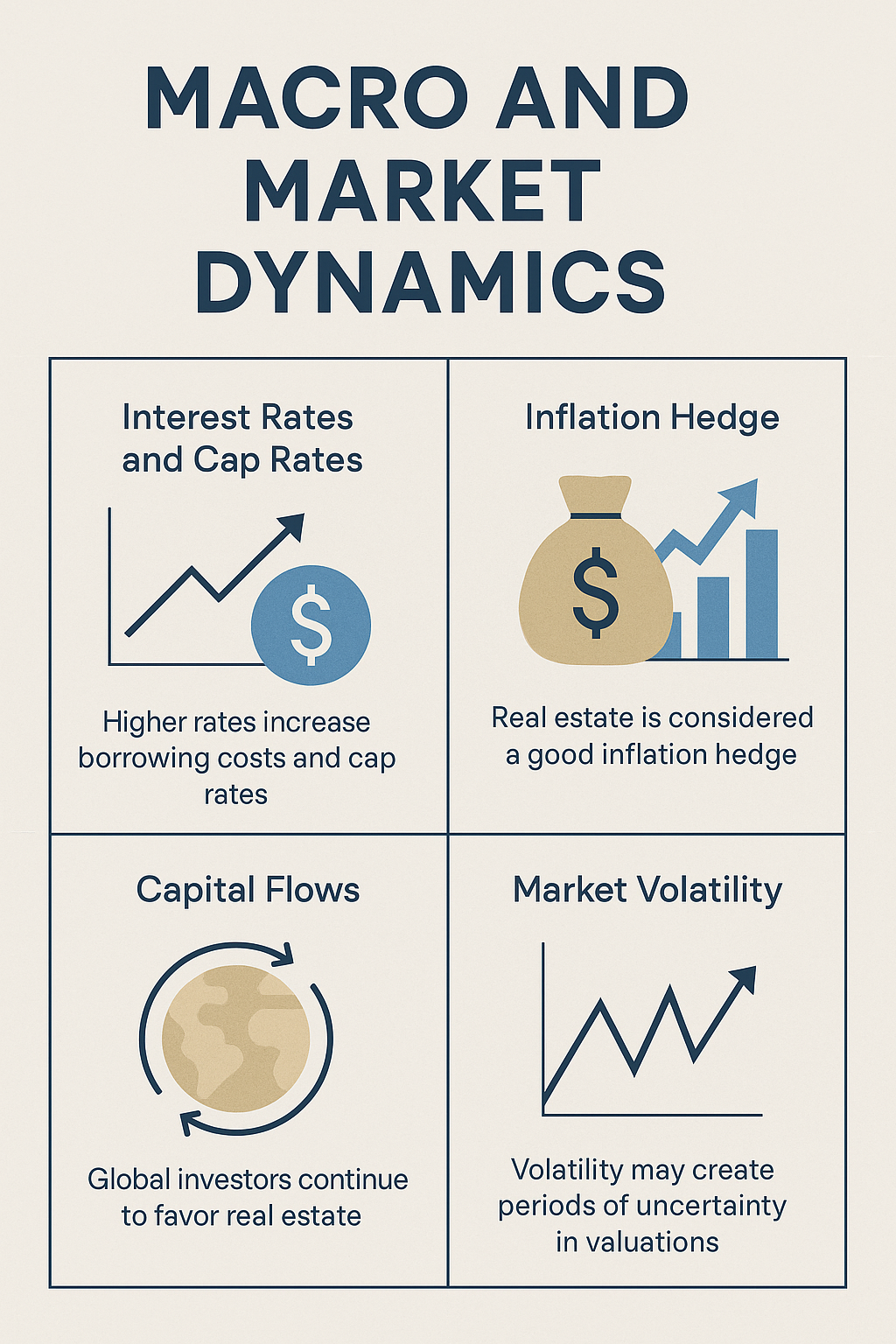
5. Interest Rates, Inflation, and Macro Dynamics
Macro conditions always loom large in real estate.
Interest Rates and Cap Rates
- Rising interest rates (like those seen in 2022–23) increase borrowing costs and pressure valuations.
- Investors are shifting toward all-cash deals or partnerships with lower leverage.
Inflation Hedge
Historically, real estate has been a strong inflation hedge:
- Multifamily leases can reset annually.
- Industrial leases often include inflation-linked rent escalators.
Capital Flows
Despite volatility, global capital keeps flowing into real estate:
- Sovereign wealth funds from the Middle East and Asia are active buyers of Western real estate.
- Example: Qatar Investment Authority invested heavily in London’s Canary Wharf and New York’s office towers.
6. Globalization and Cross-Border Investing
The world is more interconnected than ever.
- Asia-Pacific: Rapid urbanization in India, Indonesia, and Vietnam is creating huge demand for housing and infrastructure.
- Europe: Cities like Berlin and Paris remain attractive safe-havens, especially for multifamily and logistics.
- North America: U.S. multifamily and industrial remain favorites for global capital.
Platforms offering fractionalized access to global deals are also making cross-border investing more accessible to retail investors.
7. Housing Affordability and Policy Intervention
Affordability crises are shaping politics and markets.
Rent Control and Regulation
Cities like Berlin and New York are experimenting with stricter rent caps, which can dampen returns but increase stability.
Affordable Housing Incentives
Governments are providing tax credits, zoning relief, and subsidies to developers who create affordable housing.
- Example: The U.S. Low-Income Housing Tax Credit (LIHTC) program has been instrumental in spurring affordable housing construction.
Public-Private Partnerships
Cities increasingly rely on private developers to meet housing needs, offering incentives for inclusive projects.
Investor implication: Policy trends will heavily influence profitability in housing markets, requiring close monitoring.
8. Alternative Real Estate Assets
Investors are broadening definitions of “real estate.”
- Data Centers: Essential for cloud computing and AI. REITs like Equinix have seen strong growth.
- Life Sciences: Lab space in hubs like Boston and San Diego is booming.
- Self-Storage: Steady demand, even during downturns.
- Student Housing: Growing international student flows keep this resilient.
Outlook: These niches offer diversification and high growth potential, though often with specialized operational needs.
9. Democratization of Real Estate Investing
Barriers to entry are falling.
- REITs remain a simple way to gain exposure.
- Crowdfunding platforms allow smaller investors to pool money into projects.
- Tokenized assets may eventually make real estate trading as easy as stocks.
The bottom line: Access to real estate investing is becoming more inclusive, broadening participation beyond institutions and the ultra-wealthy.
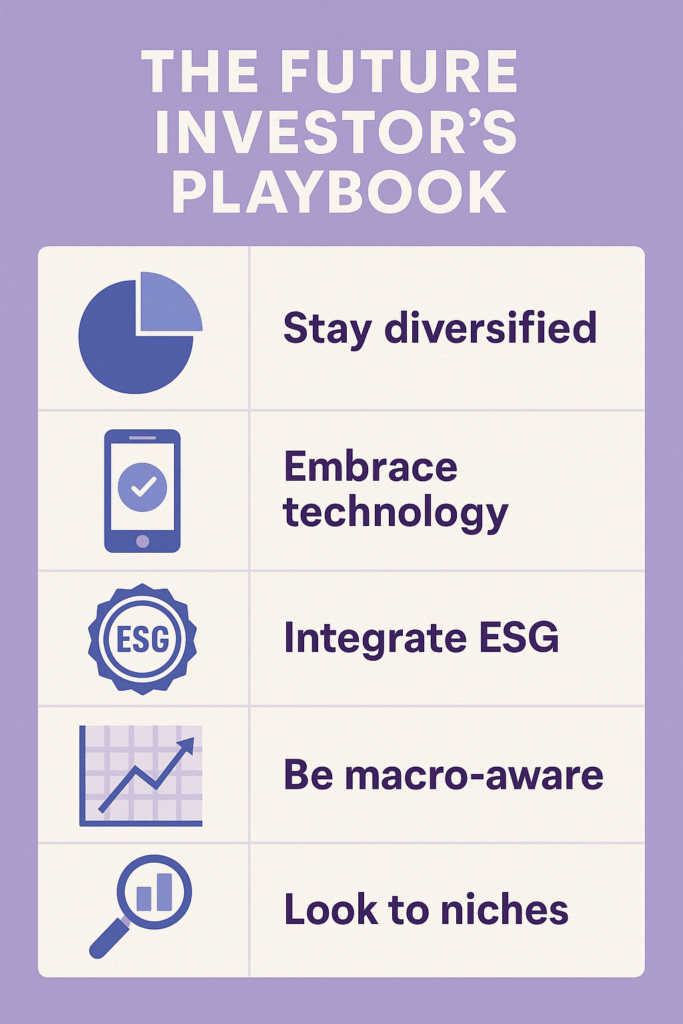
10. The Investor’s Playbook for the Future
With so many forces reshaping real estate, investors should:
- Stay diversified. Don’t concentrate too heavily in one geography or sector.
- Embrace technology. PropTech is becoming integral, not optional.
- Integrate ESG. Properties without sustainability credentials may face declining values.
- Be macro-aware. Track interest rates, inflation, and policy shifts.
- Think globally. Opportunities are expanding beyond traditional hubs.
- Look to niches. Data centers, logistics, and senior housing may outperform traditional office or retail.
Closing Thoughts
Real estate investing is at a crossroads. Technology is redefining access and efficiency. Demographic shifts are changing demand. Climate change and policy pressures are rewriting valuation models. And globalization is expanding the playing field.
For investors, the challenge is to adapt while holding onto fundamentals: location, cash flow, and long-term value. The future won’t abandon the past—it will build on it in new ways.
Those who embrace innovation while respecting timeless principles will find real estate not only remains a pillar of wealth but also an engine of growth in the decades to come.