

This Content Is Only For Subscribers
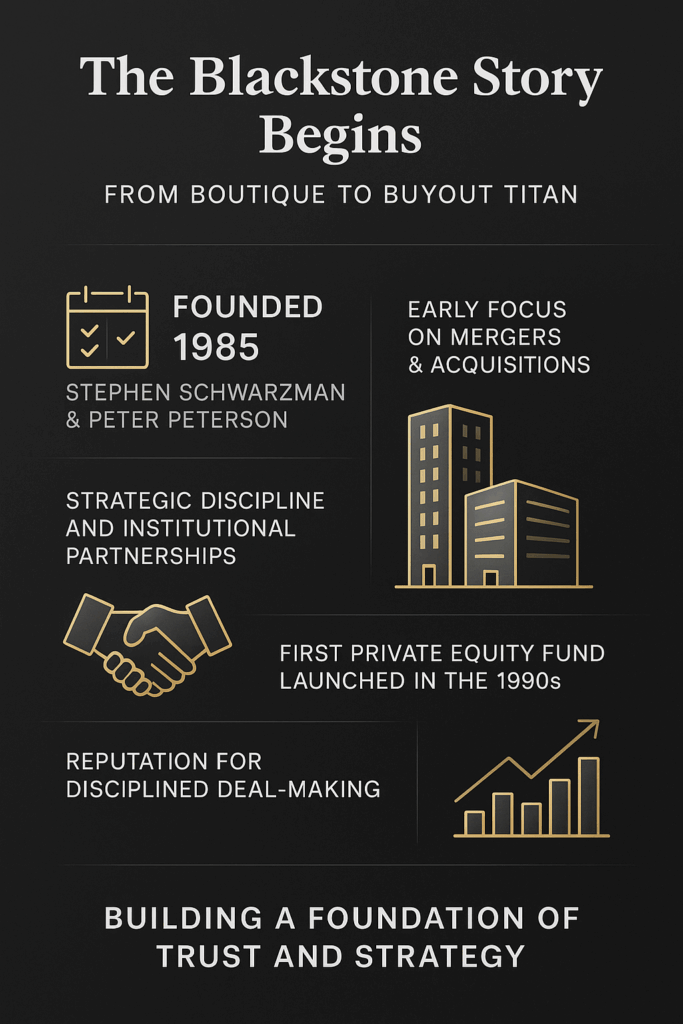
When people talk about the giants of private equity, one name comes up more than any other: Blackstone. Founded in 1985 by Stephen Schwarzman and Peter Peterson, Blackstone has grown from a small advisory firm into the world’s largest alternative investment manager, with hundreds of billions under management. Its influence spans real estate, private equity, infrastructure, credit, and beyond.
But Blackstone’s story isn’t just about scale. It’s about how a firm turned private equity from a niche financial strategy into a global business empire. For novice investors, studying the Blackstone model reveals how disciplined growth, brand power, and diversification can create resilience in a risky industry.
Origins: From Boutique to Buyout Titan
Blackstone began in 1985 as a small mergers-and-acquisitions advisory shop. Its early years mirrored the rise of leveraged buyouts in the 1980s, with firms like KKR grabbing headlines. But unlike some rivals who focused narrowly on big splashy deals, Blackstone pursued a balanced strategy: building relationships with institutional investors while carefully selecting buyout opportunities.
By the 1990s, Blackstone had raised its first dedicated private equity fund and quickly made its mark. Its investments in companies like AlliedBarton Security and TRW Automotive gave it a reputation for disciplined deal-making. From the start, the firm emphasized long-term partnerships with investors—a theme that would define its growth.
Expanding Beyond Private Equity
What makes Blackstone unique is that it never confined itself to one corner of finance.
- Real estate: In the early 1990s, when many firms avoided property after a downturn, Blackstone invested aggressively. Over time, it became the world’s largest real estate investor, buying office buildings, hotels, logistics hubs, and residential properties.
- Credit and hedge fund solutions: Blackstone built out businesses that could lend money, manage debt, or invest in hedge fund strategies, offering clients multiple ways to put capital to work.
- Infrastructure: More recently, the firm has moved into areas like data centers, toll roads, and renewable energy projects.
This diversification meant Blackstone could weather storms. When one sector underperformed, others often picked up the slack.
Going Public: A Bold Step
In 2007, Blackstone went public on the New York Stock Exchange. Many thought it was risky—private equity firms weren’t known for transparency. But the IPO raised billions and gave Blackstone currency to grow further.
For the firm, being public wasn’t just about raising capital. It also solidified its brand. Investors around the world now recognized Blackstone not just as a private equity shop, but as a diversified asset manager.
Case Study: Hilton Hotels
One of Blackstone’s most famous deals was its 2007 purchase of Hilton Hotels for $26 billion. The timing looked disastrous—months later, the global financial crisis devastated the travel industry. Critics predicted Blackstone had overreached.
Instead, the firm doubled down. Working with Hilton’s management, it expanded the company’s franchise model, streamlined operations, and invested in global growth. When Hilton went public again in 2013, and as Blackstone gradually sold its stake, the firm ultimately earned about $14 billion in profit.
The Hilton case became the ultimate example of the Blackstone playbook: buy well, support management, and think long term.
The Real Estate Bet
If Hilton showed Blackstone’s resilience, its real estate empire showed its vision. After the 2008 housing crisis, the firm began buying thousands of foreclosed single-family homes, bundling them under a new platform called Invitation Homes. By 2017, Invitation Homes had gone public in a $1.5 billion IPO, becoming the largest single-family rental company in the U.S.
This move was controversial—critics argued Wall Street shouldn’t own so much housing stock—but it demonstrated Blackstone’s ability to spot opportunity in crisis. Where others saw wreckage, the firm saw undervalued assets that could generate steady rental income.
Scaling Private Equity: The Blackstone Difference
So how did Blackstone scale private equity from a niche into a behemoth? A few themes stand out:
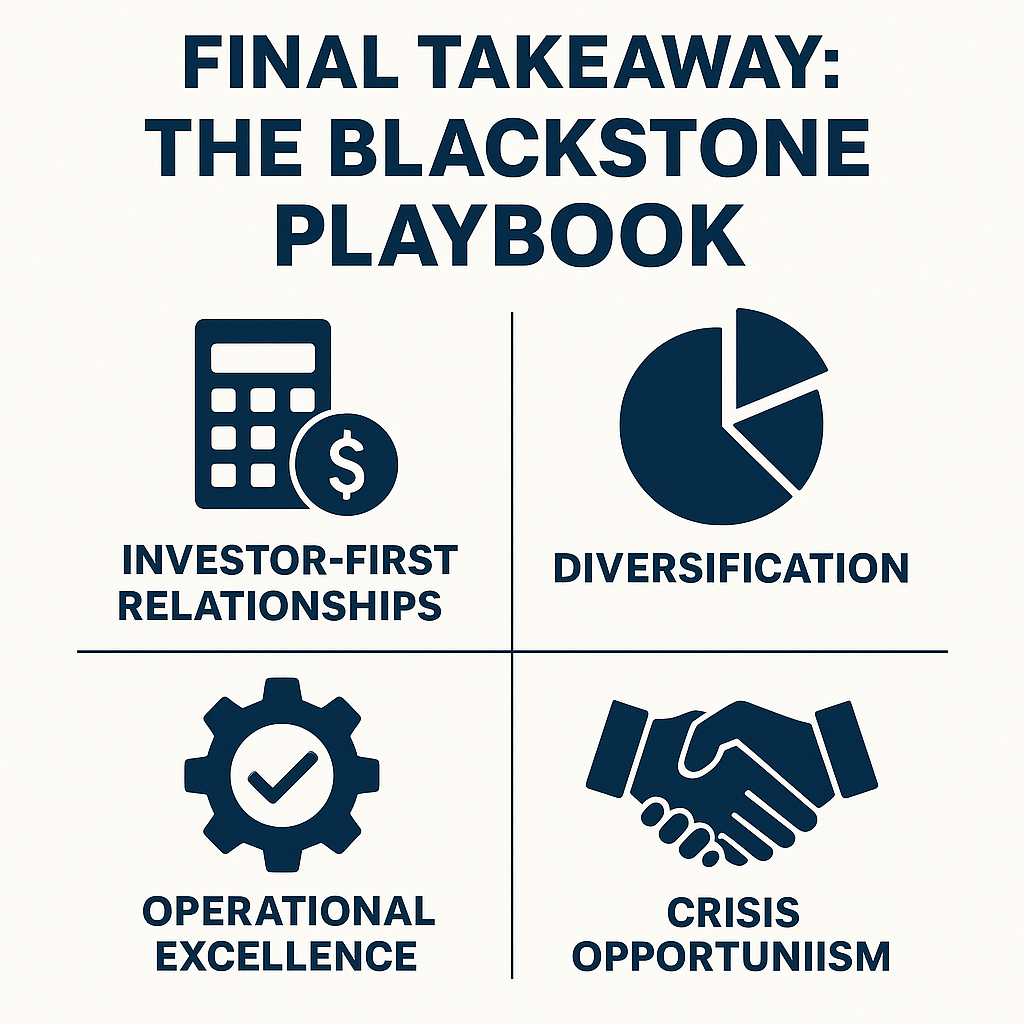
- Investor-first relationships. Blackstone cultivated deep partnerships with pension funds, endowments, and sovereign wealth funds. This gave it a steady stream of capital, even when markets turned choppy.
- Diversification. Unlike firms that stuck to buyouts, Blackstone spread across asset classes. This gave investors one-stop access to multiple strategies.
- Operational excellence. The firm focused on improving portfolio companies, not just financial engineering. Deals like Hilton proved that adding value operationally creates resilience.
- Brand and trust. Going public helped Blackstone establish itself as a household name in finance, attracting clients globally.
- Crisis opportunism. From real estate in the 1990s to homes after 2008, Blackstone often went against the grain, buying when others were fearful.
Lessons for Novice Investors
While most individuals can’t invest directly in Blackstone’s funds, its story offers powerful lessons:
- Diversify. Just as Blackstone spread risk across asset classes, individual investors should avoid putting everything in one stock or sector.
- Think long term. Blackstone held Hilton through a crisis, proving that patience often pays more than timing.
- Stay opportunistic. Market downturns, while scary, can present buying opportunities. Investors with courage and discipline can benefit when others panic.
- Build relationships. Success isn’t just about picking assets—it’s about trust, whether with partners, advisors, or even in your personal network.
- Reputation matters. Blackstone’s ability to raise capital stemmed from credibility. For individuals, this translates into making consistent, responsible choices that build trust over time.
Final Thoughts
Blackstone’s rise from a two-man advisory firm to the world’s largest private equity player shows how vision, diversification, and discipline can transform an industry. Its deals, from Hilton to Invitation Homes, illustrate both the risks and rewards of bold investing.
For novice investors, the Blackstone model is a reminder that financial success isn’t just about quick wins. It’s about building systems, trusting principles, and seizing opportunities with patience and conviction.