

This Content Is Only For Subscribers
If Bridgewater Associates represents the world of big-picture economics and guiding principles, Renaissance Technologies is its mirror opposite: secretive, scientific, and powered almost entirely by math. While many hedge funds employ armies of analysts and economists, Renaissance is famous for recruiting scientists, mathematicians, and codebreakers—people who see patterns where others see noise.
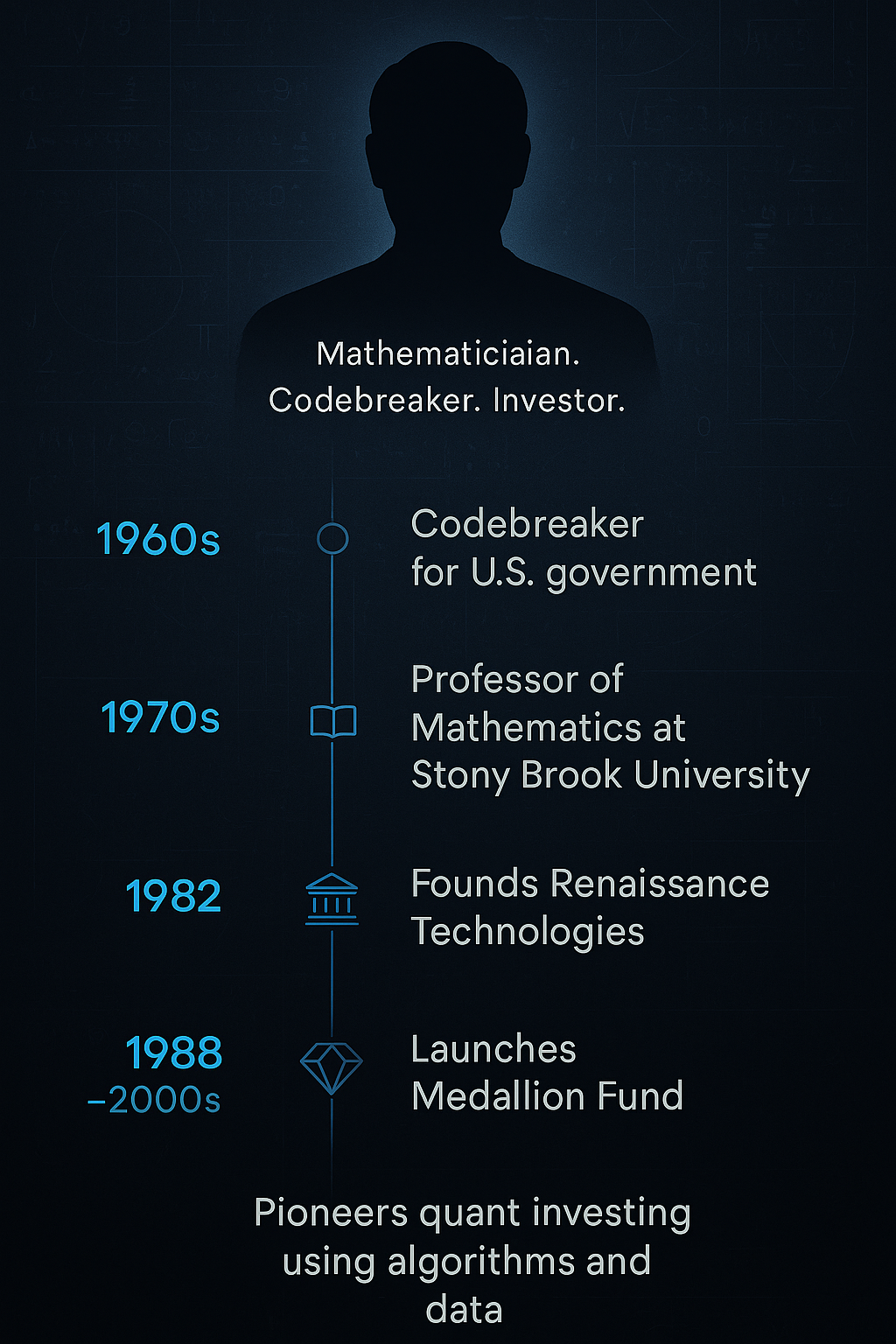
Founded in 1982 by Jim Simons, a former MIT professor and Cold War codebreaker, Renaissance has built a reputation as perhaps the most successful hedge fund in history. Its flagship Medallion Fund has achieved returns so spectacular that they almost sound fictional. Yet it’s real, and the lessons behind Renaissance’s success carry powerful messages for everyday investors.
The Origins of a Quant Revolution
Jim Simons wasn’t a Wall Street insider. He was a mathematician who worked for the U.S. government breaking codes. His idea for Renaissance was simple but revolutionary: instead of relying on analysts’ judgments or gut instinct, use data and algorithms to make decisions.
This approach—known as quantitative investing—was decades ahead of its time. By feeding massive amounts of historical data into statistical models, Simons and his team trained computers to spot hidden relationships in markets. If a stock, bond, or currency tended to move in a certain way under certain conditions, the algorithms would find it and trade on it.
The Medallion Fund: Legendary Returns
While Renaissance runs several funds, the Medallion Fund is its crown jewel. From 1988 through 2018, Medallion reportedly generated average annual returns of nearly 40% after fees—an unheard-of record. To put that in perspective:
- $1,000 invested in the S&P 500 in 1988 would be worth around $20,000 by 2018.
- That same $1,000 in Medallion could have grown into millions.
Medallion became so successful that Renaissance eventually closed it to outside investors. Today, only Renaissance employees can invest in it, and they reap the benefits of one of the most profitable financial engines ever built.
Why Was It So Successful?
Medallion’s edge came from three main factors:
- Data – Renaissance collected enormous datasets, some going back decades. Markets that seemed random to human eyes revealed subtle, exploitable patterns to their algorithms.
- Talent – Instead of hiring Wall Street veterans, Renaissance recruited physicists, statisticians, and engineers. Their skill wasn’t in predicting the economy but in finding patterns in complex data.
- Discipline – Unlike human traders, the algorithms stuck to the plan. No second-guessing. No fear or greed. Just math.
The Lesson for Novice Investors
Most individuals don’t have access to Renaissance’s resources. But its philosophy is still relevant:
- Base decisions on evidence. Even simple data—like a company’s earnings, revenue growth, or debt levels—can guide better choices than gut instinct.
- Control your emotions. Renaissance’s computers don’t panic in market downturns. You can replicate that discipline by setting rules ahead of time and sticking to them.
- Stay humble. Renaissance’s success wasn’t built on flashy stock picks. It was built on small, repeatable advantages applied consistently.
The Caveats: Why It’s Not Copyable
As much as Renaissance inspires awe, its model can’t easily be copied. A few reasons:
- Secrecy – Renaissance is notoriously private. The details of its models are closely guarded, and former employees rarely talk.
- Scale – It spends hundreds of millions on computing power and hires some of the world’s brightest minds.
- Market adaptation – As more investors adopt quantitative methods, edges can disappear quickly.
For everyday investors, the lesson is not to try to build your own Medallion Fund, but to borrow its mindset: be systematic, evidence-driven, and disciplined.
Not Always Perfect
Even Renaissance isn’t invincible. Its other funds, which manage money for outside investors, haven’t matched Medallion’s magical returns. They’ve had good years and bad years, often performing more like a traditional hedge fund.
This is an important reminder: no strategy works forever. Even the most advanced models can break down when markets change. The 2008 financial crisis and the 2020 COVID crash challenged quant funds as market relationships broke down.
A Glimpse Into the Future
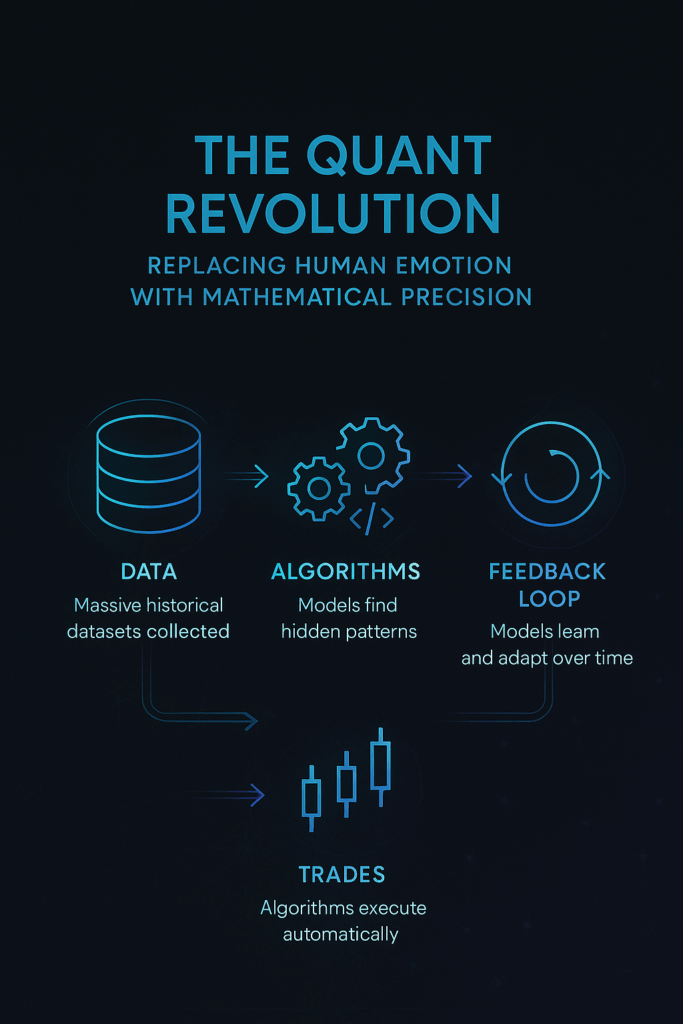
Renaissance set the stage for what’s now called quant investing. Today, many hedge funds and even retail platforms use data-driven strategies. From robo-advisors to algorithmic trading apps, the idea of letting rules—not emotions—drive decisions has gone mainstream.
For novice investors, this trend offers a silver lining. You don’t need to compete with Renaissance to benefit from its influence. Low-cost index funds, robo-advisors, and evidence-based strategies available today are part of the legacy of Simons’s quant revolution.
Final Thoughts
Renaissance Technologies remains a fascinating case study in how math, data, and discipline can transform investing. The Medallion Fund’s returns may never be matched, but the philosophy behind them is accessible to anyone.
For novice investors, the key takeaways are simple:
- Rely on evidence, not hunches.
- Create rules to manage your money and emotions.
- Don’t chase miracles—focus on consistency.
You don’t need to be a mathematician to learn from Jim Simons’s playbook. You just need to remember that, in investing as in life, clear thinking beats gut instinct.