

This Content Is Only For Subscribers
When people think of cryptocurrency, they often picture extreme volatility—Bitcoin soaring one week, crashing the next. That volatility makes crypto exciting, but it also makes it hard to use as money. How can you pay rent or send remittances in an asset that might drop 20% overnight?
Enter stablecoins: digital tokens designed to hold steady against traditional currencies, usually the U.S. dollar. In many ways, stablecoins are the unsung heroes of the crypto world. They grease the wheels of decentralized finance (DeFi), provide stability in turbulent markets, and act as a bridge between traditional money and blockchain innovation.
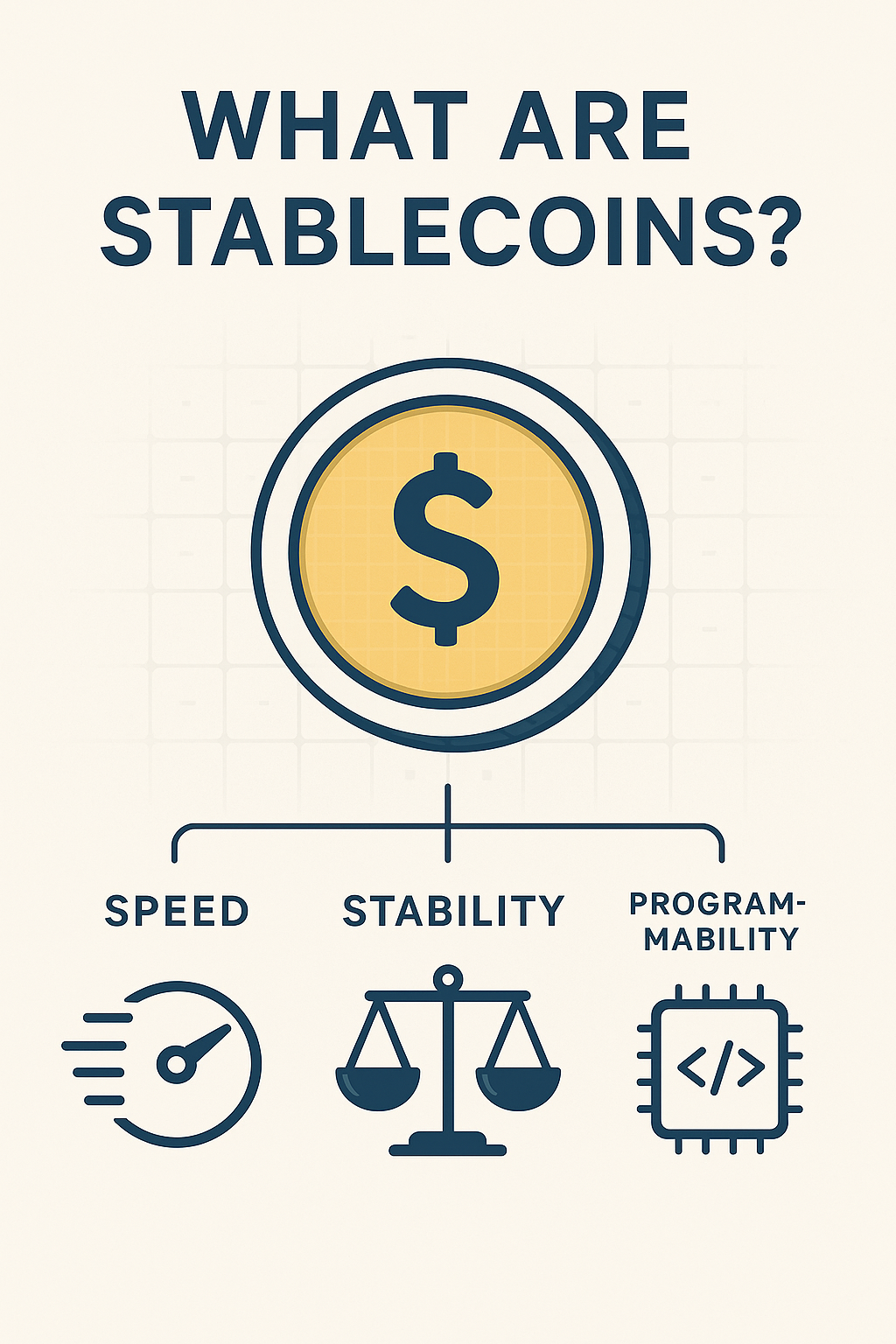
What Are Stablecoins?
Stablecoins are cryptocurrencies pegged to a stable asset—most often $1 USD. The idea is simple: combine the speed and programmability of crypto with the predictability of fiat money.
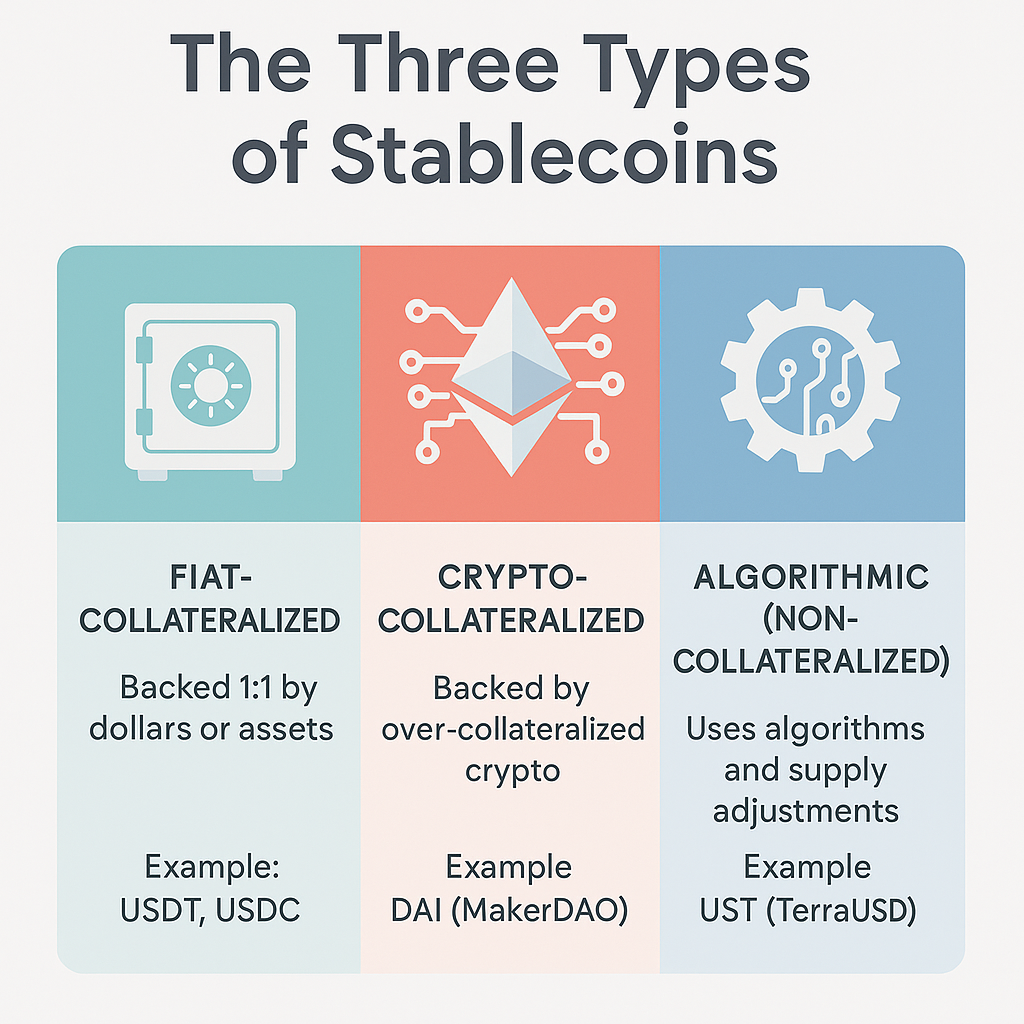
There are three main types:
Fiat-Collateralized Stablecoins
- Backed 1:1 by reserves of dollars or equivalent assets.
- Examples: USDT (Tether), USDC (Circle/Coinbase).
- Value is maintained by the issuer holding traditional assets in custody.
Crypto-Collaterallized Stablecoins
- Backed by excess crypto locked in smart contracts.
- Example: DAI (MakerDAO).
- Users deposit ETH or other assets, then mint DAI against that collateral. Over-collateralization keeps the peg stable.
Algorithmic (Non-Collateralized) Stablecoins
- Once hailed as innovative, most algorithmic models have proven fragile..
- Use algorithms and token economics to maintain the peg without direct collateral.
- Example: TerraUSD (UST) (collapsed in 2022).
Stablecoins Matter
1. Liquidity in DeFi
Stablecoins are the backbone of DeFi lending, borrowing, and trading. They provide a predictable medium of exchange in otherwise volatile markets.
- On Uniswap or Aave, stablecoins are often the most liquid pairs.
- Borrowers frequently use stablecoins as loan proceeds, avoiding exposure to wild crypto swings.
2. Safe Harbor in Volatile Markets
When markets crash, many traders move funds into stablecoins instead of cashing out to banks. This “parking” function makes stablecoins akin to a digital money-market fund.
3. Cross-Border Payments
Stablecoins allow near-instant, low-cost international transfers. For people in countries with unstable currencies, holding USDC or USDT can be safer than holding local cash.
4. On- and Off-Ramps
Exchanges often use stablecoins as a stand-in for fiat. Instead of wiring dollars back and forth, users move in and out of crypto through stablecoins.
Case Studies
Tether (USDT)
Launched in 2014, USDT is the oldest and largest stablecoin, with tens of billions in circulation. It’s widely used in trading but has faced scrutiny over the transparency of its reserves.
USD Coin (USDC)
Backed by Circle and Coinbase, USDC has positioned itself as the “regulated” stablecoin. Its issuers publish attestation reports on reserves, appealing to institutions.
DAI (MakerDAO)
A decentralized alternative, DAI is minted by locking crypto collateral. Despite volatility in underlying assets, DAI has kept close to its $1 peg for years—demonstrating that decentralized stablecoins can work at scale.
TerraUSD (UST)
Once the darling of algorithmic stablecoins, UST collapsed in May 2022 when its peg broke. The fallout wiped out over $40 billion in value and sent shockwaves through DeFi. It remains the most famous cautionary tale in stablecoin history.
The Risks of Stablecoins
Stable doesn’t mean risk-free.
- Counterparty Risk– Fiat-backed coins rely on issuers. If reserves aren’t properly managed, stability could falter.
- Regulatory Risk– Governments may impose stricter rules on stablecoin issuers, especially around reserves and licensing.
- De-Pegging Risk– Algorithmic coins like UST showed how fragile designs can unravel quickly.
- Centralization Risk– Some stablecoins can be frozen by issuers (e.g., USDC blacklisting addresses), raising questions about decentralization.
- Liquidity Risk– In times of panic, even solidly backed coins can temporarily trade below $1, as seen with USDC in March 2023 after Silicon Valley Bank’s collapse.
Stablecoins and the Global Economy
Stablecoins aren’t just a crypto curiosity—they’re influencing global finance.
- Remittances: Stablecoins enable cheaper, faster transfers compared to services like Western Union.
- Emerging Markets: In countries facing high inflation, stablecoins provide dollar exposure without a bank account.
- Institutional Use: Companies and funds are exploring stablecoins for settlement and liquidity management.
- Central Bank Response: The rise of stablecoins has accelerated central banks’ interest in CBDCs (central bank digital currencies) as potential alternatives.
Stablecoins vs. Traditional Banking Products
| Feature | Stablecoins | Bank Accounts / Money Markets |
| Accessibility | Open to anyone with internet | Limited by geography and KYC |
| Speed | Near-instant on-chain | 1–3 days for wires |
| Transparency | On-chain transfers visible | Opaque, dependent on bank |
| Regulation | Patchy, evolving | Well-established |
| Stability Mechanism | Varies (reserves, collateral, algorithms) | Deposit insurance + central bank support |
Lessons for Novice Investors
- Not all stablecoins are equal. USDT, USDC, DAI, and algorithmic designs all carry different risks.
- Look under the hood. Transparency of reserves and governance matters.
- Diversify. Don’t rely solely on one stablecoin, especially if using them for savings or transfers.
- Expect regulation. Governments are watching closely; rules could reshape the market.
- Stable doesn’t mean risk-free. A $1 peg is maintained by mechanisms that can fail.
Final Thoughts
Stablecoins might not grab headlines like Bitcoin or Ethereum, but they are arguably the most practical crypto innovation so far. They bridge traditional finance and blockchain, provide stability in a volatile market, and expand access to dollar-like assets globally.
For novice investors, the lesson is simple: stablecoins show how crypto isn’t just about speculation—it’s about infrastructure. But as UST’s collapse showed, stability depends on design, transparency, and trust. In DeFi and beyond, stablecoins will remain both essential tools and subjects of scrutiny in the years ahead.