

For generations, property ownership has been considered a cornerstone of wealth-building. From rental houses to apartment complexes, many investors view direct ownership as the most tangible way to participate in real estate. But today’s market offers alternatives—most notably real estate funds, which pool investor capital to acquire, manage, and profit from diversified portfolios of properties.
For those weighing whether to buy bricks and mortar directly or invest passively through a fund, understanding the advantages and drawbacks of each path is key.

Direct Ownership: Tangibility and Control
Direct ownership means you buy and hold a property yourself, whether it’s a single-family rental, a multifamily unit, or a commercial space.
Pros of Direct Ownership
- Full Control: Owners make all decisions about purchase, management, improvements, and exit strategy. You decide whether to renovate, refinance, or sell.
- Tangible Asset: Real estate is a physical, visible investment. Many find comfort in owning something concrete versus paper assets.
- Potential for Appreciation: Over time, properties often rise in value, particularly in growing markets. Owners capture 100% of that appreciation.
- Tax Advantages: Direct owners may deduct mortgage interest, depreciation, and certain operating costs, improving after-tax returns.
- Leverage Opportunities: With financing, you can control a larger asset base than your initial capital would allow, potentially amplifying returns.
Cons of Direct Ownership
- High Capital Requirements: Buying property typically requires a significant down payment, closing costs, and reserves.
- Management Burden: From finding tenants to handling maintenance, landlords take on active responsibilities—or must hire property managers at a cost.
- Concentration Risk: Owning one or two properties concentrates exposure in specific markets or neighborhoods. If local conditions falter, returns may suffer.
- Illiquidity: Selling property takes time and may involve steep transaction costs.
- Market Volatility: Shifts in interest rates, rental demand, or local regulations can quickly impact returns.
Real Estate Funds: Diversification and Accessibility
Real estate funds pool money from multiple investors to buy portfolios of income-generating properties. They may be structured as private funds, real estate investment trusts (REITs), or syndications.
Pros of Real Estate Funds
- Diversification: Funds spread investments across multiple properties, markets, and sometimes asset types, reducing concentration risk.
- Professional Management: Experienced fund managers handle acquisitions, leasing, maintenance, and dispositions.
- Accessibility: Funds often have lower minimum investment thresholds than direct ownership, making it easier to enter the market.
- Liquidity (in some cases): Publicly traded REITs allow investors to buy and sell shares on stock exchanges, offering far more liquidity than physical real estate.
- Passive Income: Investors receive distributions without the headaches of daily management.
Cons of Real Estate Funds
- Less Control: Investors have little say in which properties are purchased or how they are managed. Decisions rest with fund managers.
- Management Fees: Funds charge fees for administration, management, and performance, which can reduce net returns.
- Market Dependence: Publicly traded REITs may move in tandem with stock markets, adding volatility unrelated to underlying real estate.
- Diluted Upside: Unlike direct ownership, investors share returns across a pool. Exceptional gains on a property are spread among all participants.
- Complex Structures: Some private funds and syndications have layered agreements, lock-up periods, or profit splits that can be difficult to fully evaluate.
Which Option Fits Your Goals?
The choice between direct ownership and investing in a fund depends on personal goals, financial resources, and tolerance for risk and responsibility.
- For Active Investors: Direct ownership appeals to those who want control, are comfortable with management, and have sufficient capital to withstand property-specific risks. Landlords often enjoy the hands-on nature and direct decision-making of ownership.
- For Passive Investors: Real estate funds suit investors who want exposure to real estate without the time commitment. The trade-off for convenience is reduced control and management fees.
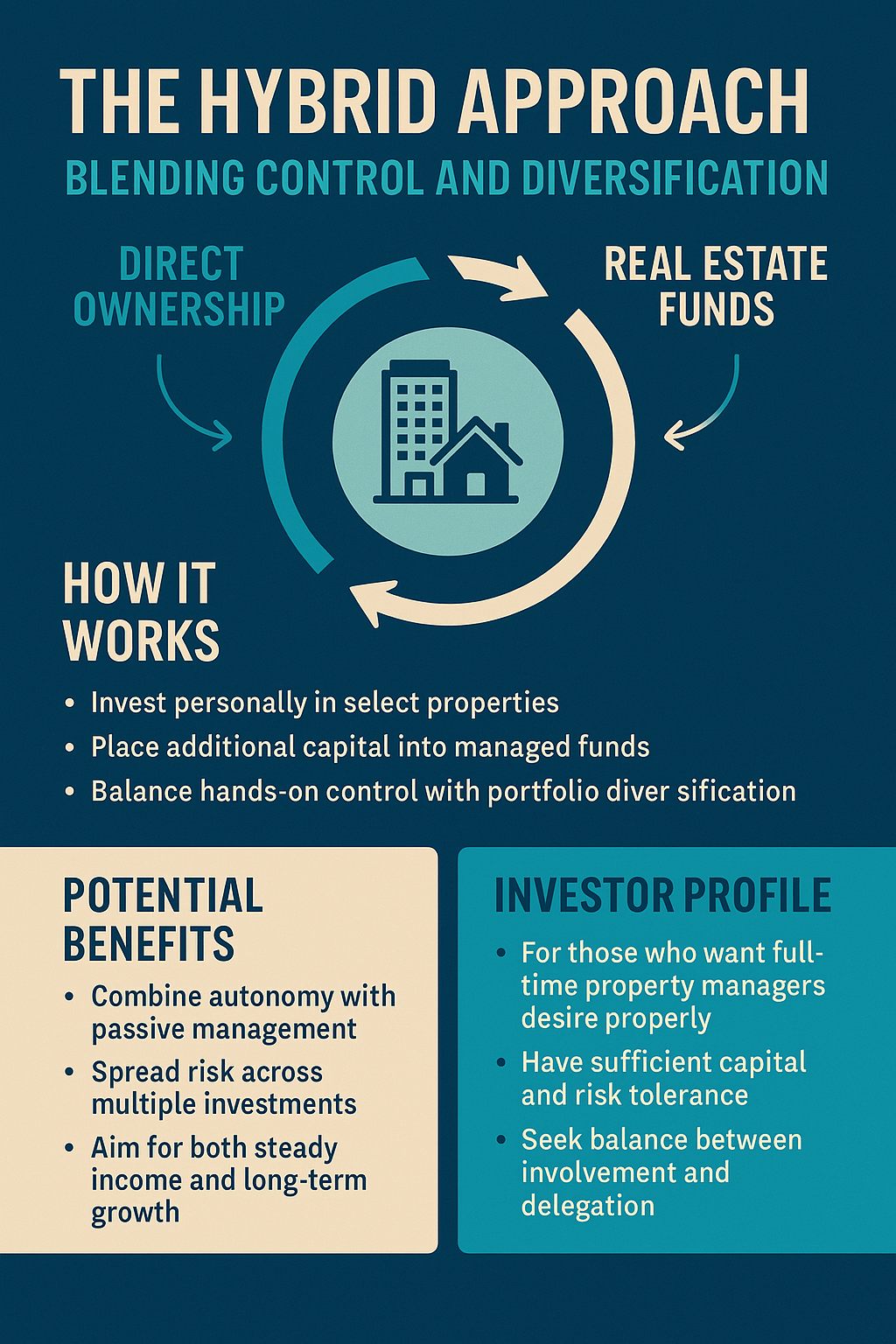
- Hybrid Approaches: Some investors use both strategies—owning a few rental units while diversifying additional capital into funds for broader exposure.
Practical Example
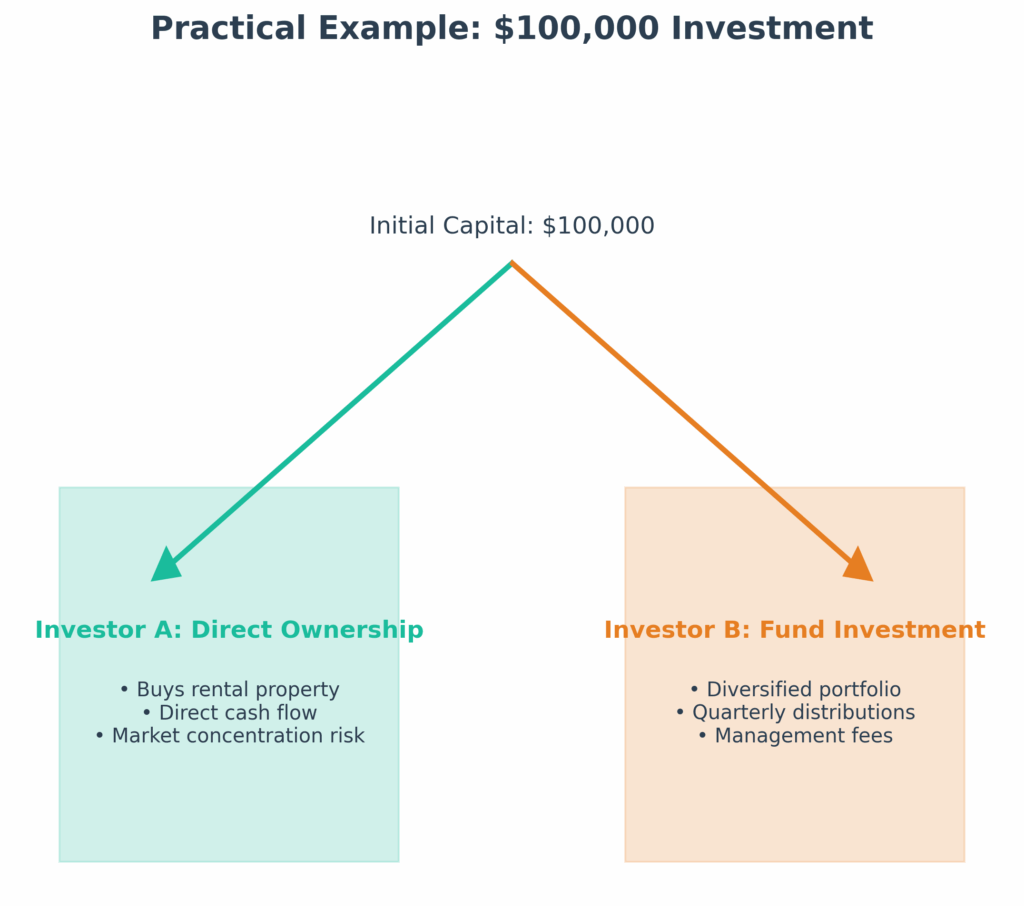
Imagine two investors with $100,000 to allocate:
- Investor A buys a rental property. They benefit from direct cash flow and potential appreciation but are responsible for tenant issues, maintenance, and the risk of vacancies. Their wealth is tied to one market.
- Investor B places capital into a real estate fund. They receive quarterly distributions from a diversified portfolio managed by professionals. Their returns may be steadier, but they have less control and must accept management fees.
Neither strategy is inherently “better”—the right choice depends on personal objectives and resources.
Final Thoughts
Both direct ownership and real estate funds are viable ways to participate in one of the world’s most enduring asset classes. Direct ownership offers autonomy and potential outsized returns but comes with significant responsibility and concentrated risk. Real estate funds provide diversification, ease of access, and professional oversight but require trust in managers and acceptance of fees.
For many, the decision isn’t either/or. Blending strategies can balance the benefits of control with the advantages of diversification. In today’s evolving real estate landscape, investors have more options than ever to tailor their portfolios to their goals.