

This Content Is Only For Subscribers
When people first hear about decentralized finance (DeFi), it often sounds too good to be true: double-digit interest rates, instant loans, and the ability to trade or lend without a bank in sight. But as with any financial innovation, risks lurk beneath the surface. For every success story of early adopters earning life-changing returns, there are cautionary tales of hacks, crashes, and unexpected losses.
Understanding these risks is crucial for anyone curious about DeFi. Unlike traditional banks, where deposit insurance and regulations provide safety nets, DeFi puts responsibility squarely on the user. Here are the main risks you should know about before dipping your toes into the decentralized waters.
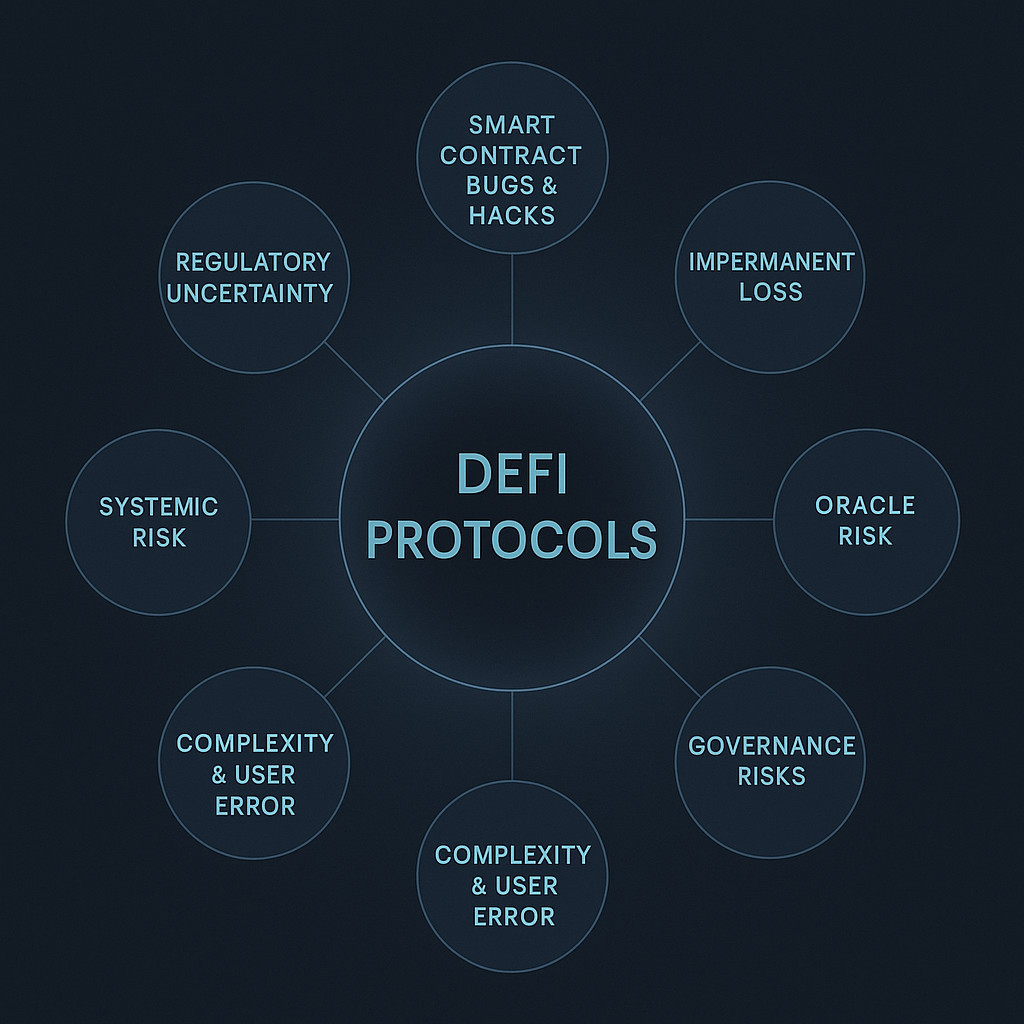
1. Smart Contract Bugs and Hacks
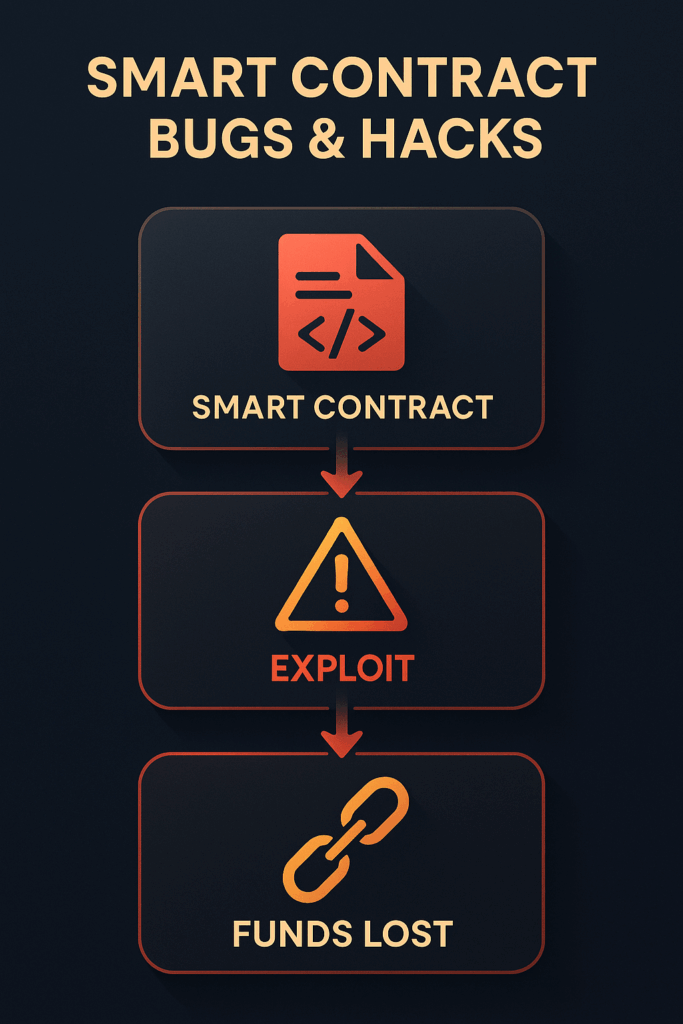
At the heart of DeFi are smart contracts—self-executing code that automates lending, borrowing, and trading. The advantage is transparency: anyone can inspect the code. The downside is finality: once a contract is exploited, funds are usually gone forever.
- Example: In 2022, the Ronin bridge hack (used in Axie Infinity’s ecosystem) drained over $600 million due to compromised validators.
- Lesson: Even well-known protocols can harbor vulnerabilities. Audits reduce but don’t eliminate this risk.
2. Impermanent Loss
Providing liquidity to decentralized exchanges like Uniswap or Curve can generate fees, but it also exposes investors to impermanent loss. This happens when token prices diverge significantly.
- Simple example: If you provide ETH and USDC to a pool, and ETH’s price skyrockets, the pool automatically rebalances your assets. You might end up with fewer ETH than if you had simply held them.
- Lesson: “Passive income” isn’t always as passive or profitable as it looks.
3. Over-Collateralization and Liquidations
Unlike banks that check credit histories, DeFi lending relies on over-collateralization. Borrowers must lock up assets worth more than their loan. If collateral values drop, the system automatically liquidates them.
- Example: During the 2022 crypto downturn, billions were liquidated on protocols like Aave and Compound as token prices plunged.
- Lesson: Automatic liquidations can happen in minutes, leaving no time to react.
4. Oracle Risk
Smart contracts often rely on oracles—data feeds that supply price information. If oracles are manipulated or fail, protocols can malfunction.
- Example: In 2020, attackers exploited low-liquidity assets to trick price oracles and drain lending pools.
- Lesson: Reliable oracles like Chainlink have improved security, but dependency on external data is still a weak point.
5. Governance Risks
Many DeFi platforms are “community governed” via tokens. In theory, this is democratic. In practice, large token holders (so-called “whales”) can dominate decisions.
- Example: In some cases, whales have pushed through proposals that benefit themselves at the expense of smaller investors.
- Lesson: Decentralized doesn’t always mean equitable.
6. Regulatory Uncertainty
DeFi exists in a legal gray zone. Governments around the world are still deciding how to regulate it.
- Possible outcomes:
- Restrictions on stablecoins.
- Licensing requirements for developers or interfaces.
- Taxation and reporting rules that make participation harder.
- Lesson: Regulation could either legitimize DeFi or curb its growth dramatically.
7. Complexity and User Error
Traditional banking is designed to be simple for customers. DeFi is not. A single mistake—like sending tokens to the wrong address—can result in irreversible loss.
- Example: Many newcomers have accidentally lost funds by interacting with fraudulent copies of real protocols.
- Lesson: Always double-check addresses and contracts. In DeFi, there’s no customer support line to call.
8. Systemic Risk and Cascading Failures
DeFi is built like a stack of “money Legos.” Assets from one protocol are reused in another, which may be connected to yet another. This composability creates efficiency but also fragility.
- Example: The collapse of Terra/Luna in 2022 rippled across the ecosystem, wiping out billions in connected projects like Anchor Protocol.
- Lesson: When one domino falls, the chain reaction can be devastating.
Balancing Innovation and Risk
None of these risks mean DeFi has no future. In fact, the industry has responded by:
- Funding independent security audits.
- Building insurance-like products (e.g., Nexus Mutual) to cover losses.
- Improving oracle systems and governance models.
Still, the risks remain substantial, especially for inexperienced users.
Lessons for Novice Investors
Even if you don’t plan to farm yields or borrow against crypto, DeFi’s risks hold broader investing lessons:
- There’s no such thing as risk-free return. High yields almost always come with hidden dangers.
- Technology risk is real. Just as a software bug can crash a protocol, even large companies in traditional finance face cyber risks.
- Diversification matters. Don’t put all your eggs in one pool, token, or strategy.
- Education is protection. The more you understand the mechanics, the less likely you’ll be blindsided.
- Skepticism is healthy. If something promises 20% “guaranteed” returns, ask where it comes from.
Final Thoughts
DeFi is one of the most exciting experiments in modern finance. It’s fast, transparent, and innovative. But it’s also fraught with dangers—many of them unfamiliar to traditional investors.
For novice investors, the key isn’t to avoid DeFi entirely, but to approach it with eyes wide open. In finance, as in life, opportunity and risk are two sides of the same coin. Understanding both is what separates sustainable participation from costly mistakes.