

This Content Is Only For Subscribers
Investing in real estate can take many forms, from buying a personal home to participating in large-scale investment funds. For investors seeking stability and predictable returns, core real estate funds are often the starting point. These funds focus on high-quality, fully leased properties in prime locations, aiming to deliver steady income and low volatility.
In this article, we’ll break down what core real estate investing is, how it works, its advantages and drawbacks, and how it fits into a diversified portfolio.
What Is Core Real Estate Investing?
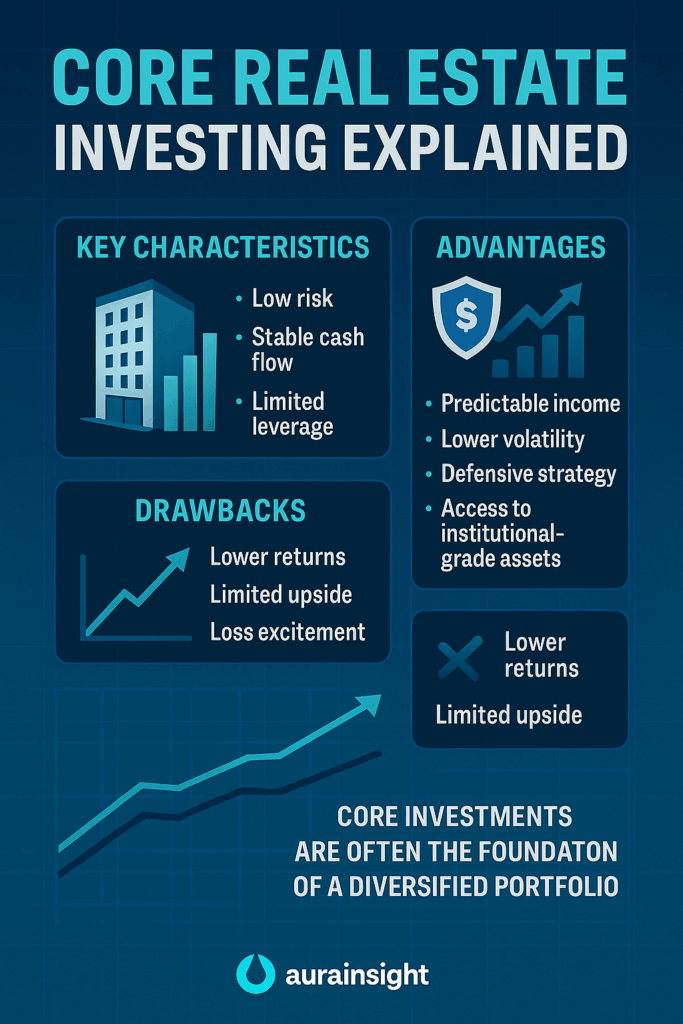
Core real estate investing is considered the conservative end of the real estate investment spectrum. Unlike higher-risk strategies such as value-add or opportunistic funds, core funds acquire properties that are already stabilized, fully leased, and located in major urban centers or highly desirable locations.
Key Characteristics
- Low Risk: Core properties typically have reliable tenants and long-term leases, minimizing vacancy risk.
- Stable Cash Flow: Rental income is predictable, which makes these funds attractive to investors seeking consistent returns.
- Limited Leverage: Core funds often use minimal debt to reduce financial exposure.
- Prime Locations: Properties are usually in major cities or highly sought-after neighborhoods, ensuring ongoing demand.
Examples of typical core assets include:
- Class A office buildings in central business districts
- Luxury or high-end apartment complexes in urban cores
- Retail centers with long-term anchor tenants
- Industrial warehouses located near key transportation hubs
How Core Real Estate Funds Work
Core funds pool capital from multiple investors, often through private partnerships or institutional vehicles. Fund managers then acquire and manage stabilized properties, focusing on maintenance, tenant retention, and operational efficiency rather than redevelopment or repositioning.
Investors in core funds benefit from:
- Professional Management: Experienced managers handle leasing, property maintenance, and financial reporting.
- Diversification: Funds typically hold multiple properties, reducing the impact of underperformance in any single asset.
- Liquidity Considerations: While not as liquid as publicly traded REITs, private core funds generally offer a more predictable cash flow schedule than opportunistic investments.
Example
A core fund may purchase a fully leased Class A office building in downtown Chicago, with tenants under long-term leases. The fund’s role is to maintain the building, collect rent, and distribute steady income to investors. No major renovations or repositioning are required, which keeps risk relatively low.
Advantages of Core Real Estate Investing
1. Predictable Income
With long-term leases in place, investors can expect steady rental income, making core real estate funds appealing for income-focused portfolios.
2. Lower Volatility
Because the properties are high-quality and well-located, they tend to maintain value during economic downturns. Core funds generally exhibit lower volatility than equities, value-add, or opportunistic real estate investments.
3. Defensive Strategy
Core funds are often seen as a defensive allocation in a diversified portfolio. During recessions or periods of market uncertainty, Class A properties retain tenants and continue generating income, providing a buffer against broader market volatility.
4. Access to Institutional-Grade Assets
For individual investors, core funds provide exposure to high-value commercial real estate that would be difficult or impossible to acquire independently.
Drawbacks of Core Real Estate Investing
While core real estate offers stability, it comes with certain limitations:
- Lower Returns
Because these funds focus on low-risk, stable assets, annualized returns tend to be 5–8%, lower than those of value-add or opportunistic strategies. - Limited Upside
There is minimal potential for significant appreciation, as the properties are already optimized and in prime locations. - Less Excitement
Investors looking for “flips” or high-growth opportunities may find core funds less appealing due to their conservative nature.
Core Real Estate in a Portfolio
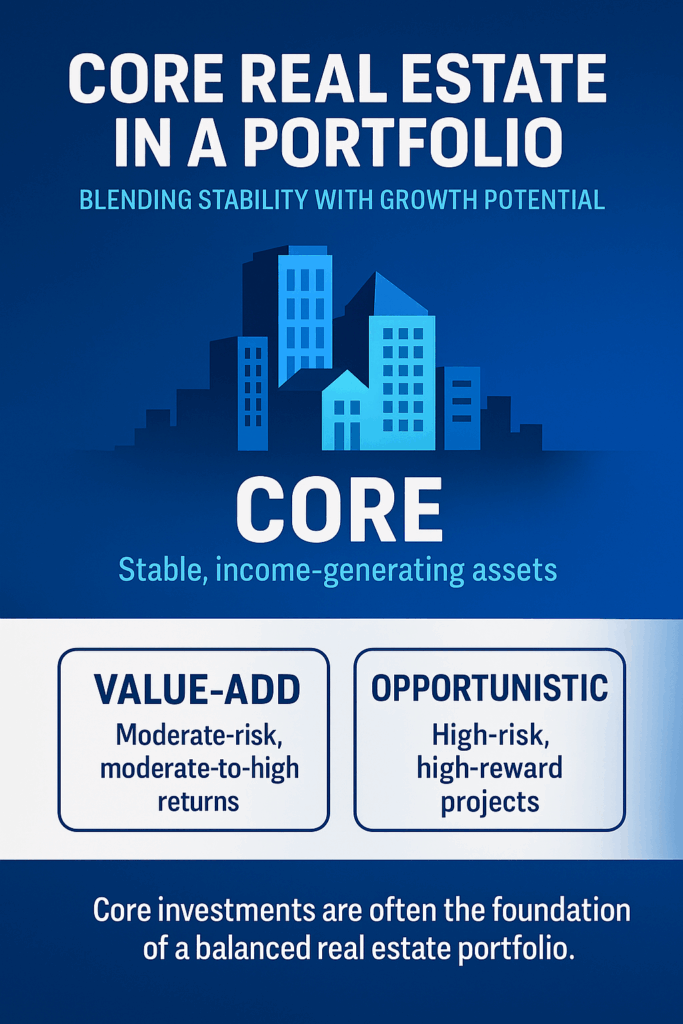
Core real estate is often the foundation of a diversified real estate portfolio. By combining low-risk core investmentswith higher-risk value-add or opportunistic funds, investors can achieve a balanced mix of steady income and growth potential.
Diversification Example
A diversified investor might allocate their real estate investments as follows:
- 50% Core: Stable income from Class A properties
- 30% Value-Add: Moderate-risk opportunities with improvement potential
- 20% Opportunistic: High-risk projects targeting high returns
This combination provides income, growth, and protection against market volatility.
Market Trends and Considerations
Urbanization and Demand: Core properties in major cities benefit from strong, ongoing demand, especially in sectors like multifamily, logistics, and office buildings with prime locations.
Interest Rates and Inflation: Core real estate tends to perform well in low-to-moderate interest rate environments. Long-term leases can help offset inflationary pressures, although rising rates may affect new acquisitions.
Global Opportunities: While many core funds focus on U.S. markets, investors increasingly look to international cities like London, Tokyo, or Sydney for stable, income-generating assets.
ESG Considerations: Investors and managers are placing growing emphasis on sustainability. Energy-efficient buildings, green certifications, and responsible tenant practices can enhance property value and attractiveness to tenants.
Practical Tips for Novice Investors
- Understand Your Goals: Core funds are ideal for income-oriented, conservative investors.
- Review Fund Structure: Check whether the fund is a private partnership, REIT, or other vehicle, and understand the associated fees.
- Assess Manager Experience: Experienced fund managers are critical to stable performance.
- Evaluate Location and Property Quality: Prime locations and Class A assets reduce risk.
- Check Liquidity and Exit Terms: Core funds are relatively stable, but some may have multi-year lock-ups.
Conclusion
Core real estate investing is a conservative strategy focused on stability, predictable income, and low volatility. While the returns are modest compared to higher-risk strategies, core funds provide a strong foundation for a diversified portfolio.
For novice investors, understanding core real estate funds is an essential step before exploring value-add or opportunistic opportunities. By incorporating core real estate into an investment mix, investors can enjoy steady cash flow, capital preservation, and long-term portfolio resilience.