

In What Is a Real Estate Fund?, we explored the big picture of how funds work and why they’re appealing to investors. But sometimes the clearest way to understand an idea is to see how it plays out in real life. That’s where case studies come in.
Today, we’ll walk through the journey of a typical passive investor—a professional with a steady income, limited free time, and a desire to put money to work in real estate without becoming a landlord. The path is one that many readers will find familiar: balancing risk, navigating choices, and ultimately building a stream of real estate income through funds.
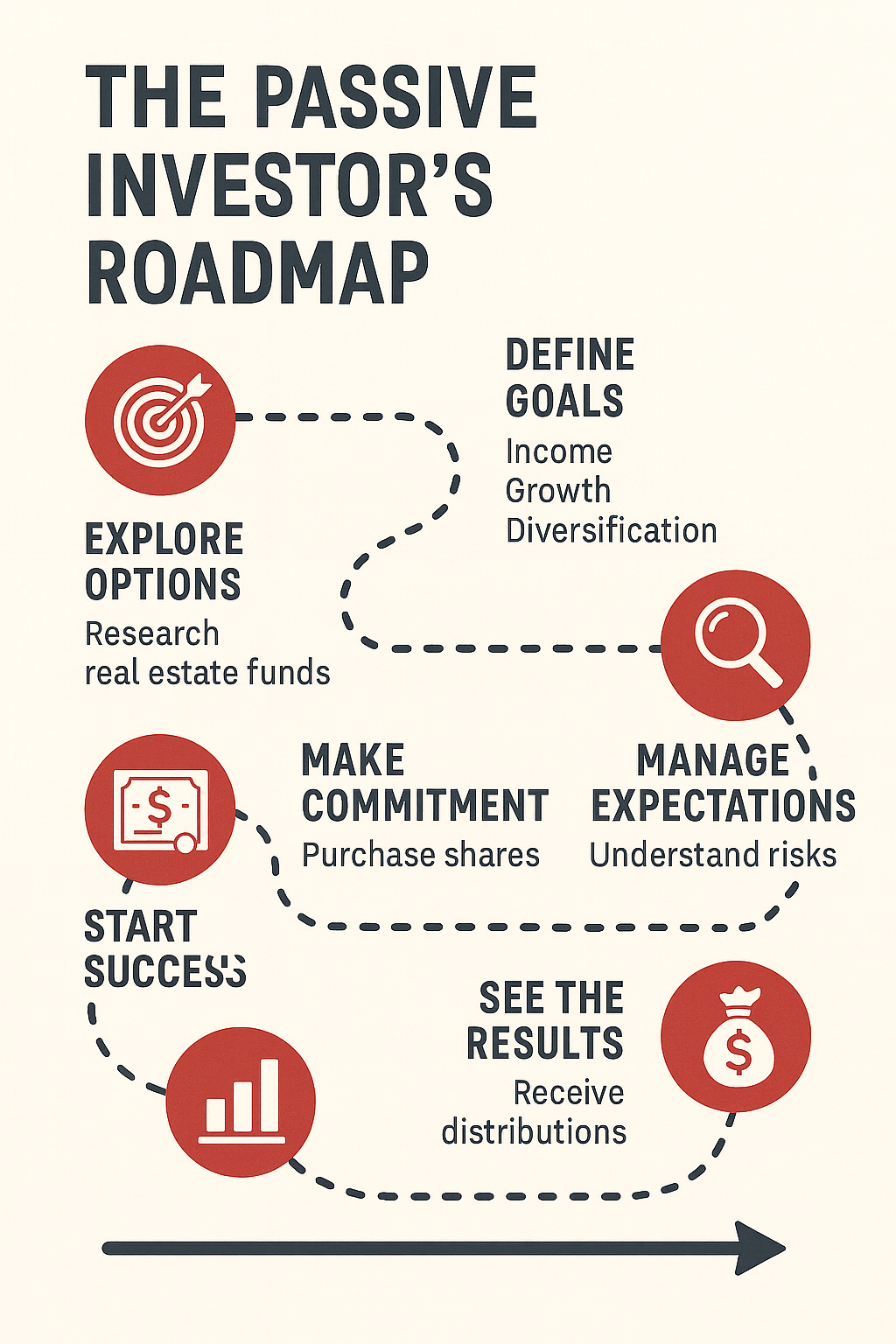
Step One: Defining the “Why”
Every investing journey begins with a goal. For passive investors, the goals often fall into a few categories:
- Income: Building reliable cash flow to supplement a salary or retirement.
- Growth: Growing wealth for long-term financial independence.
- Diversification: Reducing reliance on the stock market.
Our investor in this case—let’s call her Maria—is a mid-career professional. She earns well, maxes out her 401(k), and owns her primary home. But she doesn’t want the hassles of tenants, repairs, or late-night calls. She’s drawn to real estate funds because they offer access to property income without the landlord responsibilities.
Step Two: Exploring Options
When Maria started looking into real estate funds, the choices seemed overwhelming. There were public REITs, private limited partnerships, and individual syndications. Each came with trade-offs:
- REITs offered liquidity but were tied to stock market swings.
- LPs promised professional management and attractive returns, but locked up capital for years.
- Syndications gave transparency into single deals, but carried concentration risk.
She realized structure mattered just as much as strategy. It wasn’t about finding the “perfect” fund, but about matching options to her own goals.
Step Three: Making the First Commitment
Maria’s first step was conservative: she purchased shares in a publicly traded REIT through her IRA. It gave her exposure to income-producing real estate and the comfort of liquidity. The dividends showed up quarterly, reinforcing her confidence.
But as she grew more comfortable, she wanted to expand into private funds. With the help of her financial advisor, she set aside a portion of her portfolio for a multifamily-focused LP. The fund promised a preferred return and targeted upside from value-add renovations.
This was a bigger leap—her capital would be tied up for seven years—but she liked the alignment of interests between investors and managers.
Step Four: Managing Expectations
Passive investing doesn’t mean passive thinking. Maria learned that returns take time, distributions can vary, and private funds require patience. The REIT gave her immediate income, while the LP required her to wait a few quarters before cash flow began.
She also discovered the importance of transparency. Regular updates from the fund manager—covering occupancy, renovations, and market conditions—helped her stay confident in the investment.
Step Five: Seeing the Results
Fast forward several years, and Maria’s portfolio looks very different. The REIT dividends provide steady cash flow inside her IRA, while the LP distributions supplement her after-tax income. When the LP eventually sells its assets, she expects a sizeable profit share.
The key takeaway? Passive real estate investing wasn’t about chasing instant results. It was about layering strategies—combining liquid, low-barrier options with longer-term commitments—and letting time do the work.
Lessons for Other Investors
Maria’s journey highlights several key lessons for anyone considering real estate funds:
- Start Small: Begin with liquid, accessible options like REITs to build confidence.
- Diversify: Balance between public and private funds to manage risk.
- Align Goals: Match fund structure to your time horizon and cash flow needs.
- Stay Engaged: Even passive investors should read updates, ask questions, and monitor performance.
No two journeys are the same, but the principles apply broadly. Whether you’re looking for steady retirement income or long-term growth, real estate funds can play a role—as long as you enter with clear expectations.
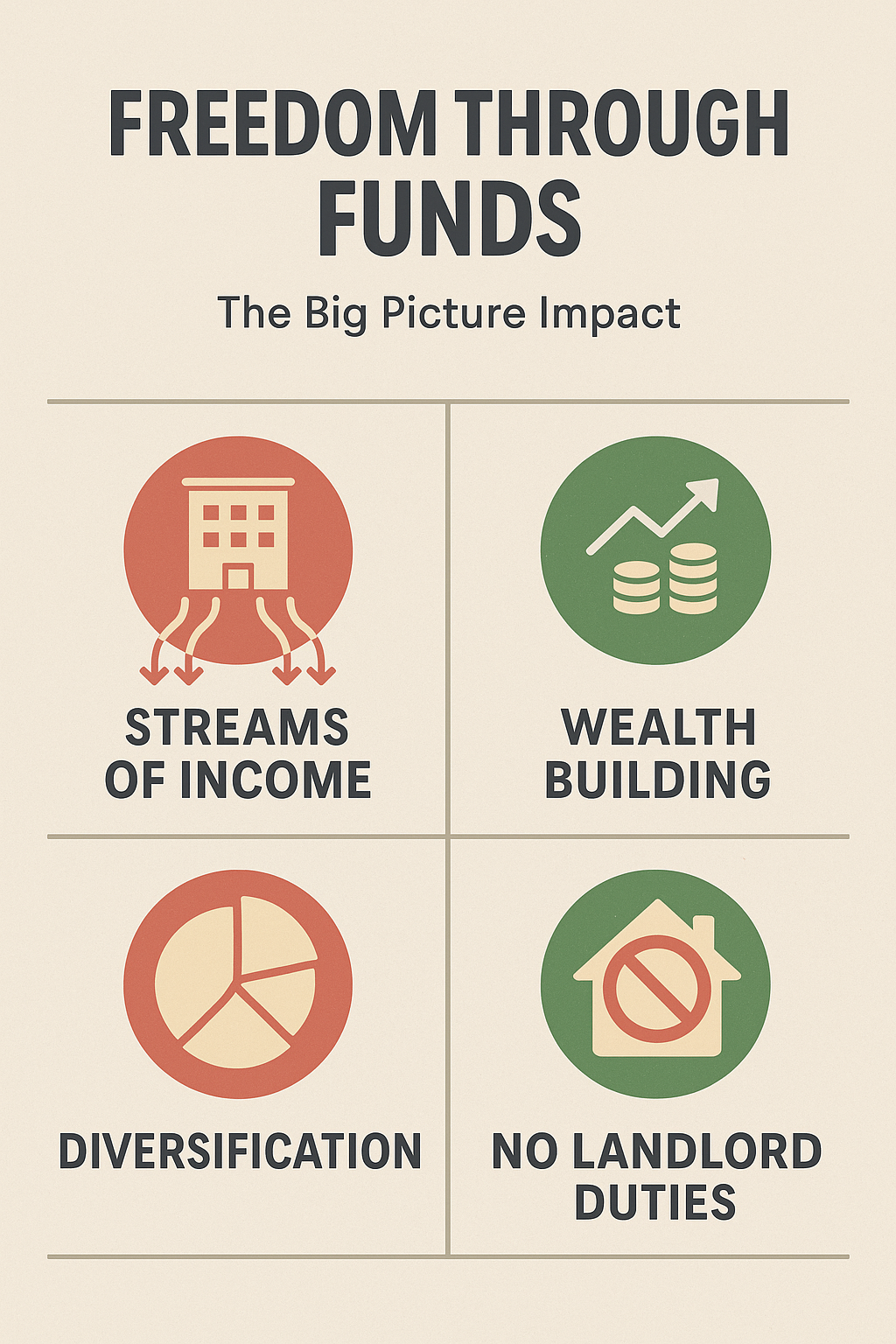
The Bottom Line
Case studies like Maria’s show that real estate funds are more than just abstract investment vehicles. They’re tools that real people use to build wealth, reduce risk, and create income streams without becoming full-time landlords.
In the end, passive real estate investing is about trade-offs. You give up control but gain freedom. You accept illiquidity in exchange for higher returns. You trust professionals to manage the details so you can focus on your career, family, or other pursuits.
As Case Study: A Passive Investor’s Journey to Real Estate Income illustrates, the journey isn’t about quick wins—it’s about building something durable, one decision at a time.