

This Content Is Only For Subscribers
Private equity has always chased industries with strong cash flows and growth potential. In recent years, few sectors have attracted as much attention—or scrutiny—as healthcare. From hospitals and nursing homes to medical devices and specialty clinics, private equity firms have poured billions into reshaping how care is delivered, financed, and even consumed.
For everyday investors, the story of private equity in healthcare is both fascinating and controversial. On one hand, private capital has funded innovation, expanded access, and improved efficiency. On the other, it has raised concerns about costs, patient outcomes, and whether profit motives belong in such a critical industry.
Let’s unpack how private equity approaches healthcare, the opportunities it sees, the criticisms it faces, and the lessons that individuals can take away.
Why Healthcare Attracts Private Equity
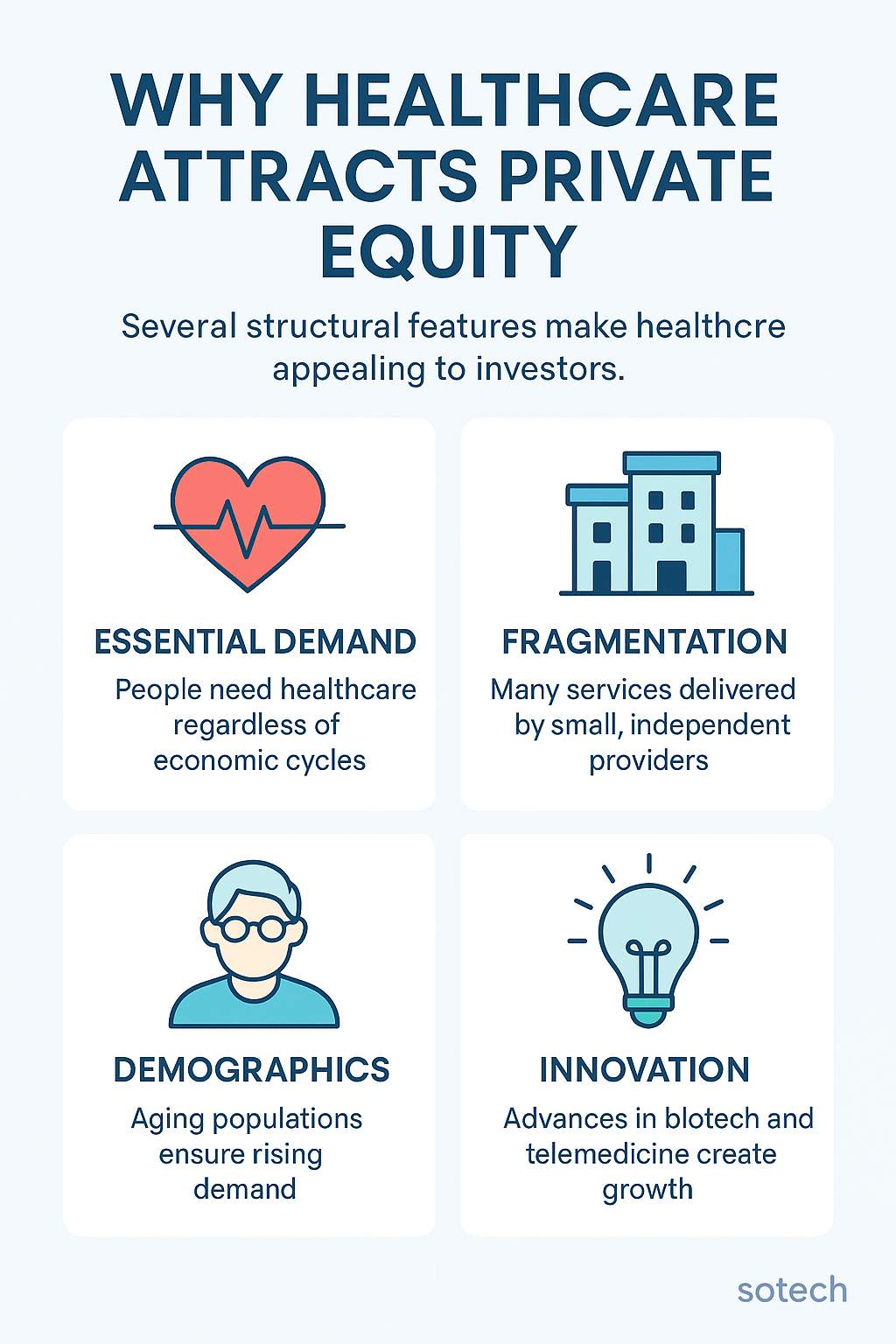
Several structural features make healthcare appealing to investors:
- Essential demand: People need healthcare regardless of economic cycles. That makes revenues relatively stable compared to discretionary industries like retail or travel.
- Fragmentation: Many healthcare services are delivered by small, independent providers. Consolidating them under one umbrella can create scale, bargaining power, and efficiency.
- Demographics: Aging populations in developed countries ensure rising demand for hospitals, long-term care, and specialized treatments.
- Innovation: Advances in biotech, telemedicine, and medical devices open opportunities for high-growth bets.
In other words, healthcare offers both defensiveness (stable demand) and growth potential—a combination private equity loves.
Where Private Equity Invests in Healthcare
Private equity’s involvement in healthcare spans a wide range:
- Hospitals and Clinics – Acquiring regional hospital systems or specialty clinics like dermatology or orthopedics.
- Long-Term Care – Nursing homes and rehabilitation facilities, where demographics drive steady demand.
- Medical Devices and Supplies – Backing companies that manufacture tools, implants, or diagnostic equipment.
- Pharmaceutical Services – Investing in contract research organizations, generics, or distribution.
- Technology and Data – Telehealth platforms, electronic health records, and healthcare analytics.
By spreading across these areas, private equity firms aim to capture both steady cash flows (nursing homes, hospitals) and high-growth opportunities (tech-enabled services).
Case Study #1: KKR and HCA Healthcare
One of the largest healthcare buyouts came in 2006, when KKR, Bain Capital, and Merrill Lynch bought HCA Healthcare, a leading hospital chain, for about $33 billion.
- The rationale: Hospitals had predictable revenue streams and could benefit from operational improvements.
- The outcome: After years of ownership and operational changes, HCA returned to the public markets in 2011. The buyout remains one of the largest healthcare deals in history, showing how private equity targets scale and essential services.
Lesson: Even in sectors with social importance, the fundamentals of private equity—buy, improve, exit—remain the same.
Case Study #2: Blackstone and TeamHealth
In 2017, Blackstone acquired TeamHealth, a major physician staffing firm, for about $6 billion. TeamHealth provides outsourced doctors and nurses to hospitals and clinics.
- The opportunity: Outsourcing medical staffing was a growing trend, allowing hospitals to cut costs.
- The challenge: Critics argued that consolidation reduced competition and may have increased surprise medical billing for patients.
- The exit: Blackstone still owns TeamHealth, navigating regulatory scrutiny and public debate.
Lesson: In healthcare, value creation strategies may spark ethical and political questions.
Benefits of Private Equity in Healthcare
Supporters argue that private equity brings important advantages:
- Capital investment: PE firms provide funding that allows hospitals and clinics to expand facilities, buy new technology, or upgrade infrastructure.
- Operational expertise: Firms often bring professional management practices, improving efficiency in billing, supply chains, and staffing.
- Innovation support: Private equity has backed emerging healthcare technologies like telemedicine, helping them scale rapidly.
For example, PE-backed urgent care chains expanded access to convenient, lower-cost care, meeting consumer demand for alternatives to traditional emergency rooms.
Criticisms and Concerns
But private equity’s role in healthcare has drawn sharp criticism:
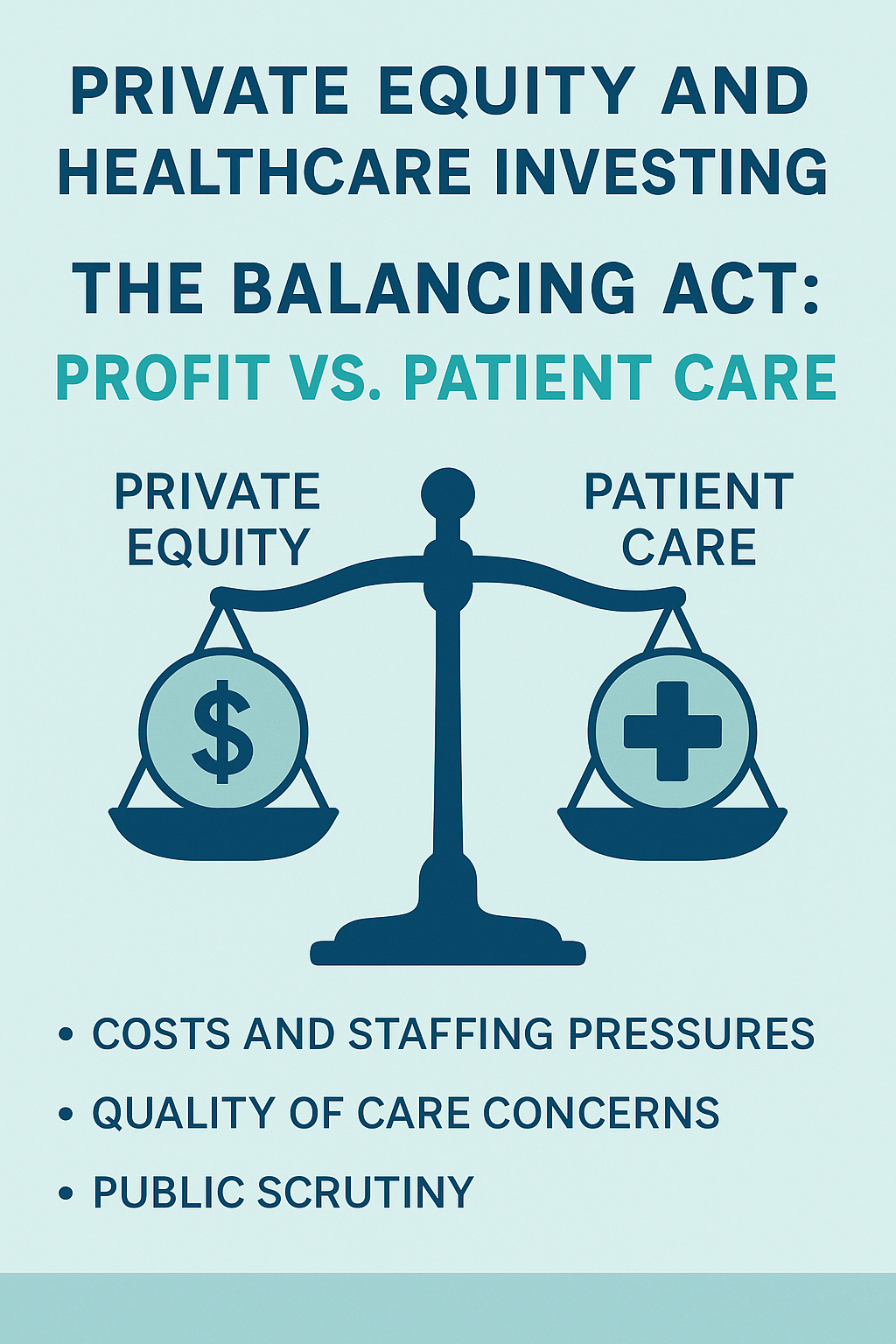
- Cost pressures: Heavy debt loads can push providers to cut staff, raise prices, or limit services to maintain profitability.
- Patient impact: Studies have suggested mixed outcomes, with some PE-owned facilities showing lower staffing levels or higher mortality rates.
- Transparency: Healthcare is already complex; private ownership can make it harder for patients and regulators to track performance.
The tension lies in balancing financial returns with the social mission of healthcare. Unlike a hotel or retail chain, healthcare isn’t just another consumer product—it’s life and death.
What Novice Investors Can Learn
While individuals can’t usually invest directly in these massive buyouts, the lessons still apply:
- Stable demand industries are attractive. Just as healthcare is recession-resistant, so are sectors like utilities or consumer staples.
- Consolidation creates opportunities. In fragmented industries (healthcare clinics, local services), roll-ups can unlock efficiency—but may also raise antitrust or ethical concerns.
- Debt has consequences. Leveraging essential services like hospitals raises public scrutiny. For personal investing, it’s a reminder that financial choices affect not just profits, but people.
- Watch the balance between profit and purpose. In any investment—whether choosing a stock, a mutual fund, or even a career—aligning financial goals with values is increasingly important.
Final Thoughts
Private equity’s expansion into healthcare shows both the promise and perils of finance-driven change. Capital can fund better facilities, wider access, and new technologies. But aggressive financial strategies can also strain patient care and spark controversy.
For novice investors, the key takeaway is perspective: every investment has ripple effects. Whether you’re allocating your retirement savings or analyzing a company’s stock, remember that financial outcomes are tied to real-world impacts. In healthcare, those impacts couldn’t be more personal.