

This Content Is Only For Subscribers
For decades, real estate investors focused on the traditional drivers of value: location, cash flow, and appreciation. While those fundamentals still matter, a new factor has become impossible to ignore: ESG—short for Environmental, Social, and Governance.
Across the financial world, ESG has gone from a niche concern to a mainstream requirement. In real estate, it has special resonance because property directly shapes the environment we live in, the communities we build, and the governance structures that oversee billions of dollars in assets. For investors, understanding ESG is no longer optional—it’s central to long-term success.
What Does ESG Mean in Real Estate?
- Environmental (E): The carbon footprint of buildings, energy efficiency, water conservation, waste management, and resilience to climate change.
- Social (S): How buildings serve people—accessibility, affordable housing, tenant well-being, and community integration.
- Governance (G): Transparency, fund management ethics, shareholder rights, and alignment between managers and investors.
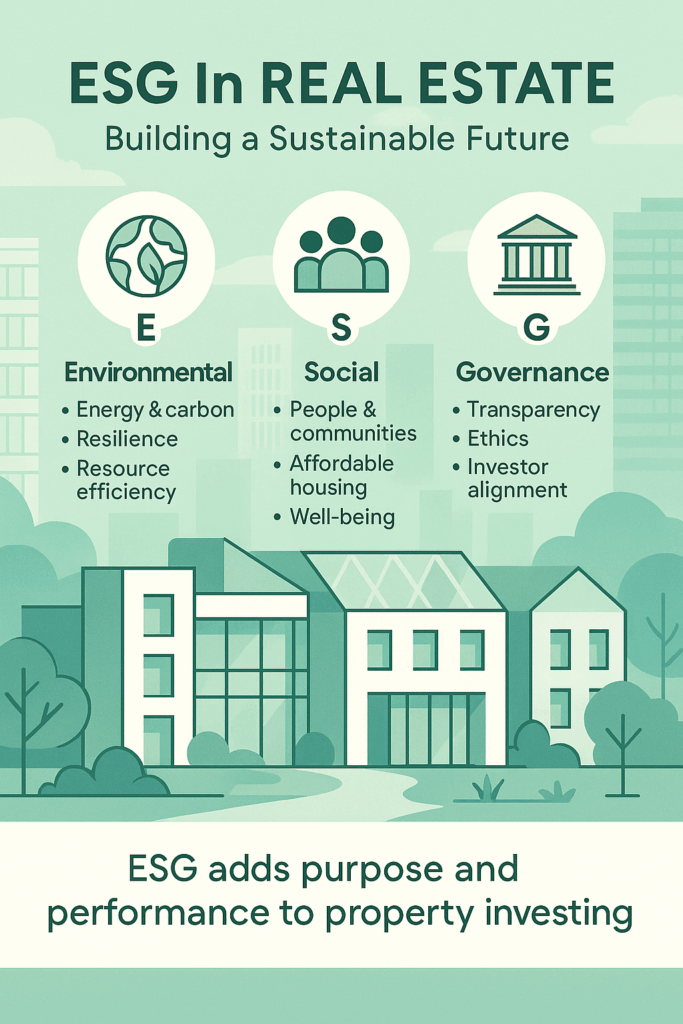
Real estate is unique in that all three ESG pillars are highly visible. A green-certified office tower, a mixed-income housing development, or a fund with transparent governance structures all show ESG in action.
Why ESG Is Transforming Real Estate Funds
Regulatory Pressure
Governments worldwide are tightening regulations:
- Europe: The EU’s Sustainable Finance Disclosure Regulation (SFDR) requires funds to disclose ESG strategies.
- U.S.: The SEC has proposed climate-related disclosure rules that will impact real estate managers.
- Cities: Local mandates like New York City’s Local Law 97 penalize buildings with excessive emissions.
Investor Demand
Institutional investors—from pension funds to sovereign wealth funds—are increasingly requiring ESG alignment. Many will not allocate capital to funds that ignore sustainability benchmarks.
Market Differentiation
Properties with green certifications often outperform peers:
- Lower utility bills.
- Higher occupancy rates.
- Premium rental values.
Environmental: The Green Building Imperative
Certifications and Standards
- LEED (Leadership in Energy and Environmental Design).
- BREEAM (Building Research Establishment Environmental Assessment Method).
- WELL Building Standard, which emphasizes health and wellness.
Certified properties are more attractive to tenants and often enjoy better financing terms.
Climate Risk and Resilience
Investors are increasingly mapping portfolios against climate risk:
- Flood zones, wildfire risk, and heat exposure all impact valuation.
- Insurance costs are rising in vulnerable areas, reducing returns.
Case example: Miami multifamily buildings face increasing flood-risk premiums, pushing investors toward more resilient inland areas.
Social: Real Estate’s Human Impact
Buildings are not just bricks and mortar—they shape lives.
- Affordable housing initiatives: Funds that incorporate affordable units may receive tax incentives or public subsidies.
- Community integration: Mixed-use developments with parks, shops, and services strengthen neighborhoods.
- Tenant well-being: Features like natural light, wellness amenities, and safety measures improve tenant satisfaction and retention.
For investors, socially aligned projects can improve reputations and attract capital from socially conscious institutions.
Governance: Trust and Transparency
Governance may be less visible than solar panels or affordable units, but it’s critical.
- Fund management accountability: Clear reporting and ethical standards reduce risk of mismanagement.
- Investor protections: Strong governance ensures fairness in decision-making, fee structures, and exit strategies.
- Alignment of interests: ESG-focused funds often emphasize long-term stewardship over short-term gains.
Benefits of ESG Integration in Real Estate Funds
Stronger Risk Management
- Properties resilient to regulation and climate risk avoid costly surprises.
Higher Returns
- Green-certified properties command premium rents and valuations.
Capital Access
- ESG alignment opens doors to capital from pension funds, insurers, and sovereign wealth funds.
Tenant Loyalty
- Healthier, more inclusive buildings attract and retain tenants.
Future-Proofing
- Aligning with ESG trends protects portfolios against obsolescence.
Challenges and Criticisms
While ESG integration is growing, challenges remain:
- Greenwashing: Some funds market ESG credentials without meaningful actions.
- Data consistency: ESG metrics vary widely, making comparisons difficult.
- Upfront costs: Retrofitting buildings for efficiency requires capital outlays.
- Balancing returns: Some critics argue ESG can limit short-term profitability.
For novice investors, the key is to look beyond labels and evaluate whether a fund’s ESG claims are backed by measurable, verifiable strategies.
How Investors Can Approach ESG in Real Estate
- Check certifications: Look for LEED, BREEAM, or WELL ratings.
- Evaluate disclosures: Funds should publish ESG strategies and performance metrics.
- Assess climate risk: Review how properties in the portfolio may be affected by extreme weather.
- Understand governance: Examine fee structures, voting rights, and alignment of interests.
- Think long term: ESG benefits compound over years, not months.
The Future of ESG in Real Estate
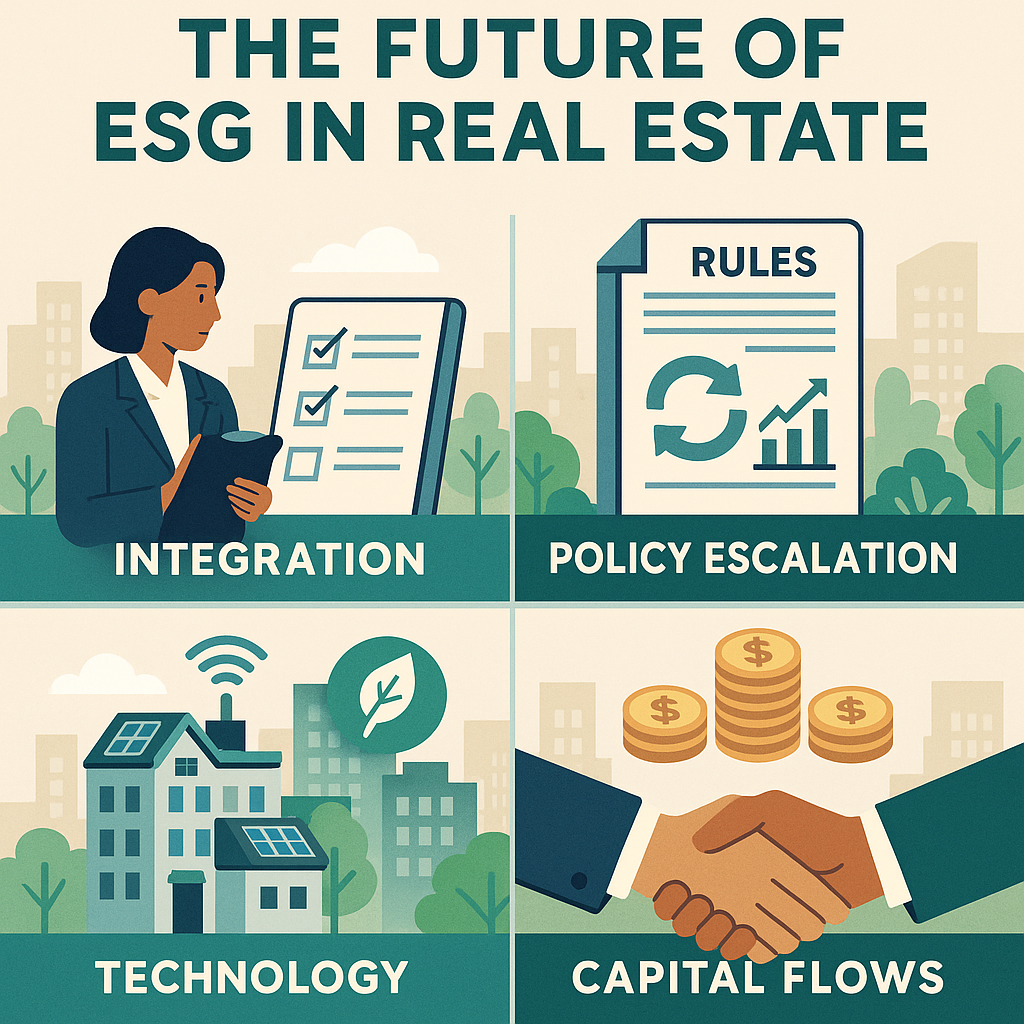
- Integration, not isolation: ESG will become part of standard due diligence, not a separate consideration.
- Technology-enabled tracking: Sensors and smart systems will generate real-time ESG performance data.
- Policy escalation: Governments will continue to tighten rules on emissions, resilience, and transparency.
- Capital flows: The majority of institutional capital will soon be ESG-screened, effectively making ESG compliance a prerequisite.
Final Thoughts
ESG is reshaping real estate investing, not as a trend but as a structural shift. Real estate funds that align with environmental sustainability, social responsibility, and strong governance are better positioned to attract capital, withstand risks, and generate long-term value.
For novice investors, the lesson is clear: ESG is not just about doing good—it’s about doing well. Sustainable, inclusive, and transparent investing is the new baseline for real estate success.