

This Content Is Only For Subscribers
When people think of private equity, they often imagine the buyout: the dramatic takeover of a well-known company, the flood of borrowed money, the bold promises of turnaround. But insiders know that the exit is just as important—if not more so. How a private equity firm eventually sells or restructures a company determines whether all the work and risk were worthwhile.
For novice investors, understanding exit strategies offers insight into how private equity creates returns—and it also highlights timeless lessons about patience, timing, and knowing when to walk away.
Why Exits Matter
Private equity funds don’t hold companies forever. They raise money from investors with the understanding that the capital will be returned—hopefully with profit—within a certain timeframe, usually 7–10 years.
The “exit” is the moment of truth. It’s when paper gains become actual dollars distributed back to pension funds, endowments, and wealthy investors. Even if a private equity firm improves a company’s operations, a poorly executed exit can wipe out years of progress.
That’s why exit planning begins almost as soon as the deal closes.
The Three Main Exit Paths
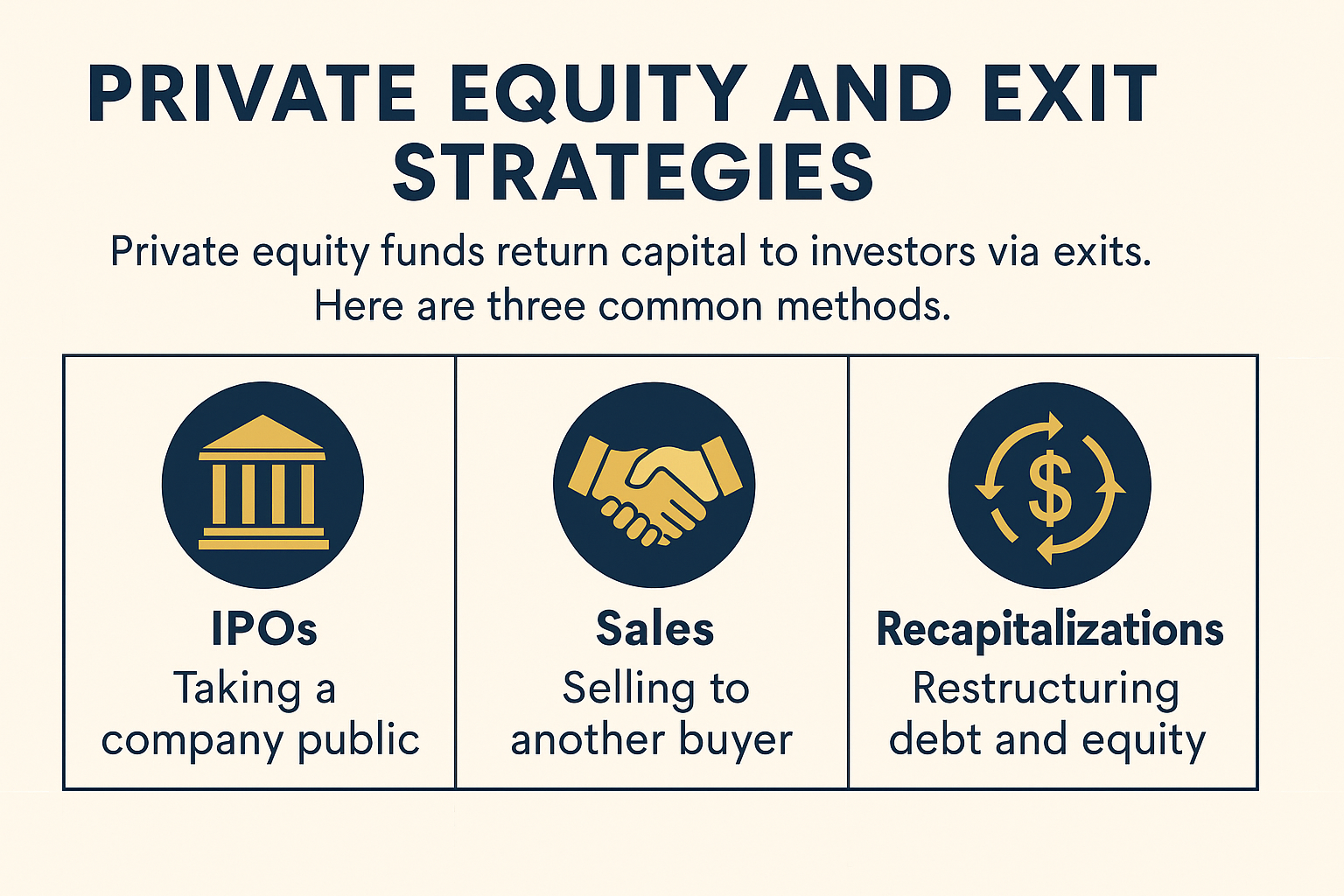
Most private equity exits fall into one of three categories:
- Initial Public Offering (IPO) – selling shares to the public.
- Sale to Another Buyer – often a larger company (strategic acquirer) or another investor.
- Recapitalization – restructuring debt and equity to return cash to investors while retaining ownership.
Let’s break them down.
1. IPOs: Taking a Company Public
An IPO is perhaps the most glamorous exit. The company lists its shares on a stock exchange, raising capital from public investors. The private equity owners typically sell some shares at the IPO and gradually sell the rest over time.
Advantages:
- IPOs can deliver huge proceeds if markets are receptive.
- They provide liquidity: the PE firm can sell in stages rather than all at once.
- Public markets may award high valuations to strong brands.
Challenges:
- Timing is everything. If markets are volatile, IPO plans may stall.
- Being public brings scrutiny—quarterly reporting, analyst coverage, and regulatory oversight.
Example: When Blackstone took Hilton Hotels public in 2013, it was one of the largest hotel IPOs ever. Blackstone used the public markets to gradually sell its stake, ultimately reaping about $14 billion in profit.
Takeaway for individuals: An IPO exit is flashy, but success depends heavily on market conditions, not just company fundamentals.
2. Sales: To Strategics or Other Investors
The most common exit is simply selling the company—either to another corporation (a “strategic” buyer) or another financial investor.
- Strategic sales: A larger company might pay a premium if the target provides synergies (shared supply chains, expanded markets, or new technologies).
- Secondary sales: Another private equity firm may buy the company, seeing further upside or a different strategy.
Advantages:
- More predictable than IPOs; not as dependent on market moods.
- A strategic buyer may pay richly if the deal enhances their core business.
- Offers a clean, one-time exit.
Example: In 2015, a group of investors sold a stake in Allegro, Poland’s largest e-commerce site, to South African giant Naspers for $3.25 billion. Naspers wanted market expansion, and the sellers locked in big gains.
Takeaway for individuals: Just as private equity sells to the highest and best-suited buyer, personal investors should think about who might want to buy their assets down the line—whether that’s selling a stock to the market or a home to a new owner.
3. Recapitalizations: Paying Yourself While Staying In
A recapitalization involves refinancing a company’s debt and equity structure. Typically, the PE firm takes on new debt and uses it to pay a special dividend to investors. The firm may continue to own the company, hoping to benefit from future growth while already having taken some money off the table.
Advantages:
- Provides partial liquidity without losing control.
- Buys time if markets aren’t ripe for an IPO or sale.
- Reduces pressure on the eventual exit.
Risks:
- New debt increases financial risk for the company.
- If business conditions worsen, the recap can backfire.
Example: In 2010, private equity owners of Burger King (3G Capital) used a recap to extract dividends while continuing to hold the chain. Later, Burger King merged with Tim Hortons to form Restaurant Brands International, creating additional value.
Takeaway for individuals: A recap is like refinancing your house and taking cash out—you get liquidity, but you also take on risk.
Timing the Exit
Across all methods, timing is crucial. The same company might fetch wildly different prices depending on interest rates, investor sentiment, or industry trends.
- Booming stock markets make IPOs attractive.
- Consolidation waves push strategic buyers to pay more.
- Low interest rates make debt-funded recaps feasible.
For PE firms, flexibility is everything: the ability to pivot between IPO, sale, or recap based on market windows often determines success.
What Novice Investors Can Learn
Even if you never buy a billion-dollar company, these exit strategies carry practical lessons:
- Plan before you invest. Just as PE firms plan exits early, think about how and when you’ll sell your own investments.
- Stay flexible. Markets change. Be willing to adjust your strategy rather than locking yourself into one path.
- Don’t chase glamour. IPOs make headlines, but steady, quiet sales often generate more consistent results.
- Balance liquidity and risk. A recap is tempting, but extra debt can cause trouble later. For individuals, this mirrors using credit cards or refinancing mortgages—be sure the future cash flows can support the obligation.
- Timing matters. Selling during panic markets can destroy value; patience often pays off.
Final Thoughts
Private equity firms live and die by their exits. The IPO, the sale, and the recapitalization are just different tools for the same goal: turning investments back into cash with a profit.
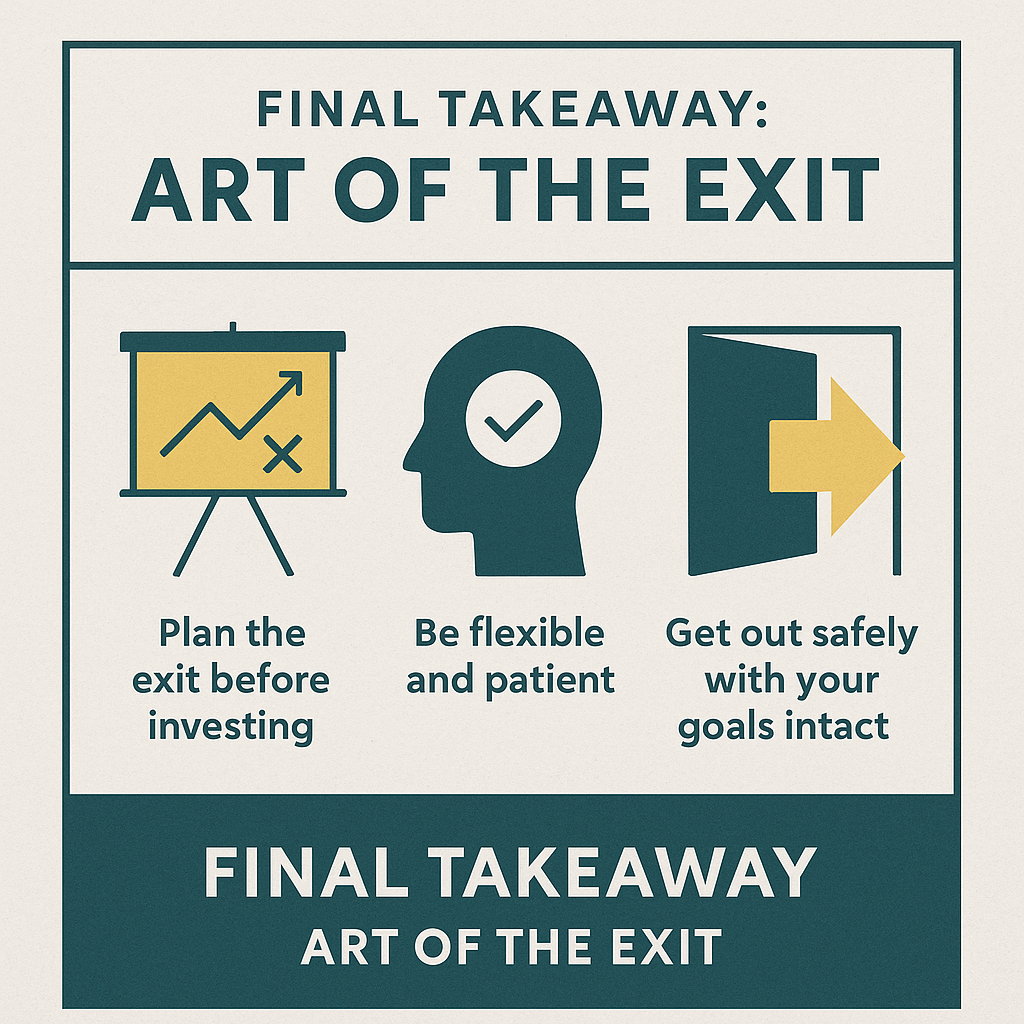
For everyday investors, the lessons are clear. Think about the endgame before you invest, stay adaptable, and remember that patience and discipline matter more than spectacle. The best exit isn’t always the flashiest—it’s the one that gets you safely home with your goals intact.