

This Content Is Only For Subscribers
When you invest in a traditional fund, you rarely worry about where your money physically sits. Securities are held at a custodian bank, insured against fraud, and tightly regulated. In the world of digital assets, however, custody and security are at the very heart of the conversation. How crypto funds safeguard digital tokens—whether it’s Bitcoin, Ethereum, or a basket of altcoins—can determine both their stability and their investors’ confidence.
For novice investors, understanding how custody works in crypto funds is essential. This isn’t just a back-office detail—it’s a critical factor in evaluating risk.
What Does Custody Mean in Crypto?
In traditional finance, “custody” simply means who holds your assets. In crypto, it’s trickier. Since cryptocurrencies exist on decentralized blockchains, whoever controls the private keys—the digital equivalent of a password—controls the assets. If the keys are lost, stolen, or compromised, the assets are gone. There’s no helpline to call and no way to reverse transactions.
Because of this, crypto custody isn’t just about bookkeeping. It’s about advanced technology, layered security, and trusted counterparties.
The Rise of Professional Custodians
In the early days of Bitcoin, funds often stored assets themselves—sometimes on laptops or hardware wallets. As the industry matured, professional custodians emerged, offering institutional-grade solutions. Companies like Coinbase Custody, BitGo, and Anchorage Digital built businesses around secure storage with insurance coverage, regulatory oversight, and independent audits.
These custodians typically use a mix of cold storage (keys kept offline, safe from hackers) and multi-signature wallets(requiring multiple parties to approve a transaction). Together, these reduce the risk of single points of failure.
Why Custody Matters for Crypto Funds
For investors evaluating a crypto hedge fund or ETF, custody is central for three reasons:
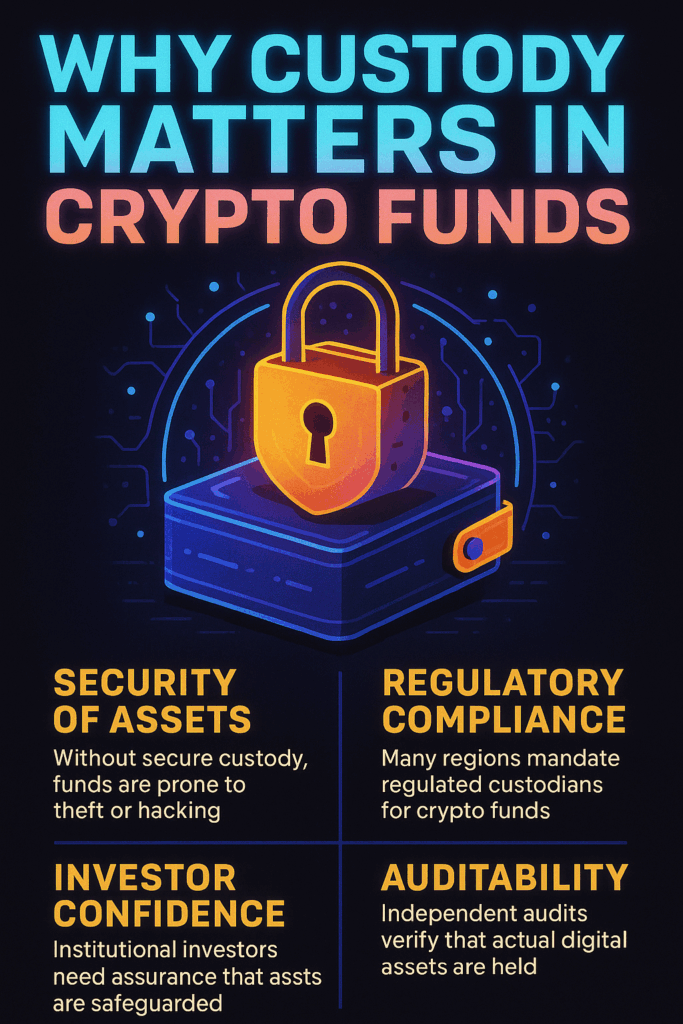
- Security of Assets: Without strong custody, funds risk theft or hacking. High-profile exchange collapses like Mt. Gox (2014) and FTX (2022) showed how devastating weak controls can be.
- Regulatory Compliance: Many jurisdictions require regulated custodians, especially for funds marketed to institutions.
- Investor Confidence: Institutional investors will not commit significant capital unless they’re comfortable that assets are safe and auditable.
In short, poor custody practices are a dealbreaker for sophisticated investors.
Hot vs. Cold Storage
A common custody distinction is between hot storage and cold storage:
- Hot storage keeps assets online, allowing faster transactions but exposing them to hacking risks.
- Cold storage keeps private keys offline—often in hardware devices or even paper backups—making them far harder to hack but slower to access.
Most funds use a hybrid approach: a small portion of assets in hot wallets for liquidity and the majority in cold wallets for long-term security.
Insurance and Audits
Insurance coverage is a growing, though still limited, component of crypto custody. Some custodians offer policies covering theft or cyber breaches, though limits are often far smaller than total assets under management. Independent audits of reserves and processes also help build investor trust, showing that custodians actually hold what they claim.
The Role of Regulation
Regulators are increasingly focused on custody. In the U.S., the Securities and Exchange Commission (SEC) has proposed rules requiring advisers to use qualified custodians for digital assets. Europe’s MiCA regulation also sets requirements for safeguarding client assets.
For funds, working with a custodian who meets these standards isn’t optional—it’s essential for legitimacy and survival in the long run.
Beyond Custodians: Self-Custody and DAOs
Not all funds rely on third-party custodians. Some decentralized funds or DAOs practice self-custody, where assets are managed directly via smart contracts and community governance. While this aligns with the ethos of decentralization, it introduces risks: bugs in smart contracts, poor governance, and unclear legal accountability.
For novice investors, funds using professional custodians generally offer stronger safeguards.
Red Flags for Investors
If you’re considering an allocation to a crypto fund, ask:
- Who is the custodian? Established, regulated names add credibility.
- What percentage of assets are in cold storage? Ideally, the majority.
- Is there insurance coverage? Even partial coverage signals maturity.
- Are processes audited? Independent verification is key.
- What’s the governance model? Who controls the keys and how are transactions approved?
If answers are vague or evasive, that’s a red flag.
The Future of Crypto Custody
Custody remains one of the fastest-evolving areas in digital finance. Trends to watch include:
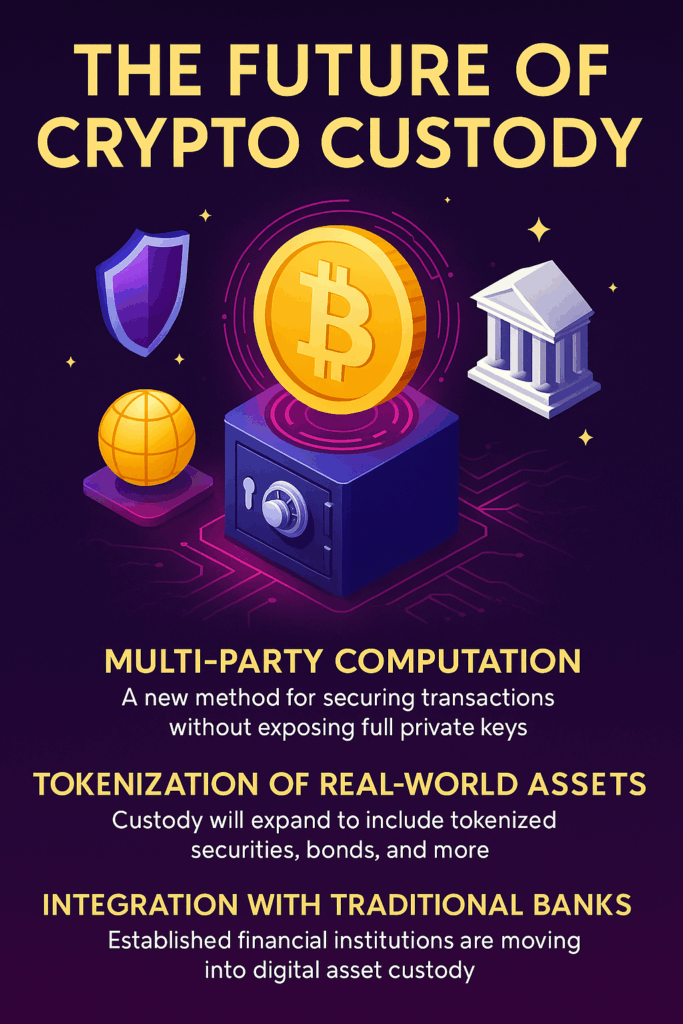
- Multi-party computation (MPC): A technology that allows secure transactions without exposing private keys in full.
- Tokenization of real-world assets: As funds begin to hold tokenized securities or bonds, custody providers must expand their scope.
- Integration with traditional banks: Big players like BNY Mellon and Fidelity are moving into digital asset custody, bridging the gap between old and new finance.
These developments suggest custody will only become more sophisticated—and more central—as crypto matures.
Conclusion
For all the excitement around crypto investing, custody and security remain the foundation on which the industry stands. Without trustworthy safeguards, even the best investment strategy can crumble under the weight of risk. For novice investors, asking tough questions about custody isn’t optional—it’s the difference between a promising opportunity and a potential disaster.
As crypto funds grow, expect custody to remain front and center—a quiet but crucial determinant of success, trust, and investor protection.