

Real estate funds have grown significantly over the last two decades, becoming a favored tool for both institutional investors and individuals who want access to the real estate market without the direct headaches of ownership. But what exactly is a real estate fund, how does it work, and is it the right fit for your investment portfolio?
This article will walk you through everything you need to know, from the basics of what real estate funds are, to the different types available, how they generate returns, and the risks and rewards you should weigh before jumping in.
Defining the Real Estate Fund
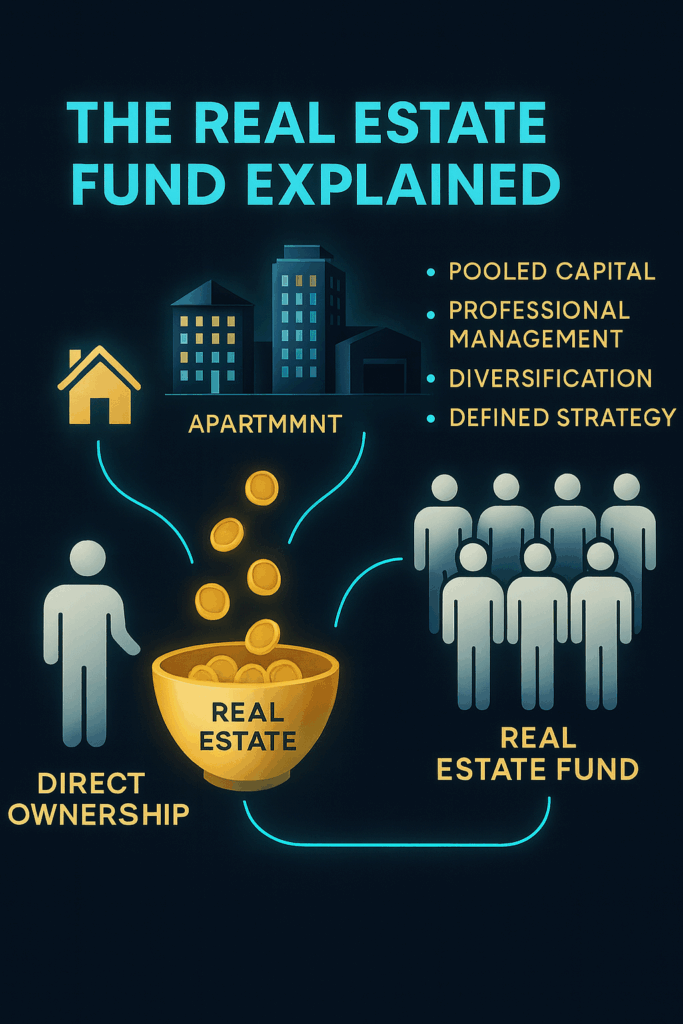
At its core, a real estate fund is an investment vehicle that pools money from multiple investors to buy, operate, and sometimes sell real estate assets. Think of it like a mutual fund, but instead of owning stocks and bonds, the fund owns apartment complexes, office buildings, retail centers, warehouses, hotels, or even debt tied to real estate.
The fund is managed by professionals—investment managers or firms—who decide what properties to buy, how to manage them, and when to sell. As an investor, you contribute capital and, in exchange, share in the profits and losses.
Key Characteristics of a Real Estate Fund
- Pooling of Capital – Multiple investors contribute money, which increases the purchasing power of the fund.
- Professional Management – Fund managers handle the heavy lifting: acquisitions, operations, and dispositions.
- Diversification – Instead of putting all your money into a single property, you gain exposure to a portfolio of real estate assets.
- Defined Strategy – Each fund has its own strategy, such as focusing on income-producing assets, distressed properties, or new developments.
A Short History of Real Estate Funds
Although real estate syndicates and partnerships have existed for centuries, the modern real estate fund emerged in the mid-20th century. In 1960, Congress created the Real Estate Investment Trust (REIT) structure, which allowed everyday investors to access large-scale real estate projects through a stock-like vehicle.
From there, the industry expanded. By the 1980s and 1990s, private real estate funds began attracting pension funds and institutions looking for alternatives to volatile equity markets. In the 2000s, the sector went global, with sovereign wealth funds and international investors pouring capital into U.S. commercial properties.
Today, real estate funds manage trillions of dollars worldwide, ranging from massive institutional portfolios to boutique funds that focus on narrow niches like senior housing or self-storage.
Real Estate Fund vs. Direct Ownership
It’s helpful to compare investing in a real estate fund with the more traditional route of directly buying property.
- Direct Ownership: You buy a property outright. You’re responsible for everything—financing, tenants, maintenance, and compliance. You keep all the profits but also shoulder all the risk.
- Real Estate Fund: You invest money into a collective pool. You don’t control the properties, but you also don’t have to manage them. Your returns depend on the fund’s performance, and your risk is spread across multiple properties.
For investors who want exposure to real estate but don’t want the headaches of being a landlord, funds offer a compelling alternative.
Types of Real Estate Funds
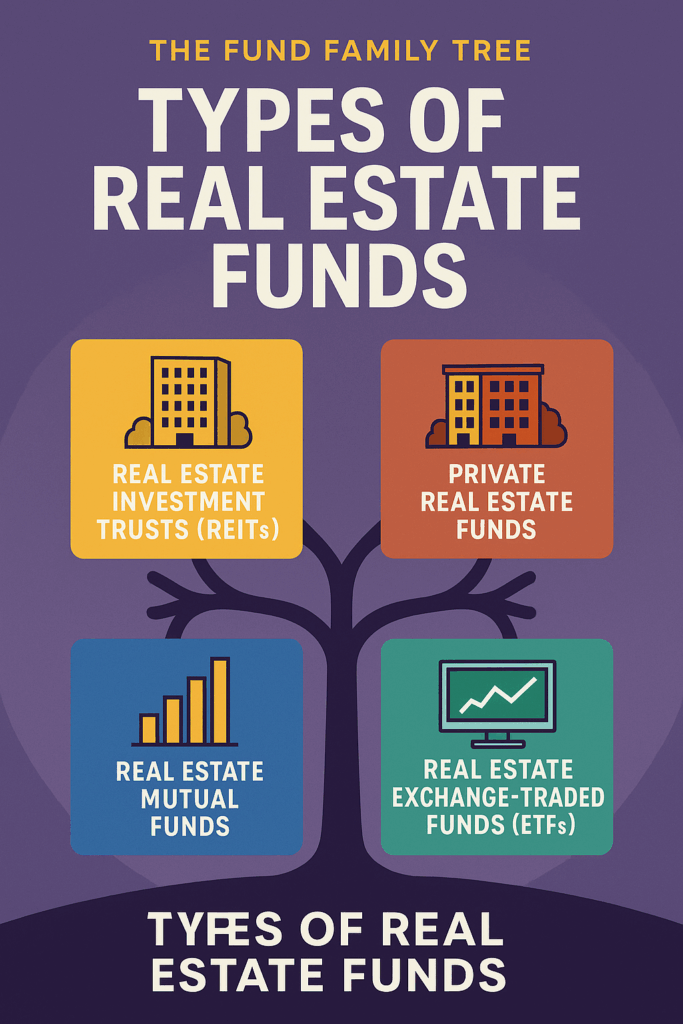
Not all real estate funds are created equal. Understanding the categories will help you see which one might fit your goals.
1. Real Estate Investment Trusts (REITs)
A REIT is a company that owns, operates, or finances income-producing real estate. Many REITs trade on public stock exchanges, making them accessible and liquid like regular stocks.
- Pros: Liquidity, transparency, and often steady dividends.
- Cons: Market volatility can impact share prices, even if underlying real estate is stable.
2. Private Real Estate Funds
These funds are not publicly traded. They may focus on commercial properties, residential developments, or niche sectors like data centers or self-storage.
- Pros: Potentially higher returns, access to specialized strategies.
- Cons: Illiquid, often require larger minimum investments, and usually reserved for accredited investors.
3. Real Estate Mutual Funds
These funds invest primarily in REITs and other real estate-related securities. They give exposure to the sector through a more traditional mutual fund structure.
- Pros: Professional management, diversified exposure.
- Cons: Fees can be high, and performance is tied to broader market trends.
4. Real Estate Exchange-Traded Funds (ETFs)
REIT ETFs and other real estate ETFs package together multiple securities into one easily tradable investment.
- Pros: Liquidity, low cost, diversification.
- Cons: Like REITs, they’re tied to stock market performance.
Case Studies: Fund Strategies in Action
To see how strategies differ, let’s look at three common fund approaches:
- Multifamily Housing Fund: Focuses on apartment complexes in high-growth areas. Returns come from steady rental income plus long-term appreciation. Investors benefit from demographic trends, such as more people renting instead of buying homes.
- Industrial Fund: Invests in warehouses and logistics hubs. With e-commerce booming, these funds often enjoy stable tenants like Amazon or FedEx. Rents may rise with demand for last-mile delivery locations.
- Office Fund: Once a cornerstone of institutional portfolios, office-focused funds face uncertainty today. Managers may reposition properties for mixed use or target resilient submarkets like life sciences office space.
Each strategy carries different risk and reward profiles, underscoring the importance of knowing a fund’s niche.
How Real Estate Funds Make Money
Investors in real estate funds generally see returns in two forms:
- Income – Many real estate assets, like apartment buildings or office complexes, generate steady rental income. Funds distribute a portion of that income back to investors.
- Appreciation – If properties are sold for more than they were purchased, the gains are passed on to investors.
Some funds focus more on income (think REITs with high dividends), while others focus on appreciation (development funds that sell projects after completion). A few try to balance both.
The Role of Fees
One of the most overlooked aspects of real estate funds is the fee structure.
- Management Fees: Typically 1–2% annually, these cover the cost of running the fund.
- Performance Fees (Carried Interest): Many private funds take 20% of profits after a certain return threshold is met.
- Transaction Fees: Buying, selling, or refinancing properties can incur additional costs.
While fees are justified by professional expertise, they eat into investor returns. A fund with average performance but high fees may underperform a lower-cost option.
Tax Considerations
Taxes play a big role in fund returns:
- REIT Dividends: Usually taxed as ordinary income, though some qualify for a 20% deduction under current U.S. tax law.
- Capital Gains: Profits from selling fund shares or underlying properties may trigger capital gains taxes.
- Depreciation Benefits: Some private funds pass through depreciation deductions, reducing taxable income for investors.
It’s crucial to consult a tax advisor before committing significant capital to any real estate fund.
Who Invests in Real Estate Funds?
The audience for real estate funds is broad:
- Institutional Investors: Pension funds, insurance companies, and endowments often allocate billions into real estate funds as part of a diversified portfolio.
- High-Net-Worth Individuals: Private funds appeal to wealthy investors seeking diversification beyond stocks and bonds.
- Everyday Investors: Through publicly traded REITs and ETFs, even small investors can participate with as little as a few hundred dollars.
The Benefits of Real Estate Funds
So why do investors choose funds over direct ownership?
- Diversification – Spread risk across multiple properties and geographic regions.
- Passive Income – Receive distributions without managing tenants or repairs.
- Professional Expertise – Access to managers who specialize in sourcing and managing deals.
- Accessibility – Publicly traded options lower the barrier to entry.
- Potential for Inflation Hedge – Real estate often retains or grows value in inflationary environments, and rental income can adjust upward.
The Risks of Real Estate Funds
Of course, no investment is risk-free. With real estate funds, some of the biggest risks include:
- Market Risk – Property values can decline during downturns.
- Liquidity Risk – Private funds often lock up your money for years.
- Manager Risk – Poor management decisions can erode returns.
- Fee Structures – Some funds charge hefty fees, cutting into profits.
- Leverage – Many funds use debt to acquire properties, which can magnify losses in tough times.
Fitting Real Estate Funds into Your Portfolio
A real estate fund can serve several roles in an investment portfolio:
- Income Generator: For retirees or income-focused investors, a REIT or income-oriented fund can provide steady cash flow.
- Diversifier: Real estate often behaves differently from stocks and bonds, helping smooth portfolio volatility.
- Growth Engine: Opportunistic or development funds may boost long-term returns, albeit with higher risk.
The right allocation depends on your goals, time horizon, and risk tolerance.
Real Estate Funds in Today’s Market
The last few years have reshaped the real estate landscape. Rising interest rates, shifting work patterns (remote work vs. return to office), and changing demographics have altered demand across asset classes.
- Multifamily Housing remains strong in many urban and suburban markets.
- Industrial/Logistics properties have seen huge demand thanks to e-commerce growth.
- Office markets are mixed, with some cities struggling and others stabilizing.
- Retail continues to evolve, with experiential retail and necessity-based centers faring better.
Funds positioned in the right sectors at the right time can capitalize on these shifts, while others may struggle.
Looking Ahead: The Future of Real Estate Funds
What’s next for this sector? Several themes are worth watching:
- Sustainability: Funds increasingly target green buildings and energy-efficient retrofits.
- Technology: Data-driven property management and AI-enhanced investment analysis are changing fund operations.
- Globalization: Cross-border investment flows mean local investors may be competing with foreign capital.
- Alternative Sectors: Data centers, life sciences, and senior housing are gaining traction as new frontiers.
The adaptability of real estate funds suggests they’ll remain a key part of global capital markets for decades to come.

The Bottom Line
A real estate fund isn’t a one-size-fits-all investment. For some, it’s a convenient way to access real estate without dealing with tenants and toilets. For others, it’s a way to diversify beyond traditional stocks and bonds, or to participate in markets otherwise out of reach.
Whether through a publicly traded REIT, a specialized ETF, or a private equity fund targeting niche opportunities, real estate funds give investors options. Like any investment, the key is understanding the structure, risks, and strategies before writing a check.
As you read this issue of the magazine, you’ll find several articles that dig deeper into aspects of real estate funds: how to evaluate managers, how taxes affect fund returns, and what sectors might be poised for growth. This pillar article is your foundation—an introduction to the world of real estate funds. From here, the path branches into the details that will help you make smarter, more confident investment decisions.
Because at the end of the day, whether you’re a first-time investor or a seasoned professional, the real question isn’t just what is a real estate fund?—it’s is this the right tool for you?