

This Content Is Only For Subscribers
In the glossy world of venture capital, headlines often focus on billion-dollar “unicorns,” splashy IPOs, and investors who turned small bets into fortunes. But there’s another side of the story that’s just as important: failure.
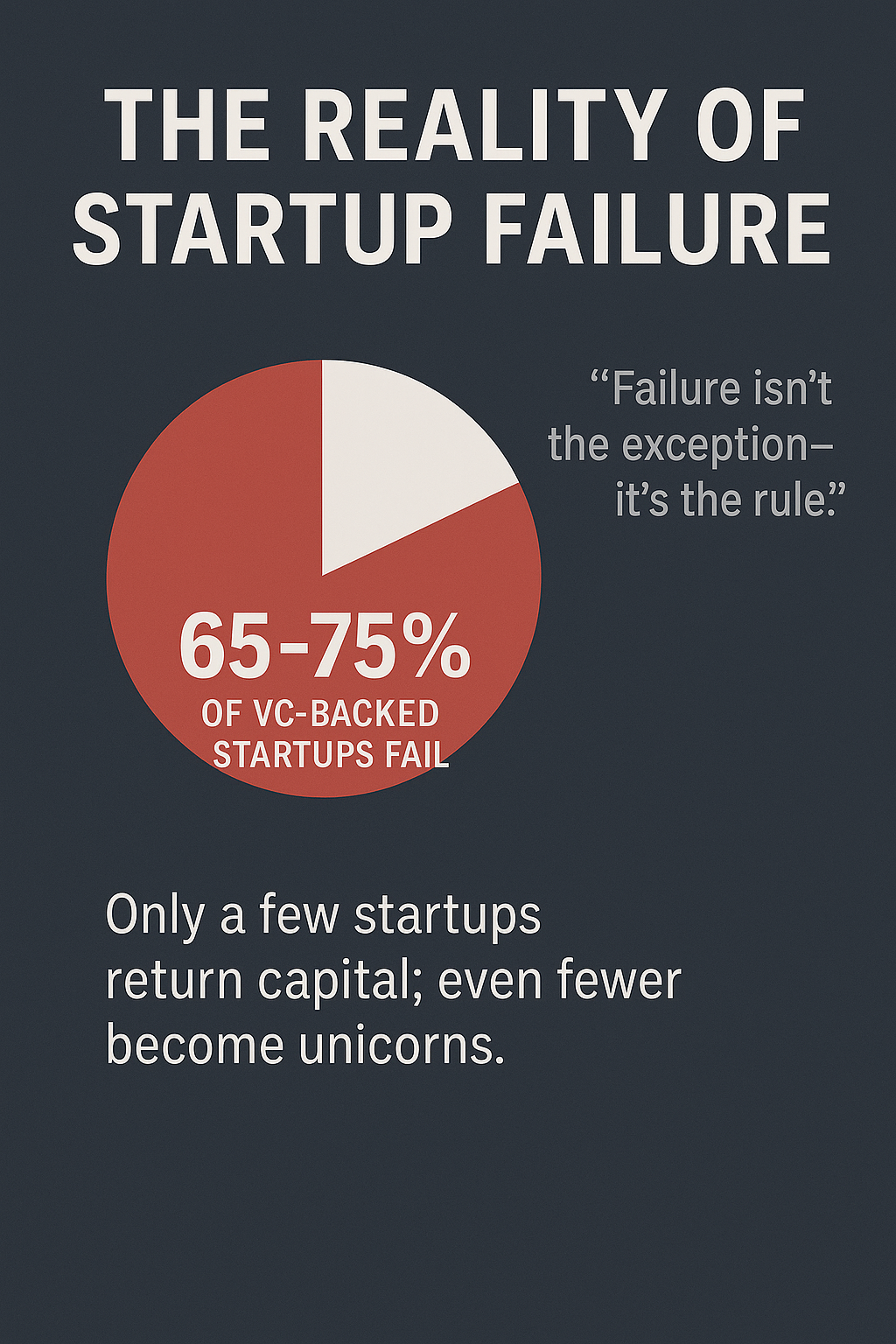
The majority of venture-backed startups don’t make it. Studies suggest that 65–75% of VC-backed companies fail to return investor capital. For founders, employees, and investors, failure is part of the game. Understanding how it plays out is crucial—because failure isn’t the end of the story. It shapes careers, ecosystems, and even future successes.
Why Startups Fail
Startups operate in uncertain territory, and the odds are stacked against them. The main reasons companies collapse include:
Lack of Market Demand
The number one reason: the product doesn’t solve a big enough problem.
- Example: Many consumer apps never gain enough users to sustain growth.
Running Out of Cash
- Startups rely on outside funding. If new rounds don’t materialize, even promising companies can die.
Team or Execution Issues
- Strong founders are critical, but conflicts, burnout, or lack of focus can sink ventures.
Competition
- Attractive markets often attract multiple startups. Only a few survive the battle.
Regulatory or External Shocks
- Government intervention or macroeconomic downturns can suddenly derail businesses.
Famous Failures
Webvan (1999–2001)
Raised nearly $800 million to deliver groceries online. But costs were too high, and adoption was too slow. It collapsed within two years—often cited as the dot-com era’s biggest flop.
Theranos (2003–2018)
Promised revolutionary blood testing but ultimately imploded when the technology didn’t work. Raised over $700 million before shutting down, and became a cautionary tale of hype over substance.
Quibi (2020)
Backed by $1.75 billion in funding, it offered short-form video for mobile. Launched during the pandemic, it shut down within six months, proving that money alone doesn’t buy product-market fit.
What Failure Means for Founders
Failure can be devastating—financially and emotionally—but in the startup world, it isn’t always career-ending.
- Silicon Valley culture: Failure is often seen as experience. Investors may back a founder again if they’ve learned from mistakes.
- Reputation matters: Honest efforts that don’t pan out are forgiven. Fraud or ethical lapses (as in Theranos) are not.
- Resilience: Many successful entrepreneurs failed before they found the right idea.
What Failure Means for Employees
Employees often bear the brunt of failure.
- Lost jobs: When funding dries up, layoffs or closures are swift.
- Equity wipeouts: Stock options in a failed startup often end up worthless.
- Experience gained: On the upside, employees gain valuable skills in fast-paced environments, making them attractive hires elsewhere.
What Failure Means for Investors
For VCs, failure is expected.
- Portfolio strategy: They assume most companies won’t work out. A few big winners pay for the losers.
- Write-offs: Investments in failed startups are written down to zero.
- Signaling risk: High-profile failures can hurt a VC’s reputation—but only if they don’t have big wins elsewhere.
How Failure Shapes Ecosystems
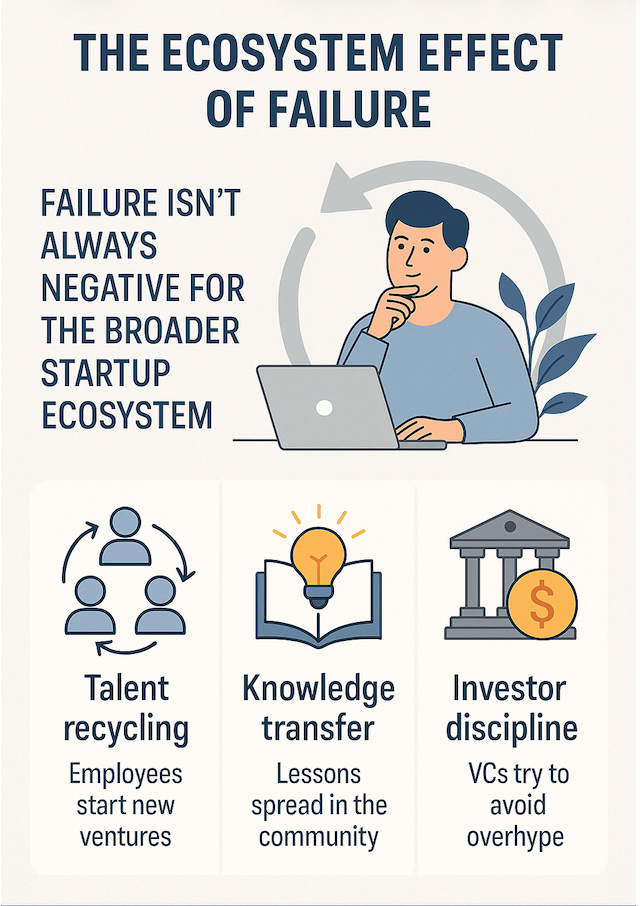
Interestingly, failure isn’t always negative for the broader ecosystem.
- Talent recycling: Employees from failed startups often launch new ventures. PayPal famously spawned the “PayPal Mafia,” including the founders of Tesla, LinkedIn, and YouTube.
- Knowledge transfer: Lessons from failures spread through startup communities, improving future companies.
- Investor discipline: Busts remind VCs to avoid overhyped sectors and demand better fundamentals.
What Happens Legally When Startups Fail
Failure also has legal and financial processes:
- Shut down / dissolution: Small companies may quietly close, paying creditors before dissolving.
- Bankruptcy: Larger startups may go through Chapter 11 or Chapter 7, selling assets to pay debts.
- Acqui-hires: Sometimes, a struggling company is acquired for its team, not its product. Employees move over, but investors rarely recoup much.
Lessons for Novice Investors
Even if you never back a startup, the failure dynamics of VC offer important lessons:
- Expect losses. Like VCs, individuals should assume not every investment will work out.
- Don’t confuse valuation with value. WeWork once looked unstoppable at $47 billion, but collapsed in bankruptcy.
- Diversification is key. Putting too much into one “hot” pick increases risk.
- Resilience pays. In personal investing, as in startups, setbacks are inevitable—what matters is adjusting and continuing.
- Learn from failure. Mistakes, whether in startups or personal finance, can provide lessons for smarter choices in the future.
Final Thoughts
In venture capital, failure is not the exception—it’s the rule. Most startups won’t make it, but the ones that do can change the world. For founders, employees, and investors, navigating failure is part of the journey.
For novice investors, the lesson is broader: don’t fear failure, but plan for it. Success comes not from avoiding risk altogether, but from managing it wisely, diversifying, and learning along the way.