

This Content Is Only For Subscribers
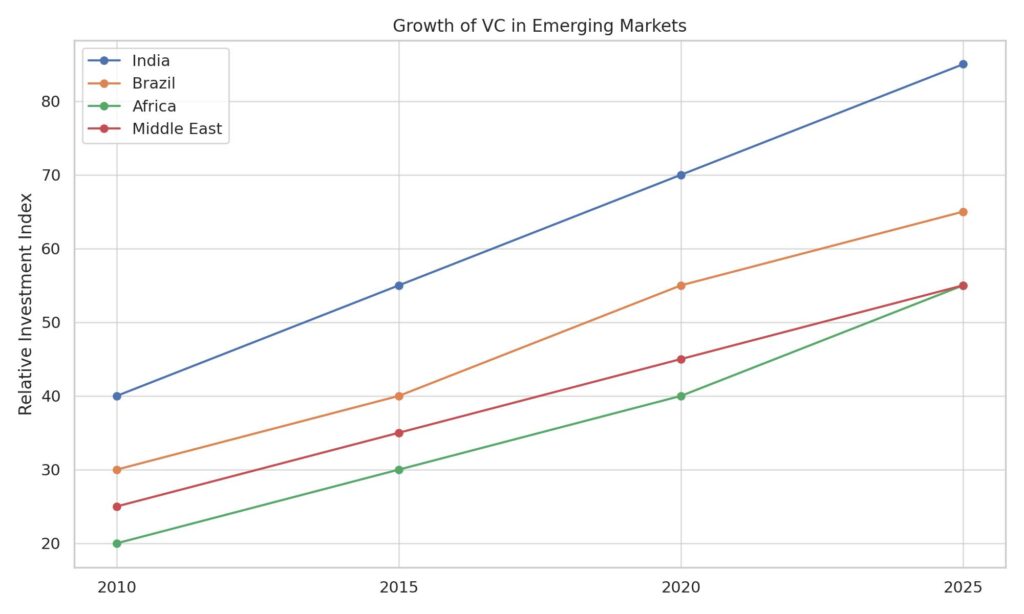
Venture capital may have started as a niche activity in Silicon Valley, but today it’s a global phenomenon. From Beijing to Berlin, Bengaluru to São Paulo, startups and venture investors are reshaping local economies and producing world-changing companies. For novice investors, understanding these geographic “hotspots” is essential: where capital flows often determines where the next wave of innovation will emerge.
Silicon Valley: Still the Benchmark
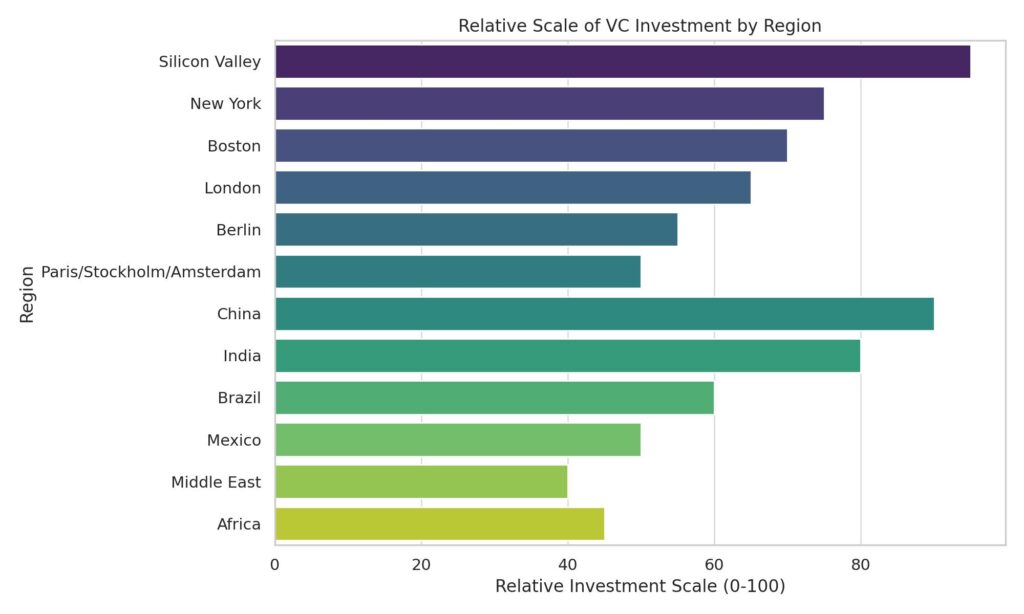
When most people think of venture capital, they picture Silicon Valley. The region surrounding San Francisco remains the epicenter of VC activity, thanks to its unique blend of tech talent, universities, and a culture of risk-taking. Giants like Apple, Google, and Meta were born here, and even today, top VC firms such as Sequoia Capital, Andreessen Horowitz, and Kleiner Perkins remain influential.
Why it matters:
- Network effects – Entrepreneurs, engineers, and investors congregate in the same ecosystem.
- Access to capital – Billions in VC funds are headquartered in the Bay Area.
- Global influence – A Silicon Valley investment often serves as a “stamp of approval” for startups worldwide.
Yet, high costs and fierce competition have led some investors to explore new regions.
New York and Boston: Finance Meets Innovation
Beyond California, two U.S. cities stand out.
- New York City has become a hub for fintech, media, and e-commerce startups, fueled by its proximity to Wall Street. Companies like Warby Parker and Etsy illustrate how consumer-focused businesses thrive here.
- Boston leverages world-class universities like MIT and Harvard to lead in biotech and life sciences. Firms specializing in healthcare and pharmaceuticals often prefer Boston over Silicon Valley for its research ecosystem.
Together, these cities broaden America’s venture capital map.
Europe: London, Berlin, and Beyond
Europe’s venture capital scene has blossomed in the past decade.
- London is Europe’s largest VC hub, driven by fintech (think Revolut, Wise, Monzo). Its financial infrastructure and international talent pool give it global reach.
- Berlin offers lower costs and a vibrant creative scene, producing startups like Zalando and N26.
- Paris, Stockholm, and Amsterdam are also climbing the ranks, producing unicorns in software, mobility, and gaming.
The EU’s regulatory environment can be stricter, but increasing investment and cross-border funds are fueling rapid growth.
Asia: China and India on the Rise
Asia is now a powerhouse of venture capital.
- China has produced some of the world’s most valuable startups, including ByteDance (TikTok) and Didi. Beijing and Shenzhen anchor the ecosystem, supported by massive local funds and government backing. While recent regulatory crackdowns have created uncertainty, China remains critical for AI, e-commerce, and hardware innovation.
- India has emerged as a rising star, with Bengaluru dubbed the “Silicon Valley of India.” Unicorns like Flipkart, Zomato, and Byju’s highlight the country’s growing consumer base and digital adoption. Global firms like SoftBank and Tiger Global have poured billions into Indian startups.
Both countries showcase how VC adapts to massive, fast-growing markets.
Latin America: Brazil and Mexico in Focus
Latin America has experienced a VC surge, particularly in Brazil and Mexico.
- Brazil: São Paulo leads the way with fintechs like Nubank, which became one of the most valuable digital banks worldwide.
- Mexico: With strong ties to the U.S. and rapid e-commerce growth, Mexico City has fostered startups like Kavak, a used-car platform valued at billions.
Although volatility and currency risks remain challenges, the region’s demographics—young, urban, tech-savvy populations—attract global capital.
Middle East and Africa: Emerging Frontiers
While still smaller in scale, these regions are emerging as exciting frontiers.
- Middle East: Dubai and Riyadh are pushing aggressively to diversify economies beyond oil. Venture funding is rising in sectors like fintech, mobility, and logistics.
- Africa: Nigeria, Kenya, and South Africa are leading hubs, with fintech playing a starring role. Companies like Flutterwave and M-Pesa demonstrate how innovation can leapfrog traditional infrastructure.
These markets are earlier in development but offer long-term potential due to rapid population growth and mobile-first adoption.
What Makes a Hotspot Thrive?
Across regions, certain factors consistently fuel venture ecosystems:
- Talent – Universities and skilled workforces.
- Capital – Local investors plus international funds.
- Infrastructure – Tech, legal, and financial systems to support startups.
- Culture – Willingness to take risks and tolerate failure.
When these ingredients combine, venture capital tends to follow.
Why Geographic Diversity Matters for Investors
For investors, geographic diversity offers both opportunities and challenges.
- Opportunities: Access to fast-growing markets, exposure to new industries, and potential for higher returns in underfunded regions.
- Challenges: Currency risk, regulatory hurdles, and political instability can impact outcomes.
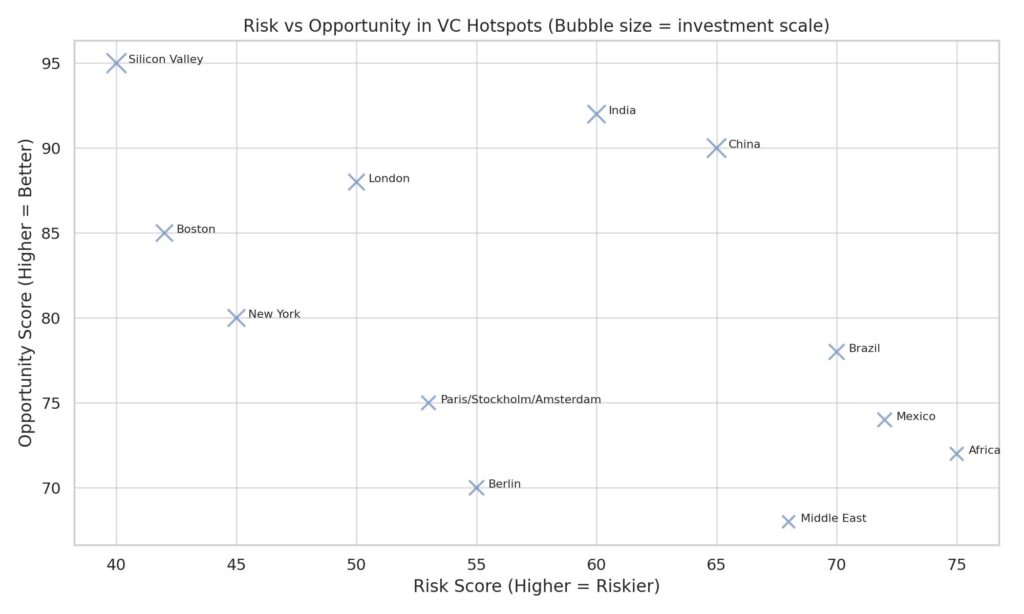
Even novice investors can track these trends through global VC reports, public companies emerging from these hotspots, or exchange-traded funds (ETFs) that offer international exposure.
Key Takeaways
- Venture capital is no longer confined to Silicon Valley—it’s global.
- Each region has unique strengths: biotech in Boston, fintech in London, e-commerce in India, fintech in Brazil, and mobile innovation in Africa.
- Global expansion offers opportunities but also adds new risks.
- Understanding geographic hotspots helps investors anticipate where the next wave of innovation might emerge.