

This Content Is Only For Subscribers
Why People Are at the Center of Hedge Funds
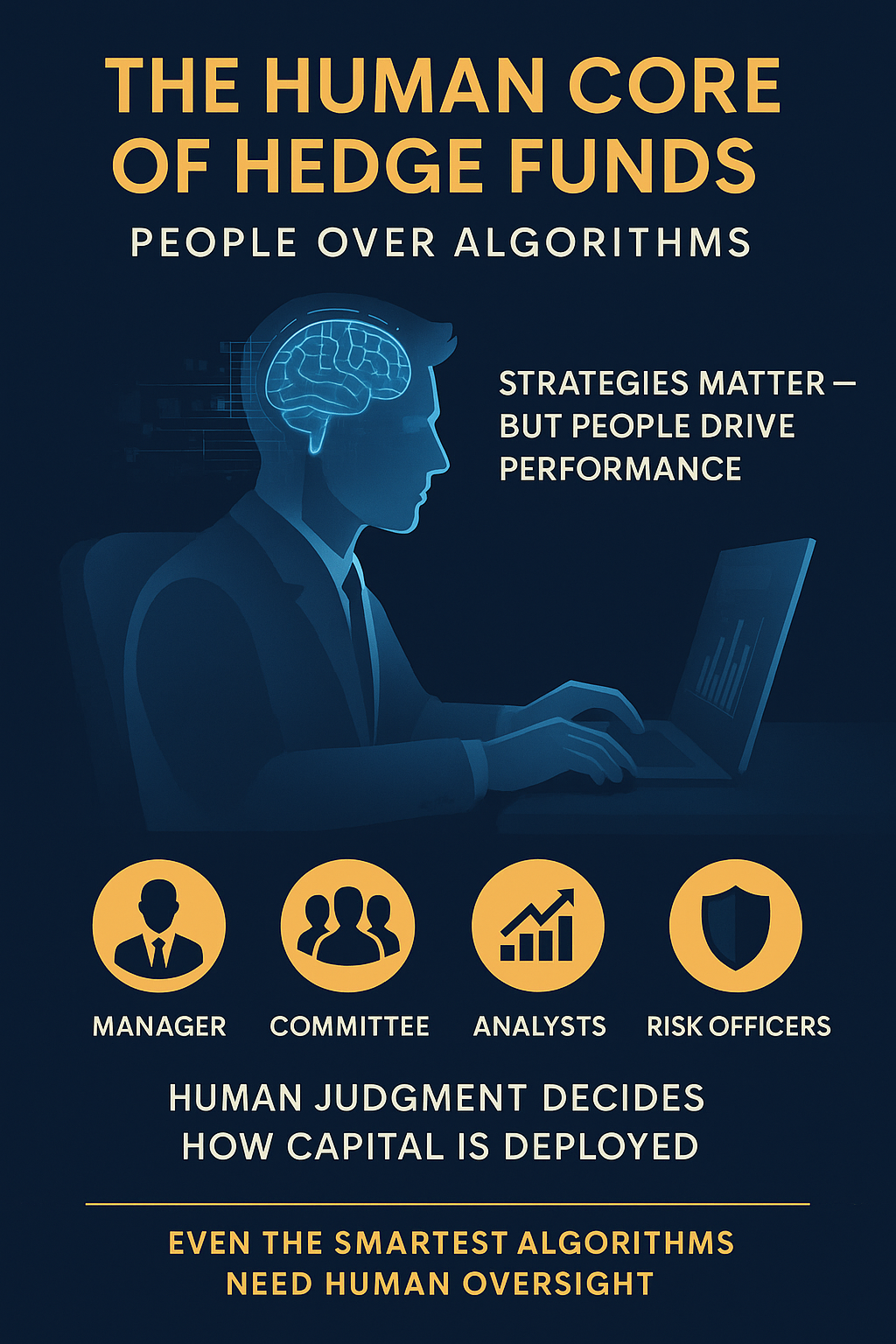
When investors think about hedge funds, they often picture complex trading strategies or advanced algorithms. But at the core of every hedge fund is a team of people—led by a manager and often supported by an investment committee—who make the actual decisions. For novice investors, understanding who these decision-makers are and how they operate is just as important as understanding the strategies themselves.
The Hedge Fund Manager: Leader and Decision-Maker
The hedge fund manager is usually the face and voice of the fund. In many cases, they’re also the founder and the largest shareholder. Their job isn’t only to execute trades—it’s to set the vision for the entire fund.
Key responsibilities include:
- Strategy Development: Designing the approach, whether it’s equity long/short, global macro, distressed debt, or another specialty.
- Execution: Making calls on when to buy, sell, or hold positions.
- Fundraising: Meeting with potential investors and building trust.
- Talent Leadership: Recruiting analysts, traders, and risk managers.
Some managers become celebrities in the finance world—Ray Dalio at Bridgewater Associates or Ken Griffin at Citadel, for example. Their reputation alone can attract billions of dollars in investor commitments.
But star power comes with risks. A fund that relies too heavily on one person can struggle if that individual makes poor decisions or eventually steps aside.
The Investment Committee: A Team Approach
While the manager leads, many hedge funds also use an investment committee to balance decision-making. This group, which may include senior analysts, risk officers, and sometimes outside experts, serves as a sounding board and a check on the manager’s authority.
Advantages of the committee model include:
- Checks and Balances: Prevents overconfidence or one person’s bias from dominating decisions.
- Specialized Expertise: Members often bring sector or regional knowledge, such as healthcare, technology, or emerging markets.
- Structured Process: Decisions are more transparent and less impulsive.
That said, not every hedge fund has a formal committee. Some smaller or more entrepreneurial funds prefer quick, centralized decision-making. For investors, it’s worth asking how a fund’s governance is structured.
Risk Management: Beyond Strategy
A manager’s job isn’t only to chase returns—it’s also to manage risks. Committees and managers work together to monitor how much capital is exposed to specific bets, ensure diversification, and plan for unexpected market shocks.
Some firms employ a Chief Risk Officer (CRO) who sits outside the investment team, providing an independent voice. This can be especially valuable when markets become volatile, since it prevents the same people who make risky bets from being the only ones evaluating them.
For investors, a key question is: How independent is risk oversight at this fund?
Culture: Debate or Dictatorship?
A fund’s decision-making style often reflects its culture. At Bridgewater Associates, Ray Dalio established what he called an “idea meritocracy,” where even junior analysts are encouraged to challenge senior managers. This culture has been credited with helping Bridgewater adapt and thrive.
By contrast, Long-Term Capital Management in the 1990s concentrated power in the hands of a few Nobel Prize-winning economists. When their models misfired during the Russian debt crisis, the lack of dissenting voices contributed to the fund’s dramatic collapse.
For novice investors, culture may sound abstract—but it often determines whether a fund can weather tough times.
What This Means for Investors
When evaluating a hedge fund, it’s worth going beyond the marketing pitch and asking:
- Who leads the fund? What’s the manager’s track record and reputation?
- Is there a committee? If so, how are decisions made?
- What’s the culture? Is debate encouraged or stifled?
- How is risk managed? Is oversight independent or tied to the trading desk?
The answers to these questions reveal whether the fund is robust or overly reliant on one individual.
Investor Example: Large vs. Small Funds
Large institutional investors—like pension funds—often prefer funds with formal committees and strong governance. They want assurance that decisions aren’t made on impulse.
Wealthy families or smaller investors, on the other hand, sometimes gravitate toward boutique funds led by a single star manager. They may be willing to accept higher risk in exchange for potentially higher rewards.
Neither approach is right or wrong—it depends on the investor’s goals and risk tolerance.
Final Takeaway
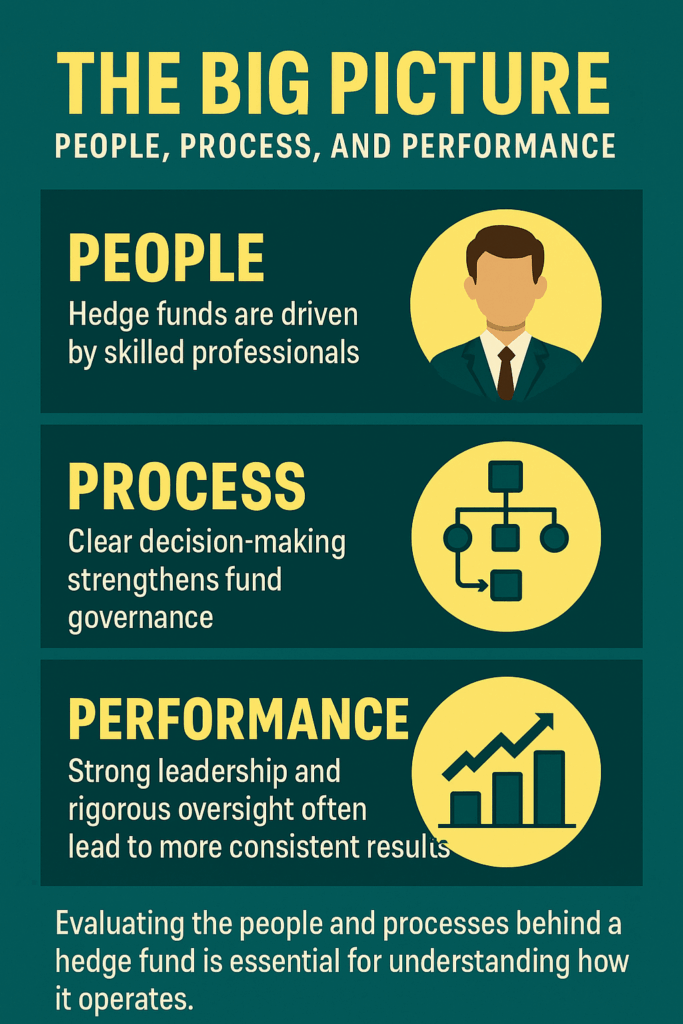
Hedge funds aren’t just about numbers and strategies—they’re about people. The manager sets the vision, the committee provides balance, and together they shape how risks are taken and how capital is deployed.
For novice investors, understanding the people behind the strategies is a crucial step. A fund with clear leadership, structured oversight, and a healthy culture is far more likely to deliver consistent results than one that relies on a single personality.